Background
Lactate Physiology
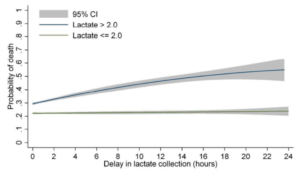 Lactic acid is a clinical biomarker that, at high levels, can be measured to predict various types of tissue hypoperfusion, including sepsis, organ failure, and hemorrhage. Physiological lactate levels in the blood are 1 mM, and lactate levels are life-threatening above 4 mM.
Current Methods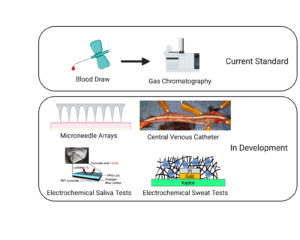
The most common method for measuring lactate levels is the use of periodic blood draws which are then sent for chemical analysis. Some groups have proposed devices that use microneedles or do real-time intravenous measurements of lactate levels using electrochemical sensors. These methods have been shown to be extremely accurate; however, they are highly invasive and have a limited scope. Additionally, electrochemical sensors that measure blood lactate indirectly using sweat or saliva have been designed, mostly for athletic use. These methods have shown to be less accurate and not as robust.
Optics
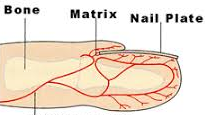 Optics provides an opportunity for non-invasive measurement & quick deployment. In a previous study (LaFrance 2003), near infrared spectroscopy (NIRS) was used to measure blood lactate levels. NIRS was used because it offered the best signal to noise ratio as well as limited the effect of water interference. In another study (Abu-Khalaf et al. 2013), the most optimal wavelengths were chosen based on characteristics of the nail, skin, and blood.