Marketing
Market Overview
- 48 million inpatient surgeries in 2009 according to National Center for Health Statistics
- Respiratory system surgeries: 1.3 million
- Cardiovascular system surgeries: 7.3 million
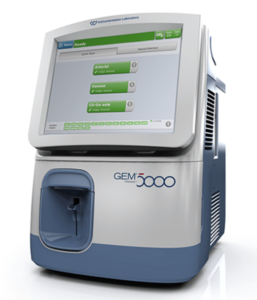
- Current Standard
- GEM Premier 5000 blood gas analyzer
- Pros: Provides absolute blood lactate level
- Cons: Requires blood draw and sample preparation
Ideal Customers
- Dr. Heinz Doofenshmirtz
- Anesthesiologist
- Monitors patients during surgery
- Needs to sample lactate continuously to monitor the presence of internal hemorrhage or the onset of sepsis before other symptoms hit0
- Phyllis Jefferson, RN
- Nurse in the ICU
- Has patients’ vitals connected and electronically transferred constantly (1 Hz or less).
- Needs to know lactate levels to detect onset of sepsis/organ failure
- Dr. Courtney Lyles
- ER Physician
- Regularly has patients that undergo internal bleeding following traumatic events
- Checking lactate levels continuously can signal the onset of internal hemorrhage
- Would help with triaging patients by severity and urgency
- Jeff Jeffries, CNA
- CNA on a hospitalist floor
- Checks patient vitals regularly (every 4 to 6 hours)
- Checks lactate levels, along with pulse oxygen levels, heart rate, etc.
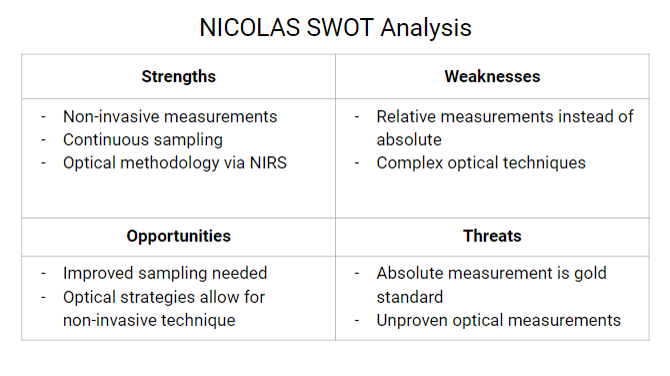
SWOT Analysis