
Research Solution
The first step in the creation of the new pump system will require the design of the actual components of the system. The drivers, control board, as well as the power supply will all be housed within a stand-alone box that will connect via wires to the bioreactor where the stepper motors will stand inside. Within this rectangular container, a structure and organizational system must be designed to allow for all required components to fit while simultaneously providing easy access to all components for maintenance and repair. This organizational system will require a two-shelf system in order to optimize the space available and to allow for proper cooling of all the equipment used.
After designing the interior of the box, the correct tension of the tubing to the stepper motors will be experimentally found. The tension of the tubes around the motors must be carefully determined because too much or too little tension has the potential to increase or decrease beyond the desired flow rate.
Once the tension of the tubing is discovered, the entire mechanism with all 24 stepper motors will be assembled. At this point, a non-contact, inline flow sensor will be designed based off of a Sensirion Inline Flow-Sensing Device. The issue with this version is that it costs far too much to buy 23 more of them, so the flow sensors will be made with material available at Vanderbilt University.
With well-designed physical organization, tubing, and inline flow sensors, the novel multichannel peristaltic pump will prove to be much more efficient than present-day pump systems (Figure 1) by allowing for more experiments to take place at a time within a bioreactor.
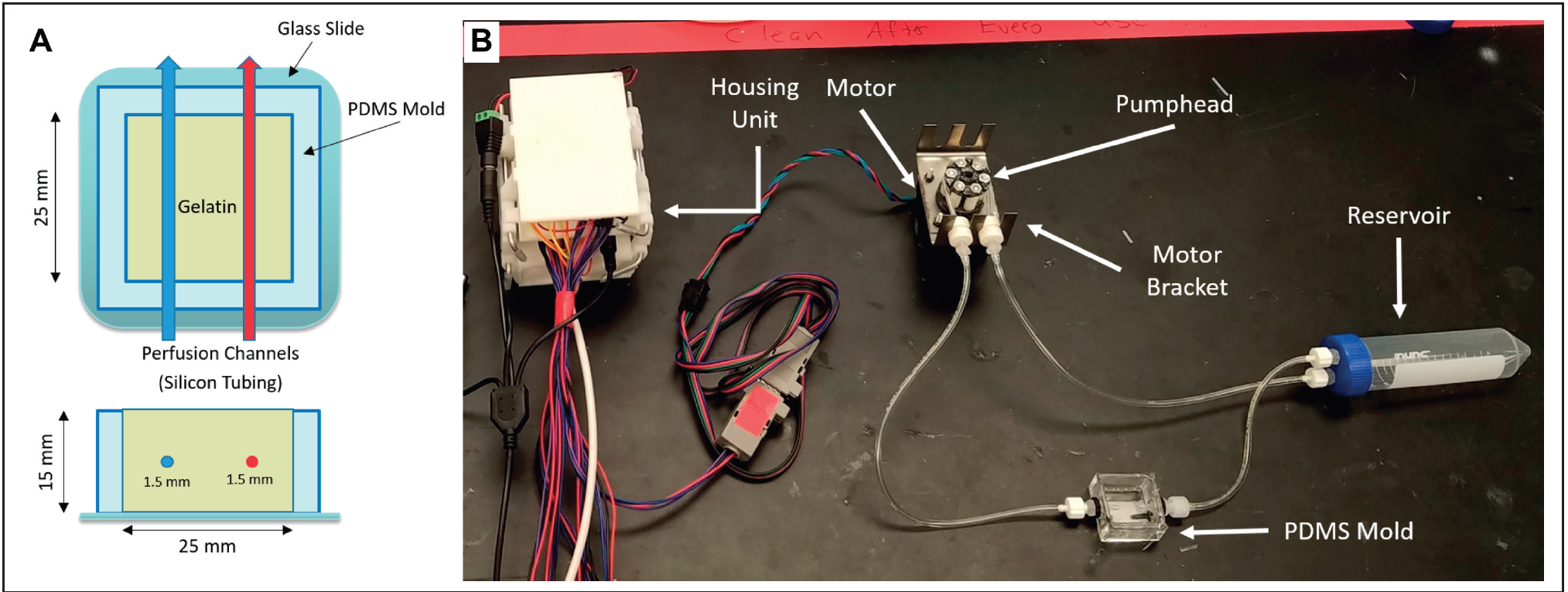
Figure 1. Present perfusion pump system used in the Bellan Lab at Vanderbilt University
Competition
Current methods for multi-channel peristaltic pumps like the Ismatec IPC ISM933A Peristaltic Pump are the main competition for our pump system. They are high quality pieces of equipment, but they are expensive ($5000) and difficult to repair. Our system is built in way that it can be easily taken apart, so that repairs can be done quickly on specific parts. It is modular, open source, and made from cheap but reliable components, which provides a much more enticing option to biomedical researchers and the broad industry.
In-line flow sensors for use in a bioreactor follow a similar trend. The most popular option is the Sensirion In-line flow sensor, which is accurate, precise, and ergonomic. However, the device is also so expensive that it is impossible to parallelize in a multichannel peristaltic pump system like the one in the Bellan lab.
Future devices may be built that incorporate both systems into one, but the business opportunity behind the development of this dual device is unclear, and many labs would likely continue to choose the dual device model. However, an inline flow sensor designed specifically for this purpose would likely fill a niche in the market that is otherwise untapped.
Differentiation
This pumping system is designed to be more affordable, accurate, and user-friendly than the current solution. The user will be able to specify what flow rate is derived for each peristaltic pump, and they will be able to receive real-time feedback on the actual flow rates going to the cell cultures. This allows for better control than current pump systems, and it gives the user more reliable results. Since the pump system is being expanding to consist of many motors and channels, it will also allow for the cell cultures to be maintained inside the bioreactor for longer time periods. Additionally, the system will be able to be taken apart, so that individual pieces can be replaced if needed, instead of having to replace the whole pump system.
Technical Feasibility
Since this project is an expansion of a currently existing and working system, it is very feasible that it will still function properly on a much larger scale. Many of the technical problems have already been sorted out, and the design team can use previous knowledge and experience to avoid repeating mistakes when adding components.
Regulations
FDA approval is not required at this stage because the pump system will not be used on humans. The pump system is directly interfacing with cells that could potentially be implanted into animals or humans, so the products created from using the pump system will need to be FDA approved before they can be used clinically. However, the intended use for this system at this time is for cellular based research, and that does not require FDA approval.
Below are relevant research publication and links:
- O’Grady, B.; Wang, J.; Faley, S.; Balikov, D.; Lippmann, E.; Bellan, L. M. A Customizable, Low-Cost Perfusion System for Sustaining Tissue Constructs. SLAS TECHNOLOGY: Translating Life Sciences Innovation 2018, 2472630318775059.
- Previous Peristaltic Pump Design from the Bellan Lab
- Previous Non-Contact Inline Flow Sensor Datasheet
- Heat-Sinks for Cooling System