Oxford Keynote, Poetry as Prophecy
“Poetry as Prophecy: From Anthropological Origins to Postmodern Apocalypses,” Keynote Speech for The Prophetic Word: Poetry, Philosophy and Theology in Conversation, Fifth Power of the Word Project Interdisciplinary Conference, Regent’s Park College, University of Oxford, September 13-16, 2017
Power of the Word Project Interdisciplinary Conference (V)
FINAL.1 Power of the Word final call for papers_0
Power of the Word – FINAL PROGRAMME
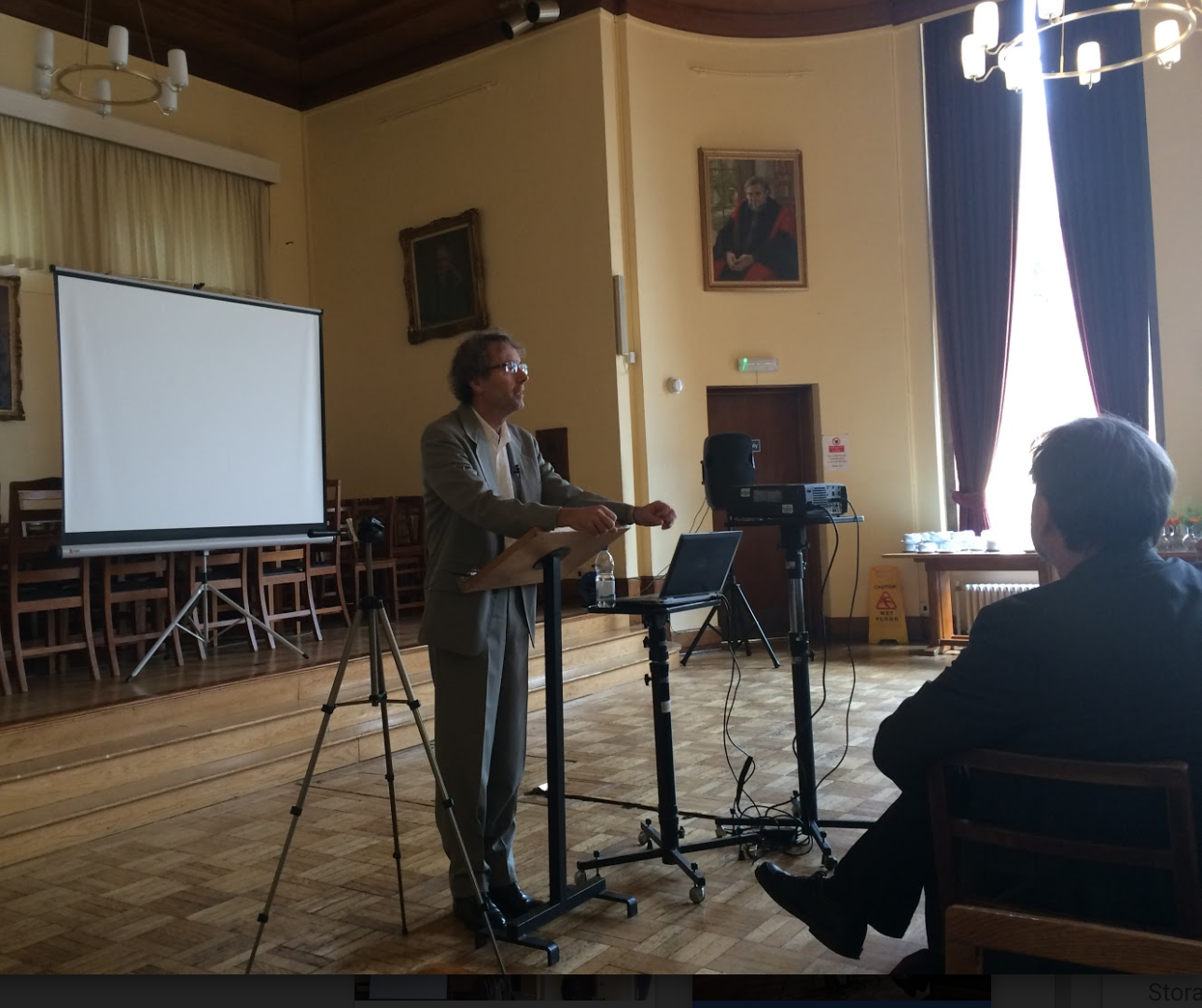
Audio Recording of Oxford Poetic Prophecy Lecture, Part 1
Audio Recording of Oxford Poetic Prophecy Lecture, Part 2
Audio Recording of Oxford Poetic Prophecy Lecture, Part 3 (Questions & Answers)
Power of the Word International Conference V – The Prophetic Word: Poetry, Philosophy and Theology in Conversation

Location: Regent’s Park College, University of Oxford
The Power of the Word International Conference V


Organized by the Heythrop Institute for Religion and Society (Heythrop College, University of London) and the Oxford Centre for Christianity and Culture, Regent’s Park College, University of Oxford).
The fifth Power of the Word international conference, to be held at Oxford in September 2017, focuses on the prophetic genius of literature, particularly of poetry. ‘Prophetic genius’ is understood here to be that relentless impulse of literature to challenge the world from which it has arisen and, looking beyond, to propose alternative visions, practicable or utopian, of individual and collective fulfilment. In some authors – Dante, Milton and Blake are three obvious examples – the prophetic word is overtly religious, in others – Virgil, Shelley and Yeats, say – it is not. Often the distinction becomes blurred, as in the poems of H.D., Denise Levertov and Allen Ginsberg. The conference will explore this theme in conversation with theology, philosophy, the three main Abrahamic religions and Greek and Latin literature and learning, and address some universal questions. For example, what do these various traditions and their understanding of the prophetic have in common? Are they mostly different or even in conflict? How do their audiences discern true from false prophets? How do they know when ‘good spirits not evil ones choose poets for their instruments’ (Czesław Miłosz)? Can poets really claim to have a prophetic authority comparable to that attributed in Scripture to the prophets? How persuasive is Seamus Heaney’s sense of the ‘redress of poetry’, of its power to stimulate alternative ways of being in the world?
The programme will include contributions by literary scholars, creative writers, theologians and philosophers, all working on texts and authors from different backgrounds and traditions. Confirmed keynote speakers:
- John Barton (University of Oxford) “The Hebrew Prophets: Seers or Poets?”
- Tina Beattie (University of Roehampton) “Hope as Prophecy: Interpreting the Silence of Holy Saturday”
- William Franke (Vanderbilt University) “Poetry as Prophecy: From Anthropological Origins to Postmodern Apocalypses”
- Michèle Le Dœuff (ENS Paris) “Equality and Prophecy”
- Christopher Rowland (University of Oxford) ‘Diversely and in many ways God spoke by the Prophets’: the perspectives of the New Testament and the texts and images of William Blake on ‘the Prophetic Word’
- Alessandro Schiesaro (University of Manchester) “Empedocles and the Prophetic Word”
- Mona Siddiqui (University of Edinburgh) “The Poetry of Piety: Between Divine Word and Prophetic Word”
The Conference will host a public poetry-reading event with Jay Parini and Mark Burrows and a public lecture in relation to the topic of the conference.
Programme and Abstracts
The full and final programme is available to download here:
Conference programme (pdf)
The full list of abstracts for the short papers to be presented at the conference can be viewed below:
Conference abstracts (pdf)
Oxford recording: passage and question index
Author’s private working copy — automatic recognition, not listening-verified. The headings below are editorial paraphrases of machine-recognized content, not quotations. Uncertain identifications remain provisional. This is a navigation aid, not a certified account of the recording. No named audience member has been identified.
Vanderbilt identifies the event as “Poetry as Prophecy: From Anthropological Origins to Postmodern Apocalypses,” Fifth Power of the Word conference, Regent’s Park College, Oxford, 13–16 September 2017. Those are conference dates, not a verified date for this individual delivery. The URL folder 2012/02 is not evidence of the lecture’s date.
Timecodes reset for each original file. Start/end positions and speaker changes are approximate. Links request playback at the relevant position; browser support for media fragments varies.
Lecture — Part 1 · 29:57.691
| File-local time | Passage/topic inferred from ASR | Qualification |
|---|---|---|
| 00:00–01:18 | Thanks, Oxford recollection, scope of the intervention | File opens with a sentence fragment; opening names and phrases are not recovered reliably. |
| 01:18–03:19 | Poetry’s prophetic vocation; origins in ritual; postmodern indeterminacy and self-reflection | Historical/philosophical thesis attributed to the speaker, not independently established fact. |
| 03:19–05:37 | Poet/prophet vocabulary; Sanskrit and Hebrew; shamanic figures; revelation and invention | Latin and Hebrew terms and etymological claims need audio and lexical verification. |
| 05:37–08:24 | Sacred texts and literary form; epic and modern lyric; George and Hofmannsthal candidates | Lists of names/titles are especially damaged. See the verification register. |
| 08:24–11:30 | Inspiration and craft; instruments and rock concerts; revelation as linguistic event | Not a claim that every musical performance is revelation. |
| 11:30–13:24 | Secularization of ritual forms and their deliberate reactivation; poetic rhythm and dance | General account, not a demonstrated history of every tradition named. |
| 13:24–16:55 | Nietzsche; pagan oracles/Sibyls in Christian reception; Virgil and a Christian cento | Biographical and historical details are not fact-checked; proper names remain uncertain. |
| 16:55–20:22 | Incantation, word magic, nonsense verse, apostrophe and symbolic efficacy | Foreign-language titles/formulas and several names unrecovered. |
| 20:22–21:50 | Shelley, Ode to the West Wind: lyric address as prophetic utterance | Printed stanza V checked separately; spoken wording not certified. |
| 21:50–24:54 | Modern verbal alchemy; ritual origins; poetic logic/metaphysics and cosmic knowledge | Severe recognition failure around 21:50–22:20. A Vico identification is provisional. |
| 24:54–28:12 | Prophecy as interpretation of history and appeal to action; Virgil, Aeneas and Roman history; Dante, Milton, Blake | Distinguishes prophecy from mere prediction. |
| 28:12–29:57.691 | Transition to German prophetic poetry; likely Klopstock, Hölderlin and Novalis; sublime inadequacy | File ends mid-argument. Names are editorial candidate identifications. |
Lecture — Part 2 · 27:49.777
| File-local time | Passage/topic inferred from ASR | Qualification |
|---|---|---|
| 00:00–01:59 | Continuation: sublime inadequacy, grace and linguistic helplessness; Dante comparison | Start appears to overlap the end of Part 1; no splice or deduplication asserted. |
| 01:59–03:25 | Self-reflection, transcendental unity, intellectual intuition and poetry | Kant, Hegel, Schelling and other name candidates are not all audibly verified. |
| 03:25–05:20 | Hölderlin/Empedocles candidate: speaking the divine and the cost of prophetic ambition | Interpretive account of a literary figure, not a historical account of suicide. |
| 05:20–08:13 | Patmos: withdrawal, dispersed traces, Scripture and divine nearness that cannot be grasped | Printed opening and ending checked separately; 06:21 region contains an ASR repetition failure. |
| 08:13–08:43 | Romantic alternatives: indirect poetic communication of transcendence | Novalis and Schlegel identifications provisional. |
| 08:43–12:43 | Modern/secular prophetic poetry; gods, aesthetic autonomy, unconscious and technological mediation | French names/titles and quoted wording particularly unreliable. |
| 12:43–16:45 | Return to negative theology; Dante and lyric revelation; subjective ground and the figure of night | Likely Novalis/Hymns to the Night; no exact edition established. |
| 16:45–19:14 | Whitman: embodied relational subjectivity, equality and prophetic democracy | Song of Myself §44 identified from matching printed wording. |
| 19:14–22:14 | Christic imagery, the body, eroticism, America and the reader | Several quotations/source locations remain unresolved. |
| 22:14–23:45 | Address to the reader; So Long! and the book becoming an encounter with a person | Printed quotation checked; interjected personal reference/name not identified. |
| 23:45–26:37 | Democratic eschatology; optimism and national identity; contradiction and multiplicity | Read with the first Q&A exchange, which explicitly challenges the optimistic emphasis. |
| 26:37–27:49.777 | Postmodern subjectivity, renewed access to inherited poetry; thanks and chair’s transition | Closing and opening Q&A remarks may overlap across files. |
Q&A — separate file · 15:21.639
The machine transcript indicates five exchanges, including a short, poorly recovered Shakespeare intervention. Speaker boundaries are provisional and are not diarization results.
| Approximate window | Question/intervention (paraphrase) | Response (paraphrase) |
|---|---|---|
| 00:00–00:30 | Chair’s transition/invitation | Opening remarks are imperfectly recovered. |
| 00:30–03:45 · question to ~01:36 | Can Whitman’s prophetic mode accommodate the Civil War, heartbreak and American pessimism, rather than only future-oriented optimism? | Acknowledges the omission; locates authentic prophecy in brokenness, with the broken body/word and an elegiac turn. This qualifies the lecture’s emphasis; it is not part of the prepared lecture. |
| 03:45–06:40 · question to ~04:40 | How does experiential/prophetic poetry relate to Plato’s criticism of inspired performance in the Ion? | Lack of rational mastery can be reconsidered as a virtue; Plato’s own mythic/poetic practice complicates his explicit criticism. |
| 06:40–10:20 · question to ~08:00 | Must prophecy have narrowly poetic form, or can film, other arts and prose be prophetic? | Broadens poetry across media; the limit of form and an evocation of the formless/common ground matter more than a narrow genre boundary. Foreign terms near 09:00 not securely recovered. |
| 10:20–11:35 | Short intervention involving Shakespeare; the question itself is not reliably recovered | Response mentions Milton’s debt and Shakespeare’s dispersion of human voices. Do not reconstruct the missing question from the answer. |
| 11:35–15:00 · question to ~12:45 | Whitman’s poet as “true Son of God”: what relation does this imply between poet, engineers/scientists and those receiving revelation? Is this exclusive? | The exemplary figure is interpreted as a conduit rather than an exclusive possessor; professions and beings may become channels. A damaged interval interrupts the answer. The printed allusion is Passage to India §5, not newly identified spoken wording. |
| 15:00–15:21.639 | Closing thanks | No additional substantive exchange established. |
Use limitation: none of the above is a manually listened-to transcription. The companion register separates printed-source matches from unresolved audio wording. No public edition or redistribution permission is inferred from public hostin
©2026 Vanderbilt University ·
Site Development: University Web Communications