Or perhaps a new set of mirrors would be more accurate.
Today, a scientist and an engineer from the James Webb Space Telescope (JWST) visited Vanderbilt and gave a talk about what they hope to discover using the telescope and the sheer feats of engineering that made the telescope a reality.
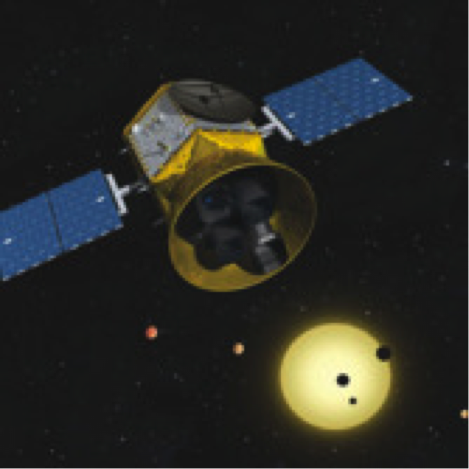
The JWST in an infrared telescope that will orbit the Sun 1 million miles from earth. Using its infrared technology, scientists hope to:
- Discover the first galaxies formed after the Big Bang
- Understand how galaxies form and how they got to where they are now in terms of size and composition
- See stars as they’re born
- Further investigate the compositions of exoplanets

The above picture is the telescope picture with the team who helped create it. The hexagonal primary mirrors span a diameter of 6.5 m and are made of beryllium and coated with gold, which absorbs a great amount of infrared light. The mirrors have a collecting area of 25 m² – the current Hubble telescope has a collecting area of about 4.5 m².
The JWST is set to launch in 2018 and you can learn more about it here!