love is in the spacetime

gravity has found itself grounded in a great deal of pop culture recently. from depictions in cinematic blockbusters to the recent historic breakthrough at LIGO, gravity has become somewhat of a household/cocktail party topic of conversation.

being a physics major, over the years i’ve come to think of cosmological things in visuals, or colors, or little mind models i have for myself. quantum mechanics is grey, and there is always a potential well in the image i conjure up. classical mechanics is a pulley, and it’s green. not the pulley, just the thought. e&m i don’t think of very often because i hate it, but when i do i imagine a gaussian cylinder. it’s always the same one.

so what are we thinking of when we think of gravity?

is it fun bouncy times with color like in the new ok go video?

is it a destructive thing of despair like in the clooney/bullock blockbuster?

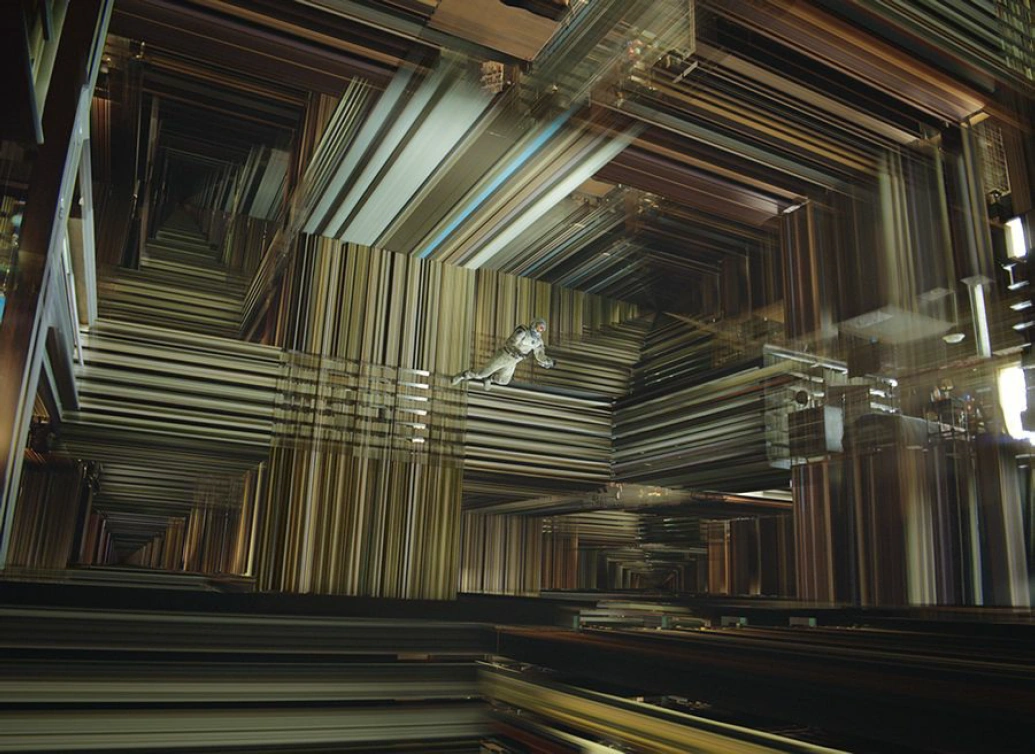
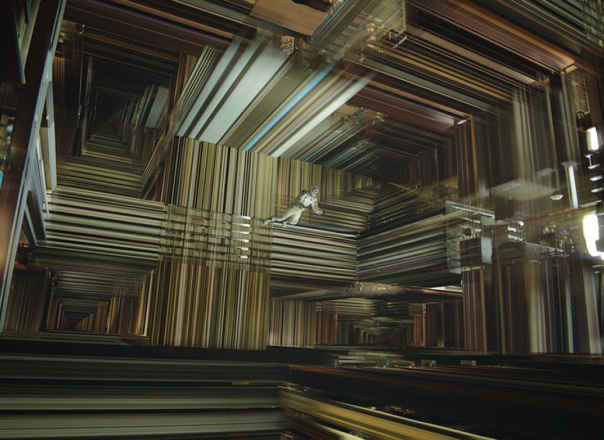
is it a higher dimension hitherto inaccessible to us humans in our current plane of existence but manifests as the power of love in a tesseract?
Nl8KjBO_-_Imgur
our intrepid hero unlocks the secret of love and gravity in the tesseract (interstellar)

is it a product of the curvature of space? if i stand still i am moving in one direction (forward in time !!) – similarly if i am right above earth i am moving downward – falling. time and space are part of the same fabric.

is it the love force of sara bareilles and john mayer? why do we romanticize it this way? why does it make us feel this way?

is it a force mediated by the imaginary graviton? if we find it will it help us unite quantum mechanics with general relativity?

so many questions, so much time and space. as one professor puts it, this is a matter of serious gravity.


Posted in Class | Tagged , , , | Comments Off on love is in the spacetime

Lunar and Solar Tides

Tides are a fascinating effect of the Moon and Sun’s gravitational forces acting on the Earth. They are a visible sign of how distance effects the strength of a gravitational force. Because the Sun is so large, it has the greatest gravitational force acting on the Earth. However, because it is so far away, the difference in gravitational force on each side of the Earth is not very different, as it is only a tiny fraction of the total distance between the core of the Earth and the core of the Sun. On the other hand, the Moon is much closer, but much smaller. Its smaller size means it has a smaller overall gravitational force acting on the Earth, but because it is closer, the difference in gravitational force on each side of the Earth is a greater fraction of the distance between the core of the Earth and the core of the Moon. As the Moon orbits the Earth, the surface of the Earth farthest from the Moon has less gravitational force acting upon it, and the centrifugal forces of the spinning Earth/Moon system overcome the gravitational force, causing the water to bulge away from the Earth. The same occurs in relation to the Sun.

spring-vs-neap-tide-large1
Bay of Fundy Tide Page

As you can see, depending on the location of the Moon compared to the location of the Sun and the Earth, high tide and low tide have a varying difference between them. During spring tide, the two gravitational forces align, making high tide VERY high and low tide VERY low. During neap tide, the two gravitational forces are perpendicular to each other, meaning high tide and low tide have a much smaller difference between them.

These pictures are not to scale, considering the size of each object and their distance from each other. Additionally, the tides are not to scale– high tide rises the oceans only about two meters, plus it also effects the land, raising it about a centimeter.


Posted in Class, Sun | Tagged , , , , | Comments Off on Lunar and Solar Tides

The Solar System’s Symphony

Its common knowledge that space is a vacuum, and that sound can not be heard inside of a vacuum. However, this is not technically true.  The solar system is constantly pulsating and producing electromagnetic waves. While these electromagnetic waves go undetected by human ears, our friends at NASA have created a special tool that uses a plasma wave antenna  to record vibrations within the  range of 20-20,000hz (range of human hearing). According to the video put out by NASA these recorded sounds are the “complex interactions of charged electromagnetic particles from solar winds, ionosphere, and planetary magnetosphere.”  Some of these recordings are quite ominous, yet still amazingly beautiful. I highly recommend you watch the video below. Which planet’s music did you find most intriguing. Personal I like the sounds that the Rings of Uranus are producing.

 NASA Space Recordings (Youtube)


Posted in Class | Tagged , | Comments Off on The Solar System’s Symphony

One Shift, Two Shift, Redshift, Blueshift

redshift97249-004-7f61b2af

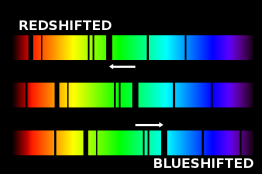
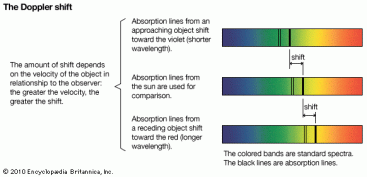
Images: Redshifted, blueshifted spectra,   The Doppler shift

You’re probably already familiar with the doppler effect of sound. Every time you hear a car zoom past, it pitch changes from higher as it approaches to lower as it leaves. This is because sound is dependent on the relative position of the observer, and if the sound source is speeding towards the observer, the sound wave’s frequency will be apparently higher.

The same phenomenon occurs with light, though we aren’t able to observe this during our day-to-day lives. When the observer is moving at a fraction of light speed in relation to the light source, the light can appear slightly blueshifted or redshifted. This is caused by the same principle as the sound doppler effect. The higher the light frequency, the more violet (or blue) it is on the light spectrum. Thus, when the observer and light source are traveling towards each other at sub-light speed, the spectrum observed shifts towards slightly higher frequencies, a phenomenon known as blueshift. The opposite occurs for redshift when the observer is traveling away from the light source.

The doppler effect of light has some interesting applications in astronomy. Using the static emission spectrum of hydrogen as a reference point, hydrogen’s emission spectrum as observed from faraway stars can be measured as redshifted or blueshifted. Amazingly, we can calculate with high accuracy the speeds of these stars relative to Earth by examining how redshifted or blueshifted their emission spectra are. In line with the expanding universe hypothesis, most stars appear to be redshifted.

The concept that an object’s relative speed can be ascertained from its emitted light is astounding. With precise measurements, the speed of an orb of light many light years away can be determined. Indeed, just like you can hear cars zooming towards you and away, every star can be “seen” zooming away or towards you (with the proper instruments, of course).


Posted in Light, Physics, Stars | Tagged , | Comments Off on One Shift, Two Shift, Redshift, Blueshift

One Shift, Two Shift, Redshift, Blueshift

redshift97249-004-7f61b2af

Images: Redshifted, blueshifted spectra,   The Doppler shift

You’re probably already familiar with the doppler effect of sound. Every time you hear a car zoom past, it pitch changes from higher as it approaches to lower as it leaves. This is because sound is dependent on the relative position of the observer, and if the sound source is speeding towards the observer, the sound wave’s frequency will be apparently higher.

The same phenomenon occurs with light, though we aren’t able to observe this during our day-to-day lives. When the observer is moving at a fraction of light speed in relation to the light source, the light can appear slightly blueshifted or redshifted. This is caused by the same principle as the sound doppler effect. The higher the light frequency, the more violet (or blue) it is on the light spectrum. Thus, when the observer and light source are traveling towards each other at sub-light speed, the spectrum observed shifts towards slightly higher frequencies, a phenomenon known as blueshift. The opposite occurs for redshift when the observer is traveling away from the light source.

The doppler effect of light has some interesting applications in astronomy. Using the static emission spectrum of hydrogen as a reference point, hydrogen’s emission spectrum as observed from faraway stars can be measured as redshifted or blueshifted. Amazingly, we can calculate with high accuracy the speeds of these stars relative to Earth by examining how redshifted or blueshifted their emission spectra are. In line with the expanding universe hypothesis, most stars appear to be redshifted.

The concept that an object’s relative speed can be ascertained from its emitted light is astounding. With precise measurements, the speed of an orb of light many light years away can be determined. Indeed, just like you can hear cars zooming towards you and away, every star can be “seen” zooming away or towards you (with the proper instruments, of course).


Posted in Light, Physics, Stars | Tagged , | Comments Off on One Shift, Two Shift, Redshift, Blueshift

I’m not an astrophysicist, but this is still exciting

captain’s blog, Stardate 69592.2

This blog post is the first without restrictions. and you know what that means.18af3cfa5bc7d5d1690dac1d0ef8dc3e

And because there are no rules, we’re gonna get crazy. This blog post is allowed to be about anything related to astronomy, so I figure why not blog about THE BIGGEST SCIENTIFIC FINDING OF THE YEAR.

Yeah. I don’t know if you heard, but we found gravity. Like, it happened, and we recorded it. In fact, we didn’t just record it, we heard it. Gravity spoke and we listened. We basically had a chit chat with the Universe.

Word on the block is this is a Nobel Prize winning-level discovery. This makes me feel cool and intellectual because it’s the first time I’ve heard about Nobel Prize research before it was given the award. But also it’s fascinating thinking about what doors this finding opens. According to the article in the New York Times, this lab is being transformed into a proper observatory, where they’ll be training their space ears on other similar events, hoping to hear the voice of space.

Particularly learning today in class about how much we can learn about objects based on their light, I have no idea what we can learn from the sound of objects, should this field be more completely investigated. Like really, I entirely don’t know – I’m not an astrophysicist, but this is still exciting.


Posted in Class | Tagged , | Comments Off on I’m not an astrophysicist, but this is still exciting

HW #B4 – To Blink Or Not To Blink

On a warm night this summer on Edisto Island, SC, my friends and I took to the beach to go shrimping. The after-dark escapade turned into a feeding frenzy, reaping monstrous crustaceans with beady, red eyes. The younger kids eventually took turns in the water, and I sat on a sand dune and looked up at the clear sky. I could make out the outline of our galaxy, thousands of stars, and what I thought might be planets.

Planets don’t twinkle, right? Stars do. But satellites definitely blink. Wait, what’s the difference between twinkling and blinking? Maybe if I stop blinking my eyelids I’ll be able to tell.

I sat on that dune for two hours trying to figure out which white dots in the sky were stars or planets, based on whether they scintillated or not.

Illustration by AstroBob, via The Random Science blog..
Effects of Turbulence Visual

What I didn’t understand is that, in reality, stars don’t twinkle at all.

Light penetrates Earth’s atmosphere and makes its way toward us. Yet, the way down is a pretty bumpy ride, all because our atmosphere is so alive. “Turbulence” occurs when the air above us is constantly moving and mixing in different ways. The light we see from stars and planets gets twisted in that turbulence, hence our “twinkling” or shaking image of stars. The longer the light has to travel through Earth’s atmosphere to get to you, the more chance the light has to experience turbulence, and the more twinkly it might be. Then why doesn’t everything we see twinkle? Our Sun doesn’t blink or vibrate in the sky, and that’s because its angular size is very big compared to that of stars far away from Earth. Similar reasoning explains why planets, to the naked eye, don’t seem to twinkle (or experience scintillation) as much as stars. Planets also have a significant angular size from our point of view, so they stay pretty still. Though it’s less poetic to say, stars don’t twinkle – our atmosphere just jiggles.


Posted in Class, Observables, Stars | Tagged , , , , | Comments Off on HW #B4 – To Blink Or Not To Blink

“ask me”

Property release: 2 Model release: A, B, C, H, I,

my little brother wants to be an astronaut and swim in the shadows of titan and calypso in the silk sheen shadow of saturn but sometimes we face-off across the little coffee table with the etch marks i made when i was ten and the ones he made when he was ten.

“i have so many questions,” he says.

“i know. i want to talk to you about gravity waves. but you have to learn about the nitrogen cycle now.”

his science book is splayed open hopelessly on the table between us. plants and animals need nitrogen to live. it helps plants make chlorophyll, which lets them make food and energy.

“read that again,” i urge.

“i don’t get it…” he’s eleven.

“do they just want you to memorize it?”

“i think so… it’s so hard.”

he huffs, crossing his arms. i decide to try something different.

“ok…” i venture. “what do you wanna learn about?”

instantly his eyes alight. “black holes… and dark matter… and why haven’t we found aliens yet?”

“whoa there buddy… one at a time. let’s see… let’s start with something simple. do you know how the seasons work?”

“yeah! i read about it in encyclopedia brittanica. it’s because earth is kinda tilty so one side is closer to the sun in the summer and the other side is far away from the sun in the winter.”

i chuckle. “you know, it isn’t really about how close it is. it’s all about how much direct sunlight it’s getting.”

“ahhh….” he leans back heavy in his chair, he is chubby. “that makes sense ok. now gravity waves i saw it on your facebook.”

i spend the night telling him all i know about “gravity waves”. how they were theorized by einstein 100 years ago and how we can finally hear them. how two black holes got married more than 1 billion years ago and this is the whispering of their love. i tell him he should read more brittanica. i am frustrated. why isn’t he allowed to talk about how cool science is at school? instead of memorizing the nitrogen cycle without understanding the science behind it, why don’t they invest in the inherent human curiosity that these kids clearly have? instead of squashing it out like an ant or a cockroach? here in my hometown of beirut, there is a painfully apparent lag in scientific literacy among all age groups. people don’t understand global warming. they don’t think evolution is “real” to “provable”. they don’t understand the scientific method. they want to stay in their bubble and ingest blindly the politics of their religious leaders. they don’t want to look up at the sky and wonder. in the pedagogy seminar we talk a lot about the importance of instilling a love for scientific curiosity and inquisitiveness at a very young age. if we can’t satiate kids’ curiosities, at the very least we ought not to siphon them dry by wrongful and misguided attempts at teaching science.


Posted in Class | Tagged , , | Comments Off on “ask me”

“ask me”

Property release: 2
Model release: A, B, C, H, I,

my little brother wants to be an astronaut and swim in the shadows of titan and calypso in the silk sheen shadow of saturn but sometimes we face-off across the little coffee table with the etch marks i made when i was ten and the ones he made when he was ten.

“i have so many questions,” he says.

“i know. i want to talk to you about gravity waves. but you have to learn about the nitrogen cycle now.”

his science book is splayed open hopelessly on the table between us. plants and animals need nitrogen to live. it helps plants make chlorophyll, which lets them make food and energy.

“read that again,” i urge.

“i don’t get it…” he’s eleven.

“do they just want you to memorize it?”

“i think so… it’s so hard.”

he huffs, crossing his arms. i decide to try something different.

“ok…” i venture. “what do you wanna learn about?”

instantly his eyes alight. “black holes… and dark matter… and why haven’t we found aliens yet?”

“whoa there buddy… one at a time. let’s see… let’s start with something simple. do you know how the seasons work?”

“yeah! i read about it in encyclopedia brittanica. it’s because earth is kinda tilty so one side is closer to the sun in the summer and the other side is far away from the sun in the winter.”

i chuckle. “you know, it isn’t really about how close it is. it’s all about how much direct sunlight it’s getting.”

“ahhh….” he leans back heavy in his chair, he is chubby. “that makes sense ok. now gravity waves i saw it on your facebook.”

i spend the night telling him all i know about “gravity waves”. how they were theorized by einstein 100 years ago and how we can finally hear them. how two black holes got married more than 1 billion years ago and this is the whispering of their love. i tell him he should read more brittanica. i am frustrated. why isn’t he allowed to talk about how cool science is at school? instead of memorizing the nitrogen cycle without understanding the science behind it, why don’t they invest in the inherent human curiosity that these kids clearly have? instead of squashing it out like an ant or a cockroach? here in my hometown of beirut, there is a painfully apparent lag in scientific literacy among all age groups. people don’t understand global warming. they don’t think evolution is “real” to “provable”. they don’t understand the scientific method. they want to stay in their bubble and ingest blindly the politics of their religious leaders. they don’t want to look up at the sky and wonder. in the pedagogy seminar we talk a lot about the importance of instilling a love for scientific curiosity and inquisitiveness at a very young age. if we can’t satiate kids’ curiosities, at the very least we ought not to siphon them dry by wrongful and misguides attempts at teaching science.


Posted in Class | Tagged , , | Comments Off on “ask me”

Gravitational Waves

One hundred years ago, Albert Einstein published his general theory of relativity. This theory predicted that the acceleration of extremely massive objects would create ripples in the fabric of space-time, called gravitational waves. Just last week, a team of scientists at the Laser Interferometer Gravitational-Wave Observatory (LIGO) announced that they had recorded a gravitational wave for the first time in human history.

Until now, humans had only been able to observe the universe via electromagnetic waves like microwaves, x-rays, ultraviolet, infrared, and visible light. This discovery opens up a new frontier of observational capabilities, and confirms the last prediction of Einstein’s theory showing that time and space in our universe is dynamic.

From the shape and amplitude of the waveform, the LIGO group can determine that this wave came from the collision of two black holes one billion light years away. This waves created by the cosmic cataclysm have faded over their billion years of travel, so much that the disturbance which was recorded was only a fraction of a proton wide. Still, the waveform was able to be recorded by LIGO’s L-shaped lasers, where the slightest space-time disturbance will cause a laser to fall our of phase with itself. The waveform can be seen in the picture above, and the converted sound of the wave can be heard here.

You just listened to two black holes colliding, so cool!

Source: NY Times


Posted in Stars | Tagged , , , | Comments Off on Gravitational Waves