Gravitational Waves Confirmed

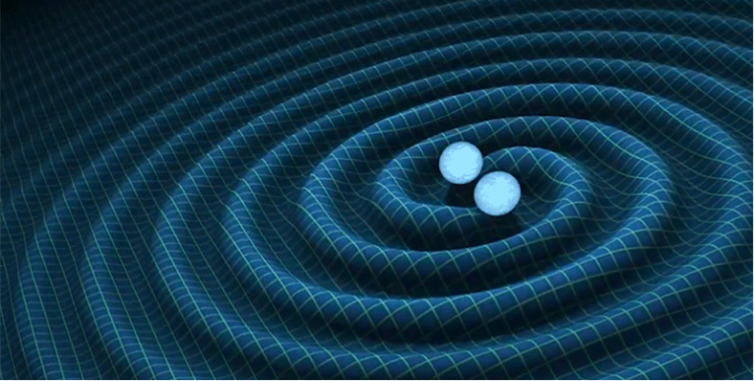
G waves pic.png

Picture and Video Explaining Gravitational Waves

Thursday February 11th 2016 was a monumental day for physics. Albert Einstein first theorized gravitational waves in 1916 as part of his theory of general relativity. Gravitational waves are ripples in the fabric of the universe caused by massive cosmic events, such as the collision of black holes. These ripples propagate unaffected by matter throughout space-time. Using the trampoline analogy to understand gravity and its interaction with matter, these gravitational waves are analogous to the waves in the fabric of the trampoline caused by when a ball is dropped on the fabric. The first confirmed recorded event on September 14th 2015 was determined to be the collision of two super massive black holes, 29 and 36 times as massive as our sun. This collision took place over 1.3 billion years ago (indicating 1.3 billion light-years away). Scientists were able to determine exactly what occurred because these waves are like fingerprints, totally unique.

Comment

Categories: Physics, Class

Tags: Astro2110, Blog3, Gravitational waves, Einstein.


Posted in Class | Tagged , , , , | Comments Off on Gravitational Waves Confirmed

The Center of the Universe

Heliocentric
source: wikimedia

While reading the textbook, I found it very disappointing just how close the Greeks were to figuring out that Earth was not the center of the universe. Had they not been fooled by looking for parallax, they would have been led to the right conclusion that the Earth orbits the sun, rather than that everything orbits the Earth. I then set out to look into the history of the heliocentric model a bit more, hoping to find some kind of ancient civilization which successfully concluded that the Earth revolved around the sun before Copernicus.

Although I was unable to find one, I found that the first notion of a heliocentric model of the solar system dated back to 9th Century BCE, credited to an Indian philosopher by the name of Yajnavalkya. Unfortunately, just as was the case with the Greeks, supporters of this model were in the minority and the model was not widely accepted until much later.

Credit for the first heliocentric models successful at predicting the positions of celestial bodies goes to the Indians as well. In his magnum opus Aryabhatiya, Aryabhata (476-550) created a planetary model in which Earth was taken to be spinning on its axis and the planets revolved around the sun. Later, Nilakantha Somayaji (1444 – 1544) proposed a heliocentric model that was even more accurate at predicting the orbits of the planets than was both the Tychonic and Copernican models. It fell short of predicting the movement of the rest of the universe, but many of the astronomers in India seemed to have accepted his planetary model. Despite this, like many things in astronomy, the European model later took over instead.


Posted in Historical | Tagged , , , | Comments Off on The Center of the Universe

Growing up on the Moon

We talked a bit in class on Tuesday about what would happen to someone’s body if he were to spend too long in space. His bones would start deteriorating, his muscles would get weaker, and his body would produce less blood as he adjusts to zero G. I was reminded while we were talking about this in class of a book I read by Isaac Asimov, The Gods Themselves. The book took place at a time when mankind had already colonized the moon. However, although people born on Earth could easily travel to the moon and back, people who were born on the moon could not. They would just crumple up and die, their bodies too unaccustomed to the Earth’s gravity. I thought it would be interesting to do some research on the topic and what I found was that no one really knows what would happen.

skel_deter.PNG
source: quora

However, I did find a diagram which showed the rate of bone loss per part of body for every month that someone spends in zero G gravity. Assuming that a baby born on the moon would not just immediately perish, it seems as if the baby would be born with an immensely low bone density compared to a human on Earth, just because it wouldn’t need as much to support its own body. If the human were one day introduced to Earth gravity all of a sudden, it is easy to see that the shock of experiencing a constant gravity of 6x greater than normal would cause it to shut down, especially considering that the heart would probably not be strong enough to pump blood up to the brain any more.


Posted in Moons | Tagged , , , | Comments Off on Growing up on the Moon

The Archeoastronomy of Teotihuacán

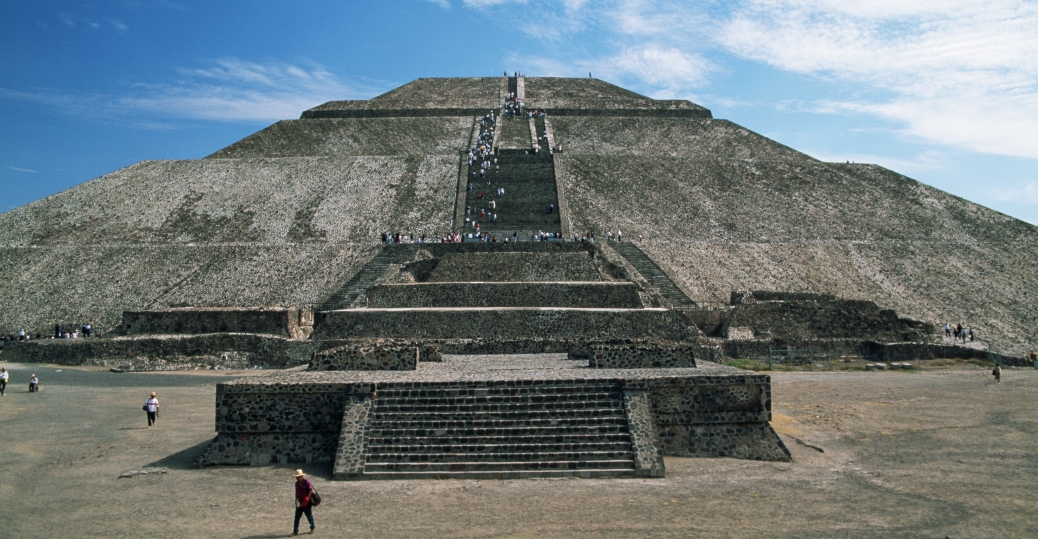
View of Pyramid of the Sun at Teotihuacan
The Pyramid of the Sun

Teotihuacán was a prominent ancient Mesoamerican city located in the Mexican highlands. Its legacy inspires civilians and scholars alike. Its stunning architecture, well-preserved art, and obvious influence over a greater area have made it one of the most studied archeological sites in Mexico.

Another thing that interests many about Teotihuacán is the layout and construction of the city in reference to celestial and sky objects.  One of the most studied sites in Teotihuacán is the Pyramid of the Sun, the construction of which took place from around 1 AD to 150 AD. The Pyramid of the Sun exhibits a 15°25’ east of true north orientation. The orientation causes the sun to set directly over a prominent mountain on August 13 on the eastern horizon and its light would directly enter a cave under the pyramid, which held relevance as the entrance to the underworld . August 13 transcends all the other dates at the most important – this is the day on the Maya long count calendar when time began: August 13, 3114 BC.

A large porch-like structure called Plataforma Adosada is attached to Pyramid of the Sun and was built sometime after the pyramid was finished. The location of the Plataforma Adosada relates to the setting position of the sun on the day that it reaches the zenith – when the sun passes directly overhead at noon. The sun passes directly overhead on May 18 and July 24, the dates associated with equinoxes in the time of Teotihuacán, and, therefore, signaled the changing of seasons. The zenith could also have been associated with worship and religious rituals.

Overall, the city of Teotihuacán represents an interesting case of archeoastronomy.


Sources:

Dow, James W. 1967 “Astronomical Orientations at Teotihuacán, A Case Study in Astro-Archaeology.” American Antiquity 32.3: 326-34. JSTOR. Web. 2 Nov. 2014.

Sprajc, Ivan. 2000 “Astronomical Alignments at Teotihuácan.” Latin American Antiquity 11.4: 403-15. JSTOR. Web. 2 Nov. 2014.


Posted in Class, Historical | Tagged , , | Comments Off on The Archeoastronomy of Teotihuacán

More than just a Queen lyric: Galileo and his part in 17th century Europe

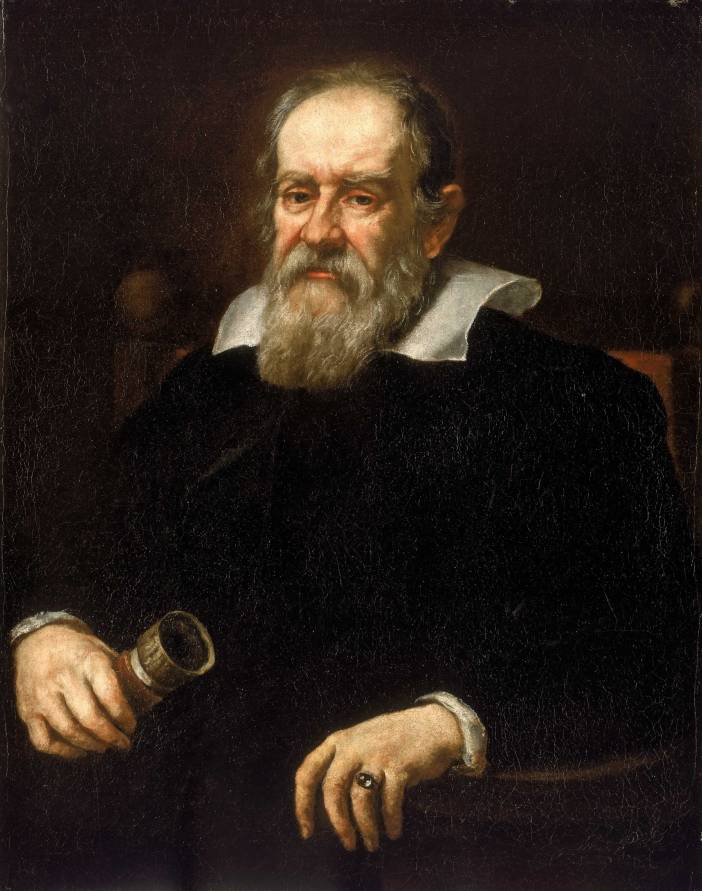
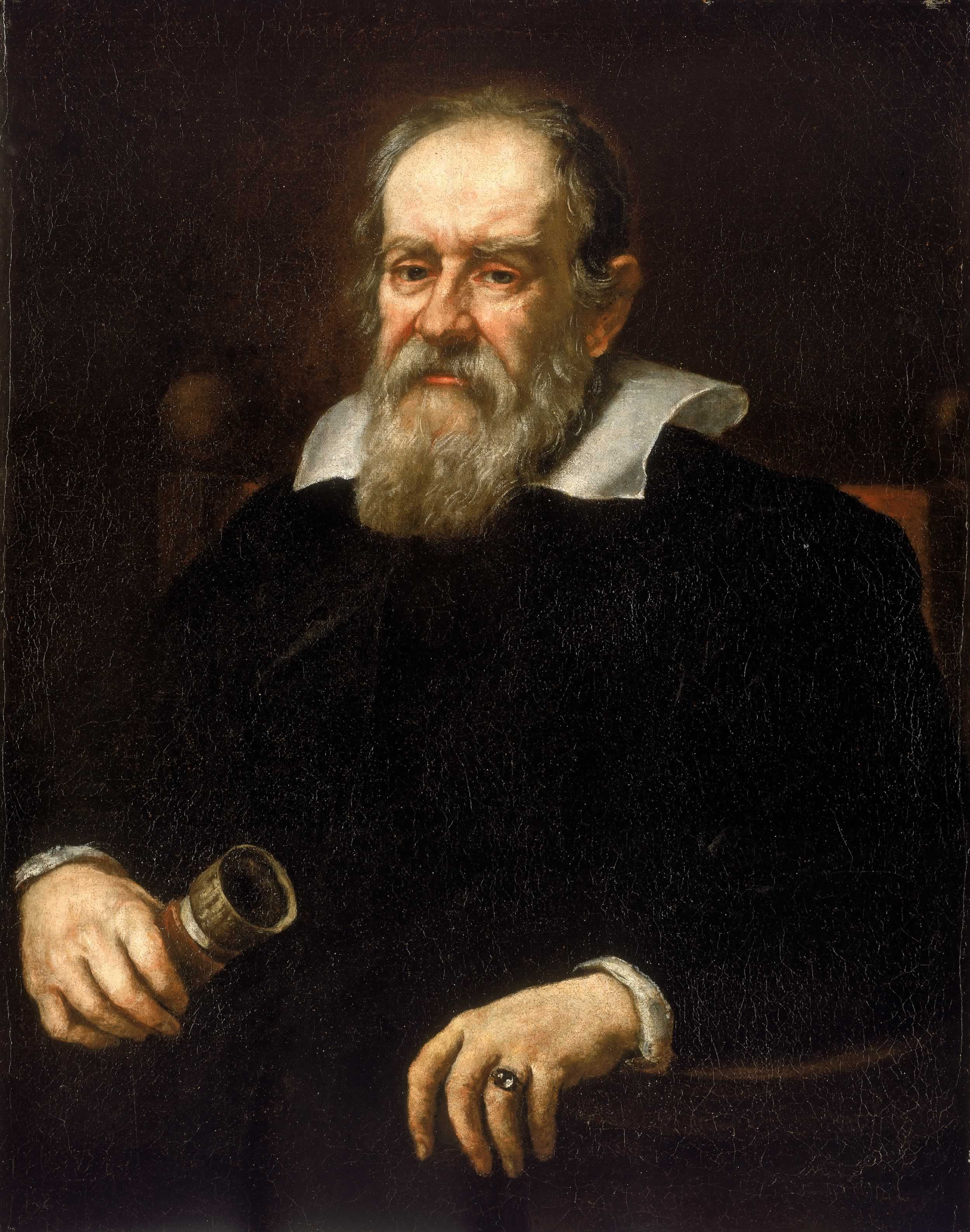
galileoPortrait of Galileo Galilei by Justus Sustermans – Source

Galileo Galilei (15 Feb 1564 – 8 Jan 1642) played an integral role in the astronomical community’s transition from the Aristotelian geocentric model of the universe to the heliocentric model of the universe, which, although still incorrect, was a more accurate representation of the heavens. While he did not invent the telescope, Galileo refined the instrument, allowing him to make several astronomical discoveries, including the phases of Venus, the Moon’s imperfect edges, sunspots, and four of Jupiter’s moons. Such discoveries shattered the Aristotelian worldview which was officially sponsored by the Catholic Church, thus marking the beginning of the split between the Church and the sciences – Galileo would be sentenced to house arrest because of his continued public support of the heliocentric worldview following a previous (ambiguous) warning not to do so. (Read more!)

While Galileo was gazing at the heavens, the majority of Continental Europe was embroiled in the Thirty Years’ War (1618-1648), a war which escalated from a religious conflict within the Holy Roman Empire and eventually saw a decline in Hapsburg supremacy and the rise of Bourbon France at the cost of nearly 8,000,000 killed. (Read more!)

Meanwhile in the Western Hemisphere, in 1620, the Puritan Pilgrims landed at Plymouth Rock in present day Massachusetts; they wished to escape Europe’s climate of religious tension and conflict. (Read more!)

In the twilight of Galileo’s life, philosopher John Locke (1632-1704) was in his childhood. Locke would go on to define the philosophical concept of self and his political philosophy was very influential on democratic movements (such as the American Revolution) in the 18th century and beyond. (Read more!)

Understanding the context of Galileo’s world allows us to view his scientific contributions as a piece of what was a tumultuous period of much upheaval in European history – the world of astronomy was a just one part of the maelstrom which was 17th century Europe.


Posted in Historical | Tagged , , , , , | Comments Off on More than just a Queen lyric: Galileo and his part in 17th century Europe

Historical Astronomers in Context

Nicolaus Copernicus formed the heliocentric model of the universe, which clashed with Aristotle’s model of celestial objects orbiting Earth in a circular path. Copernicus also hypothesized that that planetary orbit depended on distance from the sun. With this model, Copernicus was able to more accurately calculate the planets’ positions throughout the year. (Source)

Events during Copernicus’ life:

In 1498, Vasco da Gama traveled to India. In 1536, Paracelsus’ The Great Surgery Book was published. (Source)

Vasco Nunez de Balboa lived from 1475-1519. He was a Spanish conquistador and explorer who reached the Pacific Ocean and colonized Panama. (Source)

Reflection:

I found it interesting that, at the same time that Copernicus was examining and hypothesizing about the universe, others were still exploring and colonizing the world. The close proximity of each of the above astronomers’ lifetimes also surprised me. Not too long after the heliocentric model of the universe became widely accepted, Newton theorized laws of physics and the universe to mathematically describe celestial objects. It’s also worth noting that for such a large span of history, the earth-centric model was the norm, and only in the 16th century was this seriously brought into question, which spurred other astronomical discoveries.


Posted in Historical | Tagged , , | Comments Off on Historical Astronomers in Context

Historical Astronomers in Context

GALILEO
Justus_Sustermans_-_Portrait_of_Galileo_Galilei,_1636
1564-1642

Galileo was extremely crucial to astronomy for many reasons. First of all, he was one of the first astronomers to fully utilize telescopes to observe the sky. As a result, his findings were based completely on his nightly observations – in a time where accepted published works were based largely on conjecture.

Important historical events during Galileo’s life:

  • 1596 – Tycho Brahe begins working for the emperor of Prague and enlists Kepler to help him.
  • 1599 – the Globe theater is built in London; this was the venue in which most of Shakespeare’s plays were first performed.

Notable people alive during Galileo’s life:

William Shakespeare (1564-1616)
Shakespeare’s works revolutionized the world of expressive art and was a major part of the Renaissance movement. His contributions to art and culture allowed for the increased sharing of ideas amongst people at the time.

I think it’s interesting to compare the lifetimes of these astronomers and to see how different their worlds were, and even how they could have influenced one another. Especially at a time where art, science, and culture were advancing at such a high rate, looking at this history can show just how much they could have affected one another. Even more impressive to me, it shows how much these astronomers were able to discover in such a short amount of time with such limited resources compared to today’s technology.

references:
photo
Galileo’s life
historical events


Posted in Historical | Tagged , , | Comments Off on Historical Astronomers in Context

Historical Astronomers in Context

GALILEO
Justus_Sustermans_-_Portrait_of_Galileo_Galilei,_1636
1564-1642

Galileo was extremely crucial to astronomy for many reasons. First of all, he was one of the first astronomers to fully utilize telescopes to observe the sky. As a result, his findings were based completely on his nightly observations – in a time where accepted published works were based largely on conjecture.

Important historical events during Galileo’s life:

  • 1596 – Tycho Brahe begins working for the emperor of Prague and enlists Kepler to help him.
  • 1599 – the Globe theater is built in London; this was the venue in which most of Shakespeare’s plays were first performed.

Notable people alive during Galileo’s life:

William Shakespeare (1564-1616)
Shakespeare’s works revolutionized the world of expressive art and was a major part of the Renaissance movement. His contributions to art and culture allowed for the increased sharing of ideas amongst people at the time.

I think it’s interesting to compare the lifetimes of these astronomers and to see how different their worlds were, and even how they could have influenced one another. Especially at a time where art, science, and culture were advancing at such a high rate, looking at this history can show just how much they could have affected one another. Even more impressive to me, it shows how much these astronomers were able to discover in such a short amount of time with such limited resources compared to today’s technology.

references:
photo
Galileo’s life
historical events


Posted in Historical | Tagged , , | Comments Off on Historical Astronomers in Context

Observing Invisible Light

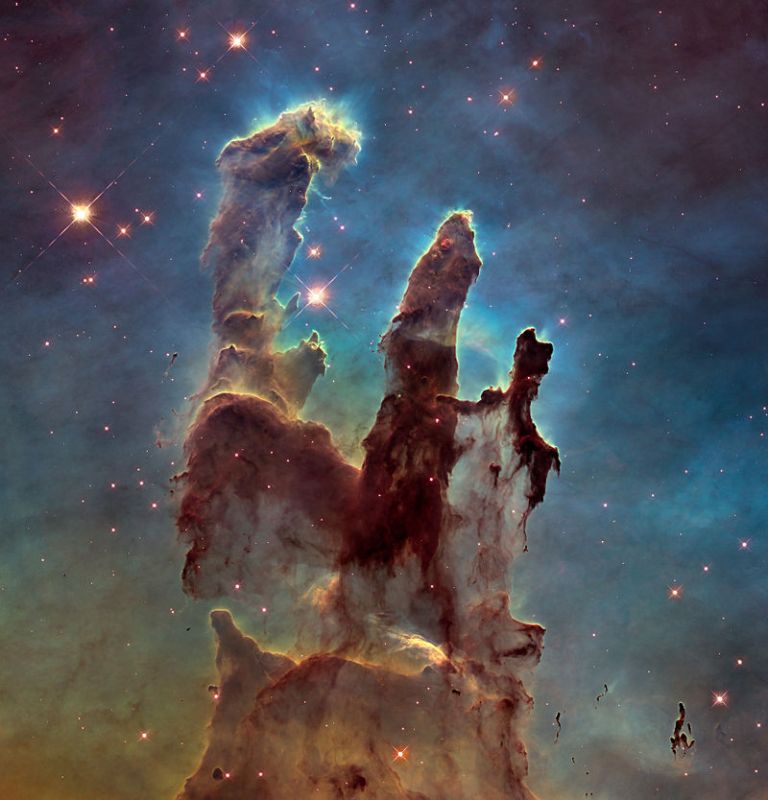
Pillars_of_creation_2014_HST_WFC3-UVIS_full-res_denoised

The invention of the telescope revolutionized the way astronomers observe the universe. They’ve enabled us to view light from around the galaxies that is not visible to the naked eye. These other forms of light can teach us things that visible light cannot – if we can find a way to visualize them. Astronomers today use smart telescopes (like the famous Hubble Space Telescope) to view radio waves, infrared light, ultraviolet light, x-rays, and gamma rays. Using a combination of photographs taken with different telescopes capturing a variety of visible and non-visible light, we can create photographs like the one you see above. The “Pillars of Creation” is one of the most famous Hubble telescope photographs and was created using data from infrared and ultraviolet light telescopes. While also providing us with beautiful pictures, detection of these rays can give us some crucial information about the composition of the gas cloud, the size, and much more. Wouldn’t it be exciting if scientists discovered a new form of detectable light that we have never been able to see before?

image source


Posted in Class, Light, Universe | Tagged , , , , | Comments Off on Observing Invisible Light

Historical Astronomers in Context

Nicholas Copernicus (February 19, 1473-May 24, 1543).

Copernicus was important to astronomy because his work lead to the geocentric theory being replaced with the heliocentric theory. Up until Copernicus, Ptolemy’s theory that the earth is the center of the universe was the most accepted, but Copernicus updated Aristarchus’s heliocentric model. Copernicus also identified that the moon orbits the earth and that the stars do not move throughout the sky. His theories were not accepted by society or the Catholic Church until long after he died. Link: Nicholas Copernicus Information

One of the major events that happened during Copernicus’s lifetime was the Protestant Reformation. The Protestant Reformation began in 1517 when Martin Luther put his 95 these on the Wittenberg church door. Luther was protesting theological tenets of the Catholic Church as well as its sale of indulgences and general corruption. This led to the split of the Protestant churches from the Catholics and a variety of political and geographic conflicts over religion in the coming centuries. Link: Protestant Reformation Info

Another historical event that happened during Copernicus’s lifetime was the Renaissance, which started in Italy and led to a revival of Greco-Roman ideals in art and scholarship. Works of art such as Pieta, David, The Last Supper, the Sistine Chapel ceiling, and others were created during his lifetime. The Renaissance also led to the development of such philosophical ideas as humanism, which was tied with the increased scholarship of this time period. Link: Renaissance Info

A figure who was alive during Copernicus’s lifetime was Leonardo Da Vinci (1452-1519). Da Vinci was an inventor, scientist, and artist. He invented the helicopter and bicycle, painted the Mona Lisa and The Last Supper, and studied human anatomy in great detail. Link: Leonardo Da Vinci Info

This historical context was interesting to look at because it places Copernicus’s insights about astronomy into a broader world of invention, renewal, and change in Europe. Copernicus was alive during the peak of the Renaissance, which was essentially the beginning of modern Western history. The humanistic and Greco-Roman ideals of the Renaissance would eventually lead to the Scientific Revolution. The Reformation is another example of this great change occurring in Europe against the forces of society that sought to keep things the same. Had Copernicus not been born in an era of such creativity and new thought, it is unlikely that he would have been able to pursue his ideas or publish them at all.


Posted in Historical | Tagged , , | Comments Off on Historical Astronomers in Context