World Events During Kepler’s Lifetime

Johannes Kepler: December 27, 1571 – November 15, 1630

Historical Events

  • Europeans Discover Australia: In 1606 Captain Willem Janszoon and his crew became the first recorded Europeans to sight and make landfall on Australia. This was a significant discovery for European explorers considering Australia is its very own continent. However no colonies were established in Australia until 1787.
  • Japanese Invasion of Korea: From 1592-1598 the Japanese attempted to invade and annex Korea. Had Japan succeeded in this, they would likely not have become the isolationist nation famous during the era of European expansion. Perhaps a Japanese Empire would have been colonized by Europeans or gone to war with China. Regardless the loss by Japan was significant in leading to their isolationist foreign policy a few decades later.


Elizabeth I: Queen Elizabeth I of England lived from 1533 until her death in 1603. As the longest ruling monarch until Queen Victoria, she established England as one of the greatest powers in Europe. In 1588 England defeated the Spanish Armada, one of the greatest victories in English history and a powerful blow to the Spanish Empire. Elizabeth ruled during a golden age in England that included the likes of Shakespeare and Marlowe.


Reflection:  Although scientific achievements may have been limited in the late 16th and early 17th centuries that does not mean there were not other human achievements occurring. Kepler, who lived slightly before the “scientific revolution” (creation of the scientific method), lived during a time of competition amongst nations both in war and in exploration. I find it amazing that Australia, a continent with a population of nearly 24 million people was never even seen by Europeans until 1606. It really puts it into perspective just how much we have learned about the natural world in just the past few hundred years. For most of human history, science was not even a concept and yet technology advanced and humans adapted an incredible amount from Roman times by the year 1600.


Posted in Historical, Science | Tagged , , | Comments Off on World Events During Kepler’s Lifetime

World Events During Kepler’s Lifetime

Johannes Kepler: December 27, 1571 – November 15, 1630

Historical Events

  • Europeans Discover Australia: In 1606 Captain Willem Janszoon and his crew became the first recorded Europeans to sight and make landfall on Australia. This was a significant discovery for European explorers considering Australia is its very own continent. However no colonies were established in Australia until 1787.
  • Japanese Invasion of Korea: From 1592-1598 the Japanese attempted to invade and annex Korea. Had Japan succeeded in this, they would likely not have become the isolationist nation famous during the era of European expansion. Perhaps a Japanese Empire would have been colonized by Europeans or gone to war with China. Regardless the loss by Japan was significant in leading to their isolationist foreign policy a few decades later.


Elizabeth I: Queen Elizabeth I of England lived from 1533 until her death in 1603. As the longest ruling monarch until Queen Victoria, she established England as one of the greatest powers in Europe. In 1588 England defeated the Spanish Armada, one of the greatest victories in English history and a powerful blow to the Spanish Empire. Elizabeth ruled during a golden age in England that included the likes of Shakespeare and Marlowe.


Reflection:  Although scientific achievements may have been limited in the late 16th and early 17th centuries that does not mean there were not other human achievements occurring. Kepler, who lived slightly before the “scientific revolution” (creation of the scientific method), lived during a time of competition amongst nations both in war and in exploration. I find it amazing that Australia, a continent with a population of nearly 24 million people was never even seen by Europeans until 1606. It really puts it into perspective just how much we have learned about the natural world in just the past few hundred years. For most of human history, science was not even a concept and yet technology advanced and humans adapted an incredible amount from Roman times by the year 1600.

Posted in Historical, Science | Tagged , , | Comments Off on World Events During Kepler’s Lifetime

Tycho and His Universe

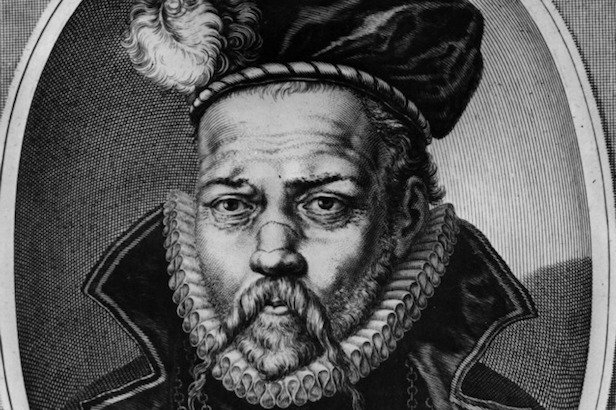
tycho-brahe-avvelenamento-638x425

Tycho Brahe (Source)

Tycho Brahe made many important contributions to astronomy in a variety of ways. He made regular observations of the heavens and tabulated that information so that other scientists (like Kepler) could use them. He engineered and calibrated his own instruments. Brahe also theorized–he made his own solar system model that incorporated both Copernicus’ and Ptolemy’s theories (Source)

By the time Brahe was at the height of his experimentation, Europe was already well on its way into the Renaissance Age (16th century):

-In 1582, the Gregorian calendar was implemented by the leadership of Pope Gregory XIII of the Roman Catholic Church.

-In 1585, the Colony of Roanoke was founded. It was the Britain’s first attempt to establish a colony across the Atlantic.

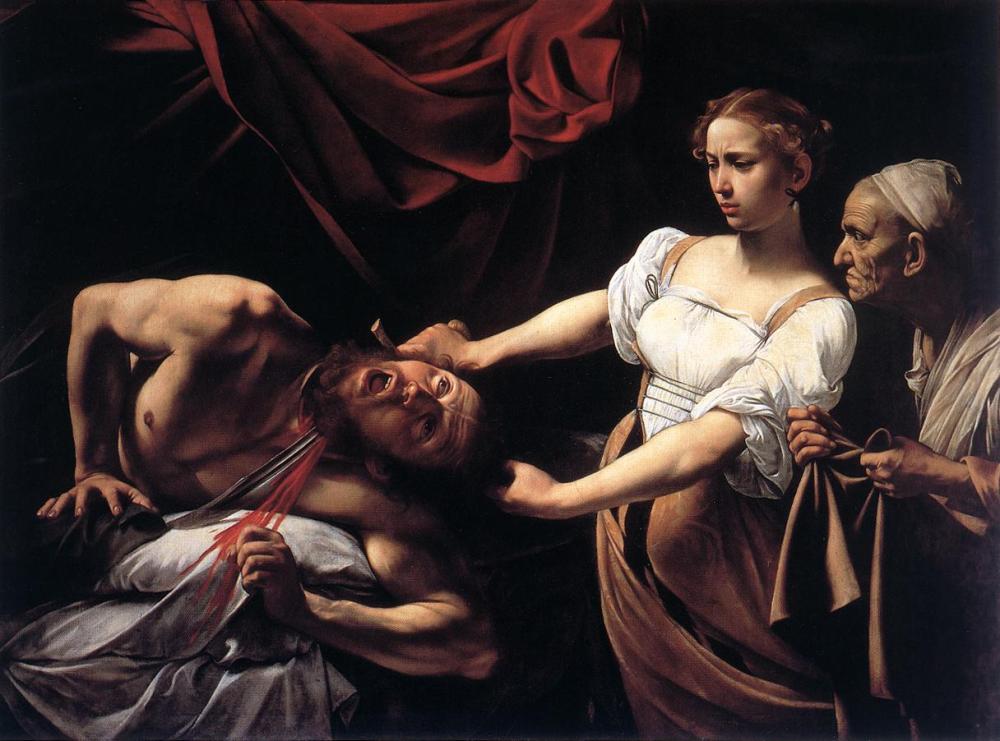
– Michelangelo Merisi da Caravaggio (1571-1610) was an Italian who was one of the initiators that started the Baroque art period, a time in art characterized by dramatic technique. Caravaggio painted from still life, to portraits of young men, to captivating scenes from biblical stories.

caravaggio_judith_beheading_holofernes

Judith Slaying Holofernes, Caravaggio (1598-99)

I can definitely see how the beginning of the 1500s was the start of the Renaissance in world history. Along with the many advances in astronomy during this period, other aspects of human culture and society started to progress further at a more rapid rate. I am glad that this exercise has reminded me the origins of the technology and culture today, and how it has evolved over time.


Posted in Class | Tagged , , , | Comments Off on Tycho and His Universe

Historical Astronomers in Context

1492 – Columbus sails the ocean blue and lands in the Americas, only to take over and wipe out almost the entire Native population. While it was an exciting “discovery” for Spain, it meant devastating consequences for others. 

1513 – Machiavelli writes The Prince, a book about political ideologies. The main idea surrounding his book is that the ends can justify the means if the ends are important and good enough. 

Martin Luther Born: 10 November 1483 Died: 18 February 1546

Luther wrote the 95 Theses, which many claim sparked a movement known as the Protestant Revolution. He most notably called out the system of indulgences, which the church sold to make money at that time.

In general, I’ve always been fascinated by this time in history. I think it was a time in which we began questioning the way we had always done things and looked beyond our comfortable, traditional way of functioning. I also like to think we are in a time like that right now. Just as Martin Luther protested the actions of the church because they seemed nonsensical, I think we today are protesting in similar ways about more modern issues, such as institutionalized racism, marriage equality, etc. Although our fights are not the same as discovering our place in the universe, they are still important and demonstrate that our goal to constantly improve our society is not a forgotten one.


Posted in Historical | Tagged , , | Comments Off on Historical Astronomers in Context

Copernicus and the Luthers

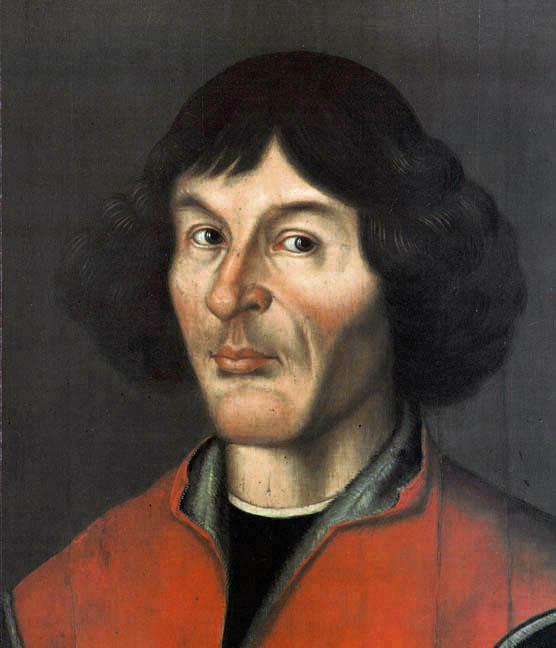
nikolaus_kopernikus
Nicolaus (NICOLAUS, NOT NICHOLAS) Copernicus

Nicolaus Copernicus had the fortune to be born on February 19, 1473 and the misfortune to die on May 24, 1543. This man laid the groundwork for future astronomers who actually did things that we study as more than just history. Before Copernicus, the geocentric model of the universe was the prevailing theory about the universe. After Copernicus, the geocentric model of the universe was still the prevailing theory about the universe, but now the heliocentric model was more reputable and known!

During Copernicus’s stay, Columbus discovered America and Martin Luther reportedly decided to nail his ninety-five theses on the door of the Schlosskirche.

in 1492, Columbus was sent to sail west to find India where the riches were and, instead, he accidentally found America.

Martin Luther was upset that an archbishop was promising people that if they gave the church money, then their sins would be repented. So in 1517 he reportedly decided to nail his ninety-five these to a door of a church. These theses stirred up more attention than Luther thought they would which caused him to formally prepare a manuscript explaining his theses which was published in 1518. These theses gave Luther a large following and marks the beginning of the Protestant Reformation.

Henry VII of England was alive at the same time as Copernicus. This guy was important because he finally brought political peace to England after ending the War of Roses – a sequence of civil wars in England. He also founded the Tudor dynasty.

My Reflection:

Historical context makes you realize how connected everything is, especially when you realize that Copernicus’s first publication (Narratio Prima) was published under Georg Rheticus’s name, whom was a Lutheran. Moreover, when De revolutionibus was finally ready to be printed, another Lutheran, Andreas Osiander, was put in charge of supervising its printing. Osiander had actually added a preface, unknown to Copernicus or Rheticus, stating that the contents of the book weren’t trying to be truthful. This obviously outraged both Copernicus and Rheticus, but, ironically, this actually helped with the book’s initial reception as the preface made the book seem like it was introducing a new method of calculation rather than revolutionary philosophy. Without Luther, it’s very possible that neither Rheticus nor Osiander would’ve come in contact with Copernicus. Without Rheticus, who knows if Copernicus’s ideas get published? And without Osiander, who knows what the public reception would’ve been? It’s weird how important one randomly chosen historical event was to Copernicus’s work.


Posted in Historical | Tagged , , | Comments Off on Copernicus and the Luthers

Historical Astronomers in Context

Johannes Kepler

  • Birth December 27, 1571
  • Death November 15, 1630

The Emperor Rudolph in Prague was in political trouble with his brother Matthias in 1611. Rudolph was forced to give up his position as King of Bohemia. Kepler’s advice was sought out by both brothers. He had been part of Rudolph’s court and Matthias’ rise threatened Kepler’s future in court.

Thirty Year’s War between Protestants and Catholics started in 1618. The Holy Roman Empire riled up Protestant states by trying to force uniform religious beliefs. Denmark, Sweden, France, and Germany all get involved in the conflict. Later years in the war resulted in major German and Bohemian population and economic losses.

John Smith (Birth January 1580 and Death June 21 1631) played a major role in establishing and leading Jamestown, the first permanent English Settlement. He also led the Virginia Colony that included Jamestown.

I didn’t realize that Galileo was only just starting to observe the moons of Jupiter as Kepler was finishing up his laws of planetary motion.

139557-004-f4e7e357
Portrait of Johannes Kepler

Posted in Historical | Tagged , , | Comments Off on Historical Astronomers in Context

Historical Astronomers in Context – Newton

Q#2

Isaac Newton (Born January 4, 1643 Died March 31, 1727)  was a mathematician, physicist, and contributed incredibly to humanity’s scientific knowledge. He created calculus, and formulated the laws of motion, the law of cooling, and universal gravitation. Newton constructed the first reflecting telescope. He observed how a prism splits white light into the visible spectrum and developed a theory of color. Newton also finally removed all doubts about the heliocentric model of the solar system.

Q#3

The great fire of London occurred in 1666 when a conflagration began in a bakery and spread rapidly across London. It is estimated to have destroyed the homes of nearly 70,000 of London’s 80,000 inhabitants, creating extreme social and economic problems.

The battle of Vienna took place in 1683, when Poland and the Roman Empire joined forces to defeat the Ottomans. This ended the Ottoman’s hegemony in south-eastern Europe.

Gottfried Wilhelm Leibniz lived from July 1, 1646 to November 14, 1716. He was a mathematician. Many scholars believe that Leibniz developed calculus independent of Isaac Newton, and Leibniz’s notation continues to be used today. He also developed different kinds of calculators, and refined binary code, which is still used in all digital computers today.

Q#4

I enjoyed learning about Isaac Newton’s life, and also some of the major world events at that time. He was born after many astronomers had already made significant strides forward, enabling him to contribute an incredible amount to humanities knowledge. It’s interesting how scientific achievements can be made while nations are at war and natural disasters can destroy whole cities. Humanity was still in a bit of a dark age before Newton came along and brought everyone into a new age of enlightenment. If Newton had never existed, the scientific revolution may have not occurred, and we would probably be tens if not hundreds of years behind our current scientific understanding of the universe.


Posted in Historical | Tagged , , , | Comments Off on Historical Astronomers in Context – Newton

Historical Astronomers in Context

Johannes Kepler (December 27, 1571- November 15, 1630) discovered the three laws of planetary motion, which Isaac Newton used to create his own set of laws. Kepler also used his discoveries to adjust Copernicus’s vision of the universe, making it so that the Sun had a more active role in causing the planet’s orbits

Other Things Happening in the World at the Time

  • The colony of Jamestown was established in the United States of America.
  • The Thirty Years’ War began. The Thirty Years’ War began as the Protestants revolting in the Catholic church and the oppressive measures taken by the church in order to maintain control.

    Tokugawa Ieyasu January 31, 1543- June 1, 1616

Ieyasu, one of the shoguns of Japan, moved Japan’s capital to Edo, now modern-day Tokyo.

Learning about the context of certain events helps to “set the stage,” so to speak. Context gives a backdrop to the reasons behind why philosophers and astronomers were seeking to accomplish in their studies. The rise in questioning the validity of religion to the Renaissance was the catalyst for making new discoveries about the universe as we know it.


Posted in Class, Historical | Tagged , , | Comments Off on Historical Astronomers in Context

Creative Title For HW6

In 1609 Galileo, improved on the current design of the telescope and used it to make many astronomical discoveries including sunspots, the phases of Venus, and the four largest moons of Jupiter. He was also a supporter of the Copernican theory that the earth revolved around the sun. This eventually led to him to being imprisoned by the church for life. Source

1636- Harvard was founded. Harvard is one of the oldest and most prestigious Universities in America, so yeah that was big.

1608- The French founded Quebec. Quebec is one of the biggest cities in Canada.

Source2

Shakespeare: 1564-1616

Shakespeare is considered by many to be the greatest play writer person in the English language. Some of his most famous works are: Macbeth, Romeo and Juliet, A Midsummer Night’s Dream etc. Source3

I thought it was really interesting how Brahe, Kepler and Galileo were all alive at the same time. Astronomy must have advanced so much during that one generation. While researching Galileo, it made me pretty sad when I read that he was imprisoned for life for saying the earth revolved around the sun. I find it hard to comprehend why the Church would even be mad for someone thinking that. It doesn’t seem like an issue that would contradict Christianity, but the Church obviously disagreed with me. Poor Galileo.


Posted in Historical | Tagged , | Comments Off on Creative Title For HW6

A Star Is Born

For this assignment I chose to focus on Tycho Brahe:

83677-004-72A98E5A
Encyclopaedia Britannica

Tycho Brahe (14DEC1546-24OCT1601) is arguably most important to astronomy (and physics) because of his observation of a supernova (SN 1572– which he called a “new star”). Before this observation people still clung to the Aristotelian view of the universe (and physics), Aristotle’s influence in other fields such as medicine and politics had already been weakening, but letting go of his physics and astronomy proved difficult (not because people didn’t realize his physics was wrong, they didn’t have anything to replace it with). Aristotle said that the “celestial sphere” was unchanging; however the sudden appearance of a “new star” proved this to be wrong. Tycho of course had other contributions to astronomy-including his many recorded observations, which he was able to use to correct many calculations-including the Copernican tables (a goal of his after seeing a conjunction of Jupiter and Saturn and realizing that the existing values were off by days). Tycho also had his missteps; he proposed a model for the solar system (The Tychonic System)that tried to conserve geocentrism by having the other planets orbit the sun which would in turn orbit the earth.

To put Brahe in context, here are two major historical events that occurred during Tycho’s lifetime:

  1. 1553: Mary Tudor (“Bloody Mary”- daughter of King Henry VIII and Catherine of Aragon) after being disinherited by her half-brother due to fears that her accession to the throne would bring about the reinstatement of Catholicism, she deposed of Lady Jane Grey (named successor by her brother), had her beheaded and became the first queen regnant of England.
  2. 1580: Formation of the Iberian Union as a result of the Portuguese succession crisis of 1580 in which King Sebastian I died in the Battle of Alcácer Quibir and left no immediate heirs. Although technically third in line for the throne, Phillip II of Spain was able to convince the Portuguese nobility to support him as a union with Habsburg Spain (then owner of many new world territories that had many natural resources) would be economically beneficial to them.

For further context, here is one other famous historical figure who lived at the same time as Tycho:

frans_hals_-_portret_van_renc3a9_descartes
Wikipedia

René Descartes (31MAR1596-11FEB1650), best known for his quote: “I think, therefore I am,” has been dubbed the father of modern western philosophy, but he was also a mathematician (father of analytical geometry and namesake of the Cartesian coordinate system).

I love this assignment! I often find that when I learn about history or even other countries in modern times, I have a tendency to compartmentalize them into these separate spaces that are completely independent of each other. This has been a great opportunity to try to put the pieces together and to realize that even though big events seem to occur in isolation they are all interconnected and concurrent. Hopefully this post has helped you as much as it has helped me!


Posted in Historical | Tagged , , | Comments Off on A Star Is Born