Historical Astronomers in Context

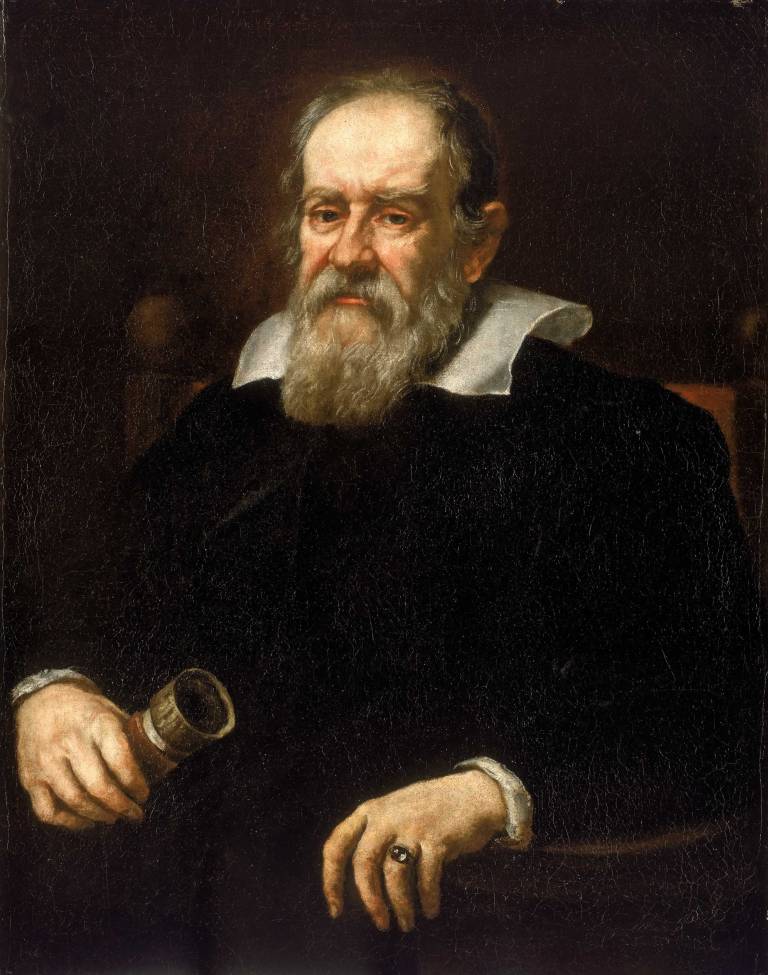
Justus_Sustermans_-_Portrait_of_Galileo_Galilei,_1636.jpg

Galileo Galilei (15 February 1564 – 8 January 1642) is one of the most recognizable figures in astronomical history. He is credited with numerous discoveries and inventions that helped advance our understanding of the solar system and the universe beyond. With his invention of the telescope, Galileo championed a new era of astronomical discoveries. Thanks to his revolutionary invention, Galileo was able to form new theories and confirm the existence of planets in our solar system and their moons.

During Galileo’s lifetime, the world was going through some major changes.

One major world event was the Spanish Armada. In the summer of 1588, The Spanish sent a fleet of over 100 ships into British waters to overthrow Queen Elizabeth I. It was their hope that with England under control, the Dutch revolution could be stopped. However, the Spanish ships would never reach land due to the strategic English war tactics at sea. As the fleet attempted to retreat, severe storms decimated two-thirds of the 130 ships. This was widely viewed as a decisive English victory.

In the Americas, the English were attempting to settle in North America. In the year 1607, three English ships carrying 144 men arrived in the New World and settled what would eventually be named Jamestown. Jamestown would prove to be the first successful North American colony that would pave the way for companies to create new settlements to form what would eventually become the United States of America.

This exercise worked well to give me some perspective about where astronomical discoveries fall in the timeline of world history. I didn’t realize that modern astronomical theory was still being developed as the Americas were being colonized. For some reason, I always assumed that the majority of major astronomical discoveries occurred long ago.

image source


Posted in Class, Historical | Tagged , , | Comments Off on Historical Astronomers in Context

Tycho Brahe

Tycho_Brahe
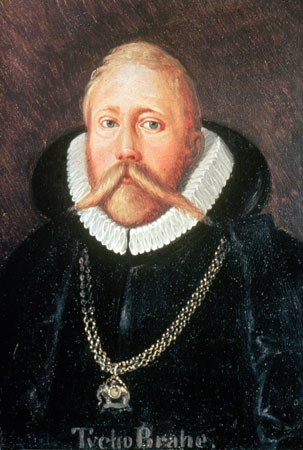
Portrait of Tycho Brahe (1546-1601)

Tycho Brahe has recently been described as “the first competent mind in modern astronomy to feel ardently the passion for exact empirical facts” by Edwin Burtt in The Metaphysical Foundations of Modern Physical Science; a Historical and Critical Essay (1925). He is the best naked-eye observer of all time, and was able to observe a supernova and a comet in 1572 and 1577, respectively. These two observations, albeit interpreted incorrectly, contradicted the current theory that the heavens, beyond the Moon, never changed. He also made the best measurements for stellar parallax, and came to 2 possible conclusions: (a) the Earth was at the center of the universe or (b) the stars were so far away that their parallax was too small to detect. He ended up choosing the wrong conclusion, but that doesn’t discount his incredible observations. Brahe also studied planetary motion, Mars’ in particular, and his observations laid the ground work for Kepler, who at one point was his assistant, to find out the planets follow elliptical orbits.

A few important historical happenings that occurred during Brahe’s life were:

In 1560, the Geneva Bible is first printed. This is the first time that a mechanically printed, mass-produced Bible was made directly available to the public, and preceded King James’ translation by 51 years. This Bible included study guides and aids, citations, introductions, book summarizations, maps, tables and illustrations, which is why it is known as the first study Bible.

In 1582, the Gregorian calendar is adopted and replaces the Julian calendar. This is important as the Gregorian calendar is the calendar we use today. The original goal for implementing the Gregorian calendar was to allow for a realignment of Easter with the spring equinox.

In 1550, French Army surgeon Ambroise Pare began creating artificial limbs for wounded soldiers. He is considered to be the father of modern amputation surgery and prosthetic design. He was born sometime in 1510 and died on 20 December 1590.

At this point in time, there is no separation of church and state anywhere and any challenge against the church was unacceptable, so it’s fascinating to see that the passion these astronomers had drove them to go against the status quo and what was the law of the land– and space. I also found it very interesting to see how related the work of all these astronomers was. Even though they were spread out all over the world, they were still able to use each other’s work to spring board their own ideas. We have the internet at our finger tips and I get frustrated when I can’t find the information I want in the first few links of my google search.  Another thing that ceases to amaze me is the accuracy of all the measurements. They were able to track sand grain-sized stars move in the sky, and I sometimes struggle to even focus on one star. Seeing how incredible these guys were without modern technology excites me for what tomorrow’s technology will allow our brightest minds to do.


Posted in Historical | Tagged , , , | Comments Off on Tycho Brahe

Tycho Brahe

Tycho_Brahe
Portrait of Tycho Brahe (1546-1601)

Tycho Brahe has recently been described as “the first competent mind in modern astronomy to feel ardently the passion for exact empirical facts” by Edwin Burtt in The Metaphysical Foundations of Modern Physical Science; a Historical and Critical Essay (1925). He is the best naked-eye observer of all time, and was able to observe a supernova and a comet in 1572 and 1577, respectively. These two observations, albeit interpreted incorrectly, contradicted the current theory that the heavens, beyond the Moon, never changed. He also made the best measurements for stellar parallax, and came to 2 possible conclusions: (a) the Earth was at the center of the universe or (b) the stars were so far away that their parallax was too small to detect. He ended up choosing the wrong conclusion, but that doesn’t discount his incredible observations. Brahe also studied planetary motion, Mars’ in particular, and his observations laid the ground work for Kepler, who at one point was his assistant, to find out the planets follow elliptical orbits.

A few important historical happenings that occurred during Brahe’s life were:

In 1560, the Geneva Bible is first printed. This is the first time that a mechanically printed, mass-produced Bible was made directly available to the public, and preceded King James’ translation by 51 years. This Bible included study guides and aids, citations, introductions, book summarizations, maps, tables and illustrations, which is why it is known as the first study Bible.

In 1582, the Gregorian calendar is adopted and replaces the Julian calendar. This is important as the Gregorian calendar is the calendar we use today. The original goal for implementing the Gregorian calendar was to allow for a realignment of Easter with the spring equinox.

In 1550, French Army surgeon Ambroise Pare began creating artificial limbs for wounded soldiers. He is considered to be the father of modern amputation surgery and prosthetic design. He was born sometime in 1510 and died on 20 December 1590.

At this point in time, there is no separation of church and state anywhere and any challenge against the church was unacceptable, so it’s fascinating to see that the passion these astronomers had drove them to go against the status quo and what was the law of the land– and space. I also found it very interesting to see how related the work of all these astronomers was. Even though they were spread out all over the world, they were still able to use each other’s work to spring board their own ideas. We have the internet at our finger tips and I get frustrated when I can’t find the information I want in the first few links of my google search.  Another thing that ceases to amaze me is the accuracy of all the measurements. They were able to track sand grain-sized stars move in the sky, and I sometimes struggle to even focus on one star. Seeing how incredible these guys were without modern technology excites me for what tomorrow’s technology will allow our brightest minds to do.


Posted in Historical | Tagged , , , | Comments Off on Tycho Brahe

Tycho, Shakespeare, Michelangelo, and the New World

brahe


Tycho Brahe lived from 1546 to 1601. Here is a page detailing his contributions to astronomy.  William Shakespeare wrote his first 23 plays during Tycho’s lifetime. These plays include such major works as Romeo and Juliet, A Midsummer Night’s Dream, and Hamlet. Click here for a list of Shakespeare’s major works.  Also, in 1584, the first attempt at British colonization of North America took place by Sir Walter Raleigh in Virginia. By 1586, when a new party sailed from England, they arrived to find this colony at Roanoke completely deserted. It is now referred to as the “lost colony.” More information on Sir Walter’s Raleigh’s expeditions to North America can be found here. Michelangelo lived during the end of Tycho’s life. He was born in 1475 and died in 1564. He is one of the most famous artists of all time, and contributed greatly to the Italian Renaissance. His works include the Pieta for the Vatican and the statue of David. He also painted the ceiling of the Sistine Chapel, including the famous scene of The Creation of Adam. Michelangelo was the greatest sculptor of the Renaissance. Michelangelo is the best documented artist of the 16th century. More information on Michelangelo’s life is available here.

As an English major, when I previously thought about Shakespeare’s time, I always assumed that the great discoveries in astronomy had already taken place. It is amazing to me that while Shakespeare was writing Hamlet, Tycho had just passed away, leaving his set of observations. Newton’s laws of motion would not even be introduced until half a century after Shakespeare’s death! All of these incredible works of art ranging from Shakespeare’s plays to Michelangelo’s sculptures were being created before humanity even had a solid understanding of the heliocentric universe, the force of gravity, or the laws governing motion. I do not think many people realize just how relatively recently our modern understanding of astronomy came to light.

Posted in Historical | Tagged , , , , | Comments Off on Tycho, Shakespeare, Michelangelo, and the New World

Tycho, Shakespeare, Michelangelo, and the New World

brahe


Tycho Brahe lived from 1546 to 1601. Here is a page detailing his contributions to astronomy.  William Shakespeare wrote his first 23 plays during Tycho’s lifetime. These plays include such major works as Romeo and Juliet, A Midsummer Night’s Dream, and Hamlet. Click here for a list of Shakespeare’s major works.  Also, in 1584, the first attempt at British colonization of North America took place by Sir Walter Raleigh in Virginia. By 1586, when a new party sailed from England, they arrived to find this colony at Roanoke completely deserted. It is now referred to as the “lost colony.” More information on Sir Walter’s Raleigh’s expeditions to North America can be found here. Michelangelo lived during the end of Tycho’s life. He was born in 1475 and died in 1564. He is one of the most famous artists of all time, and contributed greatly to the Italian Renaissance. His works include the Pieta for the Vatican and the statue of David. He also painted the ceiling of the Sistine Chapel, including the famous scene of The Creation of Adam. Michelangelo was the greatest sculptor of the Renaissance. Michelangelo is the best documented artist of the 16th century. More information on Michelangelo’s life is available here.

As an English major, when I previously thought about Shakespeare’s time, I always assumed that the great discoveries in astronomy had already taken place. It is amazing to me that while Shakespeare was writing Hamlet, Tycho had just passed away, leaving his set of observations. Newton’s laws of motion would not even be introduced until half a century after Shakespeare’s death! All of these incredible works of art ranging from Shakespeare’s plays to Michelangelo’s sculptures were being created before humanity even had a solid understanding of the heliocentric universe, the force of gravity, or the laws governing motion. I do not think many people realize just how relatively recently our modern understanding of astronomy came to light.


Posted in Historical | Tagged , , , , | Comments Off on Tycho, Shakespeare, Michelangelo, and the New World

Copernicus in Context

Historical Context of Nicholas Copernicus 

Nick
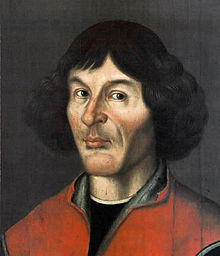
Portrait of Nicholas Copernicus (1473-1543)

Nicholas Copernicus  was born in the Kingdom of Poland on February 19, 1473 and died in the same area he was born on May 24, 1543. He was an extremely important and influential figure for early astronomy, and his work became the basis for a lot of our modern understanding of Earth’s motion. He proposed that the planets orbit the sun and that Earth, while also orbiting the sun, rotates on its axis and that the changes in direction of Earth’s axis is due to precession. According to Britannica, Copernicus’s theory, the heliocentric model, influenced thinkers such as Galileo, Kepler, and Newton. His theory that the Earth orbited the sun went against traditional church beliefs of the day because it went against the belief that God made Earth to be at the center of everything. Copernicus’s theory was one of the major reasons that Galileo was tried by the Catholic church.

Some important events happening elsewhere during Copernicus’s life were:

The War of the Roses (1455-1487) was an ongoing war for the English throne between the York and the Lancaster branches of the Plantagenet dynasty that continued during Copernicus’s lifetime.

The English Reformation (1534-undecided) was a time of religious and political change   across England. King Henry VIII was excommunicated from the Catholic Church following his establishment of the Anglican Church after the Pope refused to grant his annulment of his marriage to Queen Catherine.

An important political and religious figure during Copernicus’s time was Thomas, Cardinal Wolsey (1475-1530), the Archbishop of York and Lord Chancellor of England from 1515-1529. He was a close advisor of King Henry VIII, and was tasked by Henry to persuade Pope Clement to agree to an annulment. Wolsey’s failure at this task was a direct contributing factor the the English Reformation and the creation of the Church of England.

I think it is very important to put early astronomers into the context of their time period because it opens your mind up to the challenges that they sometimes faced when exposing their ideas to the world. It also opens your mind up to the fact that history is not made up of isolated islands of separate events, but that each thing can happen in tangent with other things and that history is widely connected.I find all of this information that I learned about Copernicus and his time period very interesting. I am currently in a history class on the Tudor dynasty in England, and it was very interesting to learn that while the Yorks and Lancasters were duking it out in England, one of the most important astronomical thinkers was growing up. I also think its interesting to learn of the changes happening to the Church in England as Copernicus was developing his heliocentric theory of Earth’s position, if only because of the Church’s reaction to Galileo’s use of Copernicus’s theory. Copernicus’s theory was being developed during a time of great change in the Church, and I believe that had he published his complete theory during his lifetime, he may have been punished by the Church. Although, I think that its interesting to imagine what would have happened. Would the Church have been too preoccupied with the break with England, a major Catholic nation at the time? Or would they have come down hard on Copernicus, much the same way they did on Galileo? It is interesting to speculate, but we cannot really know for sure.


Posted in Historical | Tagged , , , | Comments Off on Copernicus in Context

Johannes Kepler In Context

kepler
Courtesy of ExplainXKCD

Johannes Kepler

(b. December 27, 1571 – d. November 15, 1630)

Important Historical Events

(Courtesy of Frank E. Smitha)

1616 – The death of William Shakespeare. William Shakespeare is one of the most important literary figures/playwrights of all time.

1620 – Pilgrims aboard the Mayflower arrive at what would become Plymouth, MA. This was one of the first successful settlements of the modern day United States by European settlers.

Important Historical Figure

Miguel De Cervantes (1547 – 1616) lived during Kepler’s time. Cervantes wrote Don Quixote, the first modern novel, and much like Shakespeare, another literary figure of the day, Cervantes is one of the most recognized names in literature today. 4.

Reflection

The time in which Johannes Kepler lived was a time of great learning and discovery. Mankind was pushing the boundaries of science, literature, and art during the late 16th and early 17th century. These thinkers were some of the key contributors to the beginning of the Enlightenment, a period in which knowledge and empiricism reigned supreme. These thinkers are the foundation for modern thought, whether that in the sciences or the humanities.

(all information used for the creation of this post was found in Encyclopedia Brittanica unless otherwise noted.)


Posted in Historical | Tagged , , | Comments Off on Johannes Kepler In Context

kepler’s Discoveries in Context

Johannes Kepler was born on December 27th, 1571 and died on November 15th, 1630. Kepler was important to astronomy primarily because of his development of the  laws of planetary motion. In short, these laws state that all planets’ orbits are ellipses, show that a planet’s orbital speed is inversely proportional to its distance from the body it orbits, and give an equation relating a planet’s orbital period to the planet’s orbiting distance. These laws have allowed us to better understand how our solar system works as well as how objects, in general, orbit a center of mass.

Around this time, Shakespeare published Romeo and Juliet  (1597), perhaps his most famous play, and the British established their first permanent colony in the America’s, Jamestown (1607). Furthermore, Ivan the Terrible was born in 1530 and died in 1584. He was the first tsar of Russian and is most famous for his conquest of vast amounts of present day Russian territory.

In present times, it is easy to scoff at the discoveries that astronomers made hundreds of years ago and refer to them as fairly obvious. When we think about what was occurring during the time of the discoveries, though, it becomes more clear that these discoveries were actually pretty remarkable. As mentioned, around the time Kepler came up with his laws of planetary motion, Jamestown was founded, Shakespeare first published Romeo and Juliet, and Ivan the terrible ruled Russia. Comparing the founding of Jamestown, in particular, to Kepler’s laws of planetary motion is quite fascinating. One of the primary goals of the Jamestown colony was to find a short water route to the Pacific. This shows how little people’s understanding of Earth’s geography was. Thus, the fact that Kepler was able to observe planets millions of miles away and come up with accurate calculations regarding the orbits of these planets is astonishing given the technology and knowledge of his time. This causes us to think about what people in the future might think of the discoveries we are currently making. Though we consider people making these discoveries to be geniuses, will people in the future scoff at the discoveries we are currently making?


Posted in Historical | Tagged , , | Comments Off on kepler’s Discoveries in Context

Historical Astronomers in Context

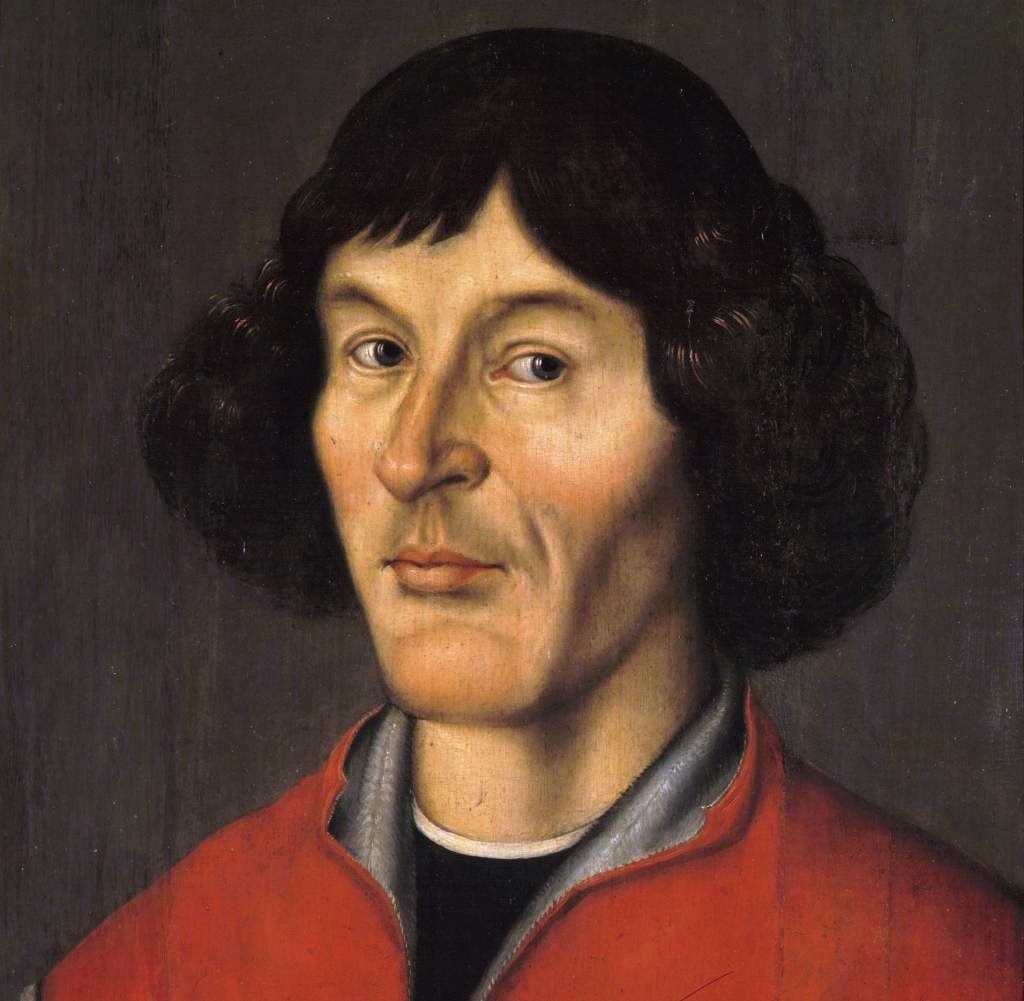
Nikolaus_Kopernikus

Nicholas Copernicus (2/19/1473 – 5/24/1543) played a massive role in laying down the foundation for modern day astronomy. He came up with the heliocentric model of the solar system where the Sun was at the center, as opposed to the Earth as everyone had previously thought. This sparked the Copernican Revolution where a lot of new information regarding the solar system was gathered and expanded on. Copernicus’ heliocentric model was not perfect, however, as it insisted that all orbits are perfectly circular, which as we know today is not true. Regardless, the heliocentric model was one of the first major dominoes to fall in the development of modern astronomical thought.

During his lifetime there were many other important events that took place as well. In 1492, Christopher Columbus came to the Americas from Spain. This was one of the first times someone from Europe made it to the Americas and the discovery of the “New World” changed the entire world dynamic as many European countries began to focus on colonizing the newly founded land. In 1506, Leonardo da Vinci finished painting the Mona Lisa The Mona Lisa is one of the most famous paintings in human history, and its legacy is still strong today. Although it wasn’t worshipped back then as much as it is now, it’s still one of humankind’s finest artistic products. Hernán Cortés was an important historical figure alive at the same time as Copernicus. The Spanish Conquistador led the expedition that ultimately led to the destruction of the Aztec Empire and traveled far and wide in the newly founded Americas (Smitha).

Personally, I think one of the most eye-opening aspects of putting all of this into context is just how many important things in human history were going on at the same time. In just about all realms of human knowledge something significant happened. The Copernican Revolution, the painting of the Mona Lisa, and the conquest of the Americas all have massive implications on the world as we know it today, and all happened within 20 years of each other. A lot of discoveries were all taking place at the same time, so much so that it is hard to say which one was the most important. It may be because we are living during this time period, but it just does not feel like anything of similar magnitude has been discovered during our lifetimes. If people living in 2500 look back at our contributions to human history, it would be hard to see them finding anything more significant than the contributions of the people in the early 16th The computer is one thing that comes to mind that has had massive implications, but it is hard to compare a physical object to entire revolutionary theories. It should also be noted just how little technology they had compared to today, and yet still managed incredible discoveries.


Posted in Historical | Tagged , , | Comments Off on Historical Astronomers in Context

Learning the Planets

We all remember trying to learn the names and order of the planets in our Solar System in grade school. Some of us got pretty thrown off by the removal and addition of Pluto on the list.

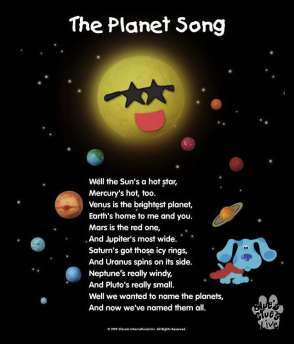
For me, the Blue’s Clues Planet Song we the best way to remember the planets and a fun fact about each of them. Below, you will find the lyrics to this adorable and helpful song.

BluePlanetsong.jpg
Pics About Space

Another popular way to remember the planets is using mnemonic devices where the first letter of each planet is the first letter of each word in a silly sentence. The one I remember is “My Very Eloquent Mother Just Served Us Nine Pizzas.”

Mnemonic-device.com has ideas for some other great silly sentences to help us remember the order of the planets. Below you will find some of my favorites, some of which have a “P” word at the end for Pluto, and some of which do not.

  • My Very Eyes May Just See Under Nine Planets
  • My Very Evil Mother Just Smacked Unicorn’s Nose
  • My Very Easy Method: Just SUN
  • My Very Easy Method Just Speeds Up Naming Planets


Posted in Class, Science | Tagged , , , | Comments Off on Learning the Planets