Some pretty extreme(“ophiles”)

Waterbear

Image from wikipedia.com

That above picture is of a water bear, one of multiple really cool extremophiles discussed in this article.  The article makes a really cool comment about how we are lucky that water bears, and the same probably holds true for other extremophiles as well, are so small.  Otherwise, it is likely that these creatures would rule the planet.  They are nearly invincible it seems, being able to withstand such extreme conditions.  The water bear specifically can live without food or water for 120 YEARS.  Humans on average can’t even LIVE 120 years total, let alone go that long without food or water.  They can withstand pressures grater than six times those found in the oceans, can survive happily at temperatures just barely above absolute freezing, and can also withstand radiation to levels hundreds of times higher than humans can.  The article even says that these creatures can survive in the vacuum of space.  NOW I see why we wouldn’t want these creatures to be any bigger than the half a millimeter they are..without a doubt they would rule our world and possibly many other worlds in our solar system.

This was just the coolest and most extreme creature this article mentioned, but there are many more too!  Including ones that thrive in environments filled with sulfur and emit seriously acidic waste products.  Discovering creatures like these sure changes my view a LOT about how we define life and the possibility of finding it on other planets!


Posted in Aliens, Exoplanets, Science | Tagged , , | Comments Off on Some pretty extreme(“ophiles”)

Blog Post #10: 100 Year Starship

After learning about all of these thoughts and ideas about interstellar travel and the widespread interest in human exploration to find signs of life outside of our solar system, I found myself asking, “what measures are being taken to get this done?”

That’s when I stumbled across 100 Year Starship. This is a grant project funded by NASA and DARPA to continue cutting-edge research and experimentation with the intention to “make human interstellar travel capabilities a reality within the next 100 years.” They host a yearly symposium where anyone can submit papers for approval documenting their research, theories, etc. that could contribute to the goal of interstellar travel. They have a number of initiatives where their efforts are being focused today which include bone growth and education.

I found this very interesting not only because of their research and methods of acquiring data from people and institutions outside of government programs, but also because it seems aggressively optimistic. It is clearly meant for those whose passions lie in exploring and knowing more about our universe– not only for the sake of some sort of political “space race” as had been the case only a few short decades ago.

Capture

100yss


Posted in Space Travel | Tagged , , | Comments Off on Blog Post #10: 100 Year Starship

Blog Post #9: 11 of the Weirdest Solutions to the Fermi Paradox

Of all the topics covered in this class, I found the Fermi Paradox the most interesting, and this is probably one of my favorite articles I’ve stumbled upon while trying to blog!

It gives 11 of the “weirdest” hypotheses that solve the Fermi Paradox, and although we discussed a couple of them already in class, I will give a brief description of a couple of my favorites.

The Whack-a-Mole Hypothesis: This hypothesis states that there might be some sort of “intergalactic club” just waiting to see if we pose any threat to the rest of the universe. If we prove to be a threat or develop a certain destructive technology, they are just sitting there with a giant theoretical hammer waiting to take us out, if need be.

All Aliens are Homebodies: Civilizations could have developed superior technology on their home planet and space exploration and communication is no longer of interest to them because they have so much exciting adventure at home.

18i2p164tvxmvjpg

io9.com

I encourage you to read the rest of them! Some of them are pretty funny.


Posted in Aliens | Tagged , , | Comments Off on Blog Post #9: 11 of the Weirdest Solutions to the Fermi Paradox

Astronomy in “The Big Bang Theory” and “Interstellar”

I originally came into Astronomy 201 just wanted to fulfill my last hours as a second-semester senior at Vanderbilt University with a subject I was interested in. Now that the course is coming its conclusion, the class has evolved into my favorite class I have taken this semester and the one I learned the most and has sparked my interest even further in the subject. Throughout the semester, I found myself, like most students, spending a little too much time watching Netflix and TV. I justified it by watching The Big Bang Theory and Interstellar and saying I was “studying” for astronomy. Even though I wasn’t really studying, I found myself understanding the complex topics covered by the lovable characters of The Big Bang Theory. One of the areas that stood out to me most was Dr. Raj Koothrappali’s work with the Kepler Belt. I suddenly found myself understanding Raj’s work and his search for Trans-Neptunian objects. Trans-Neptunian objects is any minor planet that orbits at a greater average distance than Neptune or 30 astronomical units.

Big-Bang-TheoryI watched Interstellar about 2 weeks ago, which is a great movie (everyone should watch it)! It is extremely applicable to what we are studying currently which is extraterrestrial life. Even though within the movie, they did not find alien life, they found habitable exoplanets that humans could establish life on. The characters deal with a plethora of topics we discussed in class such as time relativity and the space-time continuum. Theoretical physicist Kip Thorne consulted on the movie making sure that the science was accurate as possible. Overall, taking astronomy 201 has enabled me to understand the science in modern media, which now I can go and impress my friends with my knowledge.
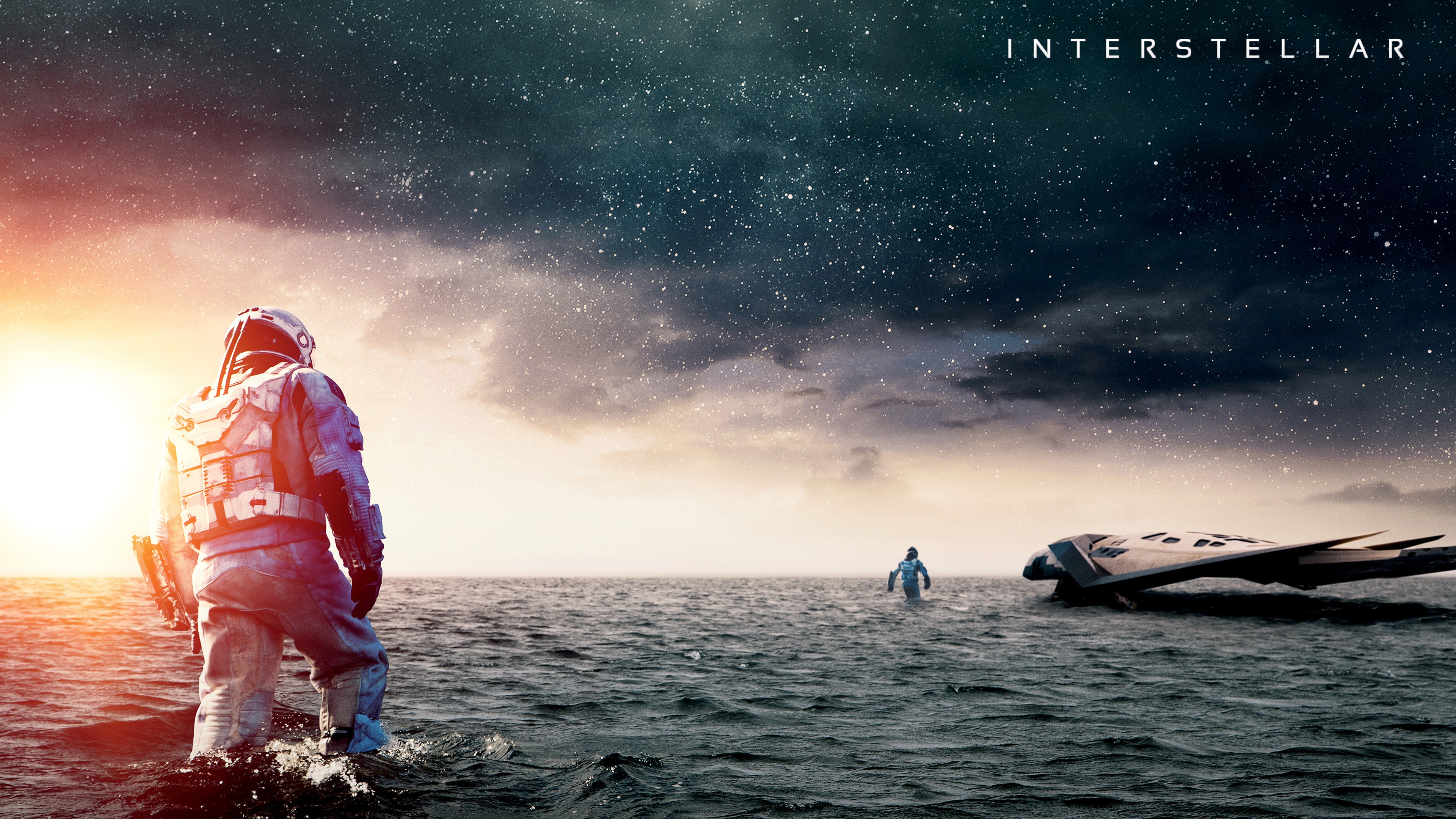
interstellar-3840x2160


Posted in General, Physics | Tagged , , , | Comments Off on Astronomy in “The Big Bang Theory” and “Interstellar”

‘Definite Evidence’ Of Alien Life Within 20-30 Years

In a panel discussion earlier this month, NASA Chief Scientist, Ellen Stofan, said that there is definite evidence that we will find alien life within the next 20-30 years. She defines life not as ‘little green men’ but microbes, which as we learned in class can survive in a range of conditions. These microbes were given the name ‘extremophiles’ due to their ability to survive in conditions previously thought to extreme to sustain life. John Grunsfeld, a former astronaut and associate administrator for the agency’s Science Mission Directorate, concurred with Stofan’s assessment of finding extraterrestrial life in the next 20-30 years. The panel took place on April 7th, and the full discussion is available below. It is interesting to consider where we will find life. Will it be a world that is much like our own Earth, that humans could live on without considerable construction of habitats? Or will the world have hostile and extreme conditions that only extremophiles can survive on?


Posted in Aliens, Exoplanets | Tagged , | Comments Off on ‘Definite Evidence’ Of Alien Life Within 20-30 Years

To Go Boldly Where No (Hu)Man Has Gone Before: The Future of Space Exploration

In the 1960’s, Star Trek popularized the idea of outer space as the “final frontier”. However, exploration of space is about as final as the possible values between .99 and 1: the possibilities are limitless. Here are few of the most exciting forthcoming explorations of this infinite final frontier:

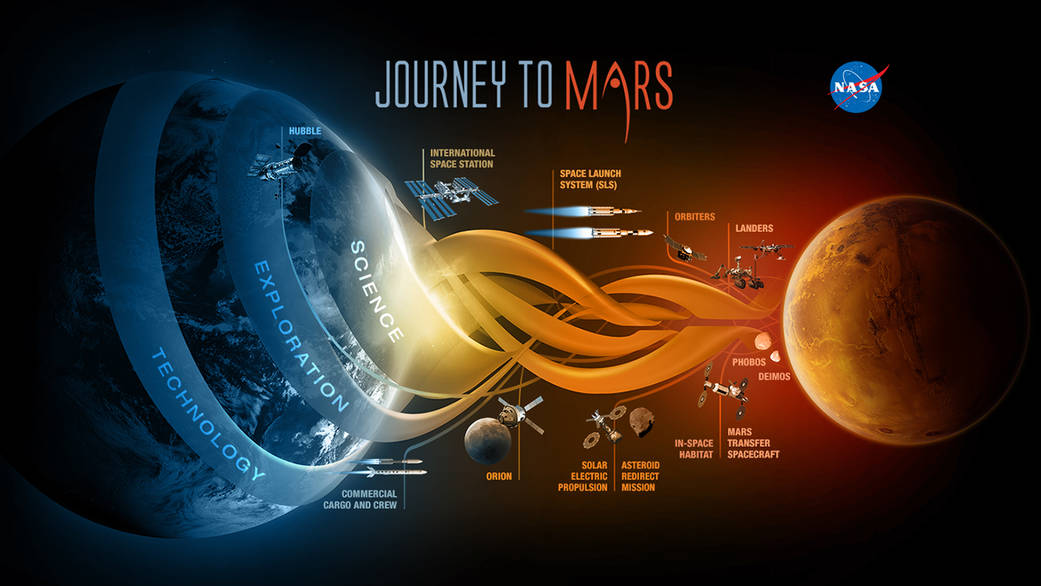
  1. NASA’s Journey to Mars– NASA plans to send humans to Mars in the 2030’s. It will begin developing the technology by robotically capturing a piece of an asteroid and pulling it into orbit around the moon. Manned missions will then be sent to explore and learn from the asteroid by 2025. This manned mission will serve as the precursor for an eventual Mars mission.
  1. The James Webb Space Telescope– Set to launch (hopefully!) in 2018, the James Webb Space Telescope will use infrared detection to look for our universe’s first stars and galaxies and for planetary systems that might harbor earth-like worlds and even life. Because the detection is infrared, the JWST could even detect a change in seasons and temperature on an extrasolar planet, giving us more information about the possibilities for life. (Admittedly, this is not exploration in the form of sending physical objects to different worlds, but I consider examination of new things a form of exploration)

These missions will help to determine our place in the universe: whether we are alone as a life-filled planet, whether other planets in our solar system could eventually be habitable for us, and how other solar systems compare to our own. However, as exciting as these missions are, I think that a more exciting mission (in terms of capacity to detect life) would be to send a probe to Europa to explore the world’s surface and underground ocean. What do you think of these NASA’s two forthcoming missions mentioned above? Considering everything we’ve learned in ASTR 201, what kind of mission would you create to further explore our universe?

journey_to_mars

A graphic from NASA detailing the long-term plan to send humans to Mars (photo source)

Posted in Class | Tagged , , | Comments Off on To Go Boldly Where No (Hu)Man Has Gone Before: The Future of Space Exploration

To Go Boldly Where No (Hu)Man Has Gone Before: The Future of Space Exploration

In the 1960’s, Star Trek popularized the idea of outer space as the “final frontier”. However, exploration of space is about as final as the possible values between .99 and 1: the possibilities are limitless. Here are few of the most exciting forthcoming explorations of this infinite final frontier:

  1. NASA’s Journey to Mars– NASA plans to send humans to Mars in the 2030’s. It will begin developing the technology by robotically capturing a piece of an asteroid and pulling it into orbit around the moon. Manned missions will then be sent to explore and learn from the asteroid by 2025. This manned mission will serve as the precursor for an eventual Mars mission.
  1. The James Webb Space Telescope– Set to launch (hopefully!) in 2018, the James Webb Space Telescope will use infrared detection to look for our universe’s first stars and galaxies and for planetary systems that might harbor earth-like worlds and even life. Because the detection is infrared, the JWST could even detect a change in seasons and temperature on an extrasolar planet, giving us more information about the possibilities for life. (Admittedly, this is not exploration in the form of sending physical objects to different worlds, but I consider examination of new things a form of exploration)

These missions will help to determine our place in the universe: whether we are alone as a life-filled planet, whether other planets in our solar system could eventually be habitable for us, and how other solar systems compare to our own. However, as exciting as these missions are, I think that a more exciting mission (in terms of capacity to detect life) would be to send a probe to Europa to explore the world’s surface and underground ocean. What do you think of these NASA’s two forthcoming missions mentioned above? Considering everything we’ve learned in ASTR 201, what kind of mission would you create to further explore our universe?

journey_to_mars

A graphic from NASA detailing the long-term plan to send humans to Mars (photo source)


Posted in Class | Tagged , , | Comments Off on To Go Boldly Where No (Hu)Man Has Gone Before: The Future of Space Exploration

Are You There, Universe? It’s Me, Earth.

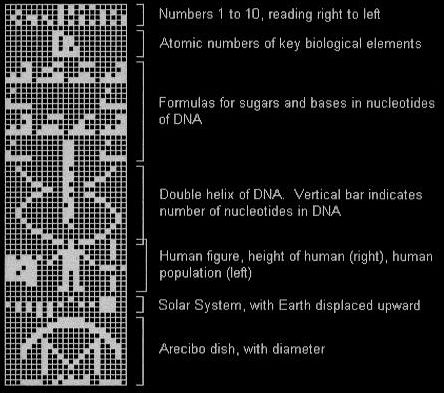
In 1974, to celebrate the remodeling of Puerto Rico’s Arecibo radio telescope, the Arecibo message was sent toward the globular star cluster M13 (located 25,000 light years away from our sun) through radio waves. The message was written by Dr. Francis Drake (of the Drake equation) and Carl Sagan, among others. Aimed at other civilized life, it consisted of 1,679 binary digits and conveys messages about life on Earth. For example, it includes the atomic numbers of hydrogen, carbon, oxygen, phosphorus, and nitrogen, which are the components of DNA. When translated into graphics, it contains a stick figure of a human and a rough image of our solar system.

This message, “the most powerful broadcast ever deliberately beamed into space”, is theoretically Earth’s coming out to the universe, our introductory statement, our Twitter bio. However, ironically, by the time the message reaches its intended destination (25,000 years from now), our purported audience (M13) will have moved from this location. The messages’ creators were aware of this irony, and apparently only meant for the Arecibo message mainly to prove the advancements of technology. However, should we be sending messages about Earth to locations where civilizations can theoretically receive them? What should our messages contain? Is it fair for a few scientists to determine the message that will represent our entire solar system?

AreciboM

Pictorial representation of the arecibo message, with explanations

Posted in Class | Tagged , , , | Comments Off on Are You There, Universe? It’s Me, Earth.

Are You There, Universe? It’s Me, Earth.

In 1974, to celebrate the remodeling of Puerto Rico’s Arecibo radio telescope, the Arecibo message was sent toward the globular star cluster M13 (located 25,000 light years away from our sun) through radio waves. The message was written by Dr. Francis Drake (of the Drake equation) and Carl Sagan, among others. Aimed at other civilized life, it consisted of 1,679 binary digits and conveys messages about life on Earth. For example, it includes the atomic numbers of hydrogen, carbon, oxygen, phosphorus, and nitrogen, which are the components of DNA. When translated into graphics, it contains a stick figure of a human and a rough image of our solar system.

This message, “the most powerful broadcast ever deliberately beamed into space”, is theoretically Earth’s coming out to the universe, our introductory statement, our Twitter bio. However, ironically, by the time the message reaches its intended destination (25,000 years from now), our purported audience (M13) will have moved from this location. The messages’ creators were aware of this irony, and apparently only meant for the Arecibo message mainly to prove the advancements of technology. However, should we be sending messages about Earth to locations where civilizations can theoretically receive them? What should our messages contain? Is it fair for a few scientists to determine the message that will represent our entire solar system?

AreciboM

Pictorial representation of the arecibo message, with explanations


Posted in Class | Tagged , , , | Comments Off on Are You There, Universe? It’s Me, Earth.

Drafting behind the Millennium Falcon

“I’m going to make the jump to light speed…” Are famous words spoken by Han Solo as he and other Rebel Alliance members make the jump to light speed in hopes of outrunning the Empire. In films like Star Wars and Star Trek, we see many instances like the above example where it really is just as easy as flipping a switch and then your vessel is travelling through space at a speed faster than light. How close is modern society, though, to achieving this great feat?

It is generally accepted than physical matter can not accelerate to the speed of light within our space time, but where there is a glimmer of hope is posited in the question of if we can shift space around us such that we can arrive at a destination faster than light could. This is represented best by the Alcubierre drive theory which states that FTL is possible by expanding and contracting the regions behind and in front of the space craft, respectively. This would model a surfer riding a wave, except that this wave would be the fabric of time as opposed to water and be travelling faster than we can imagine.

warpdrive

As of right now, we are still in the modeling and theoretical phase of this idea, but scientists are still pretty confident that this can be achieved if the right parameters are met.


Posted in Class, Universe | Tagged , , | Comments Off on Drafting behind the Millennium Falcon