Radio Telescopes: Like Car Radios, but Bigger

When we think “telescope”, we picture peering through a viewfinder or viewing images of the stars. However, visible light is only a small part of the electromagnetic spectrum; we can learn much about our galaxy by viewing visible light’s less frequent older brother, the radio wave. Radio telescopes are the technological descendants of actual radios (like the one in your car!). Karl Jansky, who worked for Bell Telephone Laboratories, created a large radio antenna to test for sources of static which would interfere with radio telephone calls. He identified static from nearby thunderstorms, but heard a constant “faint hiss.” This “faint hiss” was radiation from the universe, concentrated in the Milky Way galaxy.

Radio telescopes typically look like huge dishes with an antenna. Currently, astronomers often use radio interferometers: series of connected radio telescopes. While radio interferometers are used to observe information about galaxies, planets, and nebulae, some of the most groundbreaking work in radio astronomy is taking place examining cosmic background radiation. Cosmic background radiation is the thermal radiation left behind from the Big Bang. Differences in radio frequencies of cosmic background radiation reveals early differences in temperature which dictated how stars and galaxies form. Thus, radio telescopes can reveal how and why the universe formed the way it did.

hintergrundstrahlung

Photo source


Posted in Class | Tagged , , | Comments Off on Radio Telescopes: Like Car Radios, but Bigger

Circadian Rhythms and the Length of the Day

We learned in class that the earth’s day is always getting longer: that is, the attraction of the moon’s gravity pulls angular momentum from the earth, slowing down its rotation. On the flip side, the earth’s day used to be much shorter. Evidence from ancient corals indicate that the year was once 385 days long, meaning that an individual day was only 23 hours. Of course, these corals were alive about 350 million years ago; in comparison, the dinosaurs went extinct 65 million years ago. Thus, the speed’s of the earth’s change is extremely slow from the standpoint of a human lifetime: about 1.7 milliseconds are added to the day each century.

However, could the lengthening of the day be problematic for life on earth? Is there something special about the 24-hour cycle that we’d lose if the day were much longer? The 24-hour cycle, it turns out, is genetically intrinsic to life processes on earth. This phenomenon is known as a circadian rhythm: many biological processes on earth, from the feeding times of bees to human sleep cycles, display an endogenous (coming from within cells, organisms, etc) variation over the course of 24 hours. For example, in 1729 Jean-Jacques d’Ortous de Maira observed that the movement of the leaves of the mimosa pudica plant (touch-me-not) varied over a 24 hour cycle, even in the absence of sunlight. This means that the 24 hour cycle of earth life is more than just a response to sunlight or external stimuli. In fact, in 1994, Dr. Joseph Takahashi discovered the CLOCK gene, which generates circadian rhythms in mice.

So, circadian rhythms mean that 24 hour cycles are more than just a response to sunlight. Does this mean that millions of years from now, when the day is 25 hours long, plant and animal life on earth will be thrown off its cycle? While this might be more of a biology question than an astronomy question, considering the implications of the earth’s torque on human life helps to place astronomical lessons in context.

Mimosa_Pudica

The mimosa pudica (“touch-me-not”)

Photo source

Posted in Class | Tagged , , , | Comments Off on Circadian Rhythms and the Length of the Day

Circadian Rhythms and the Length of the Day

We learned in class that the earth’s day is always getting longer: that is, the attraction of the moon’s gravity pulls angular momentum from the earth, slowing down its rotation. On the flip side, the earth’s day used to be much shorter. Evidence from ancient corals indicate that the year was once 385 days long, meaning that an individual day was only 23 hours. Of course, these corals were alive about 350 million years ago; in comparison, the dinosaurs went extinct 65 million years ago. Thus, the speed’s of the earth’s change is extremely slow from the standpoint of a human lifetime: about 1.7 milliseconds are added to the day each century.

However, could the lengthening of the day be problematic for life on earth? Is there something special about the 24-hour cycle that we’d lose if the day were much longer? The 24-hour cycle, it turns out, is genetically intrinsic to life processes on earth. This phenomenon is known as a circadian rhythm: many biological processes on earth, from the feeding times of bees to human sleep cycles, display an endogenous (coming from within cells, organisms, etc) variation over the course of 24 hours. For example, in 1729 Jean-Jacques d’Ortous de Maira observed that the movement of the leaves of the mimosa pudica plant (touch-me-not) varied over a 24 hour cycle, even in the absence of sunlight. This means that the 24 hour cycle of earth life is more than just a response to sunlight or external stimuli. In fact, in 1994, Dr. Joseph Takahashi discovered the CLOCK gene, which generates circadian rhythms in mice.

So, circadian rhythms mean that 24 hour cycles are more than just a response to sunlight. Does this mean that millions of years from now, when the day is 25 hours long, plant and animal life on earth will be thrown off its cycle? While this might be more of a biology question than an astronomy question, considering the implications of the earth’s torque on human life helps to place astronomical lessons in context.

Mimosa_Pudica

The mimosa pudica (“touch-me-not”)

Photo source


Posted in Class | Tagged , , , | Comments Off on Circadian Rhythms and the Length of the Day

USA reliant on Russian rockets

Recently top officials in NASA and the military have brought to the forefront the unpleasant reality that the USA is only capable of launching small-to-medium size rockets into space with our own rockets. We rely on Russian-built rockets to launch heavy satellites, as well as shuttle astronauts to the ISS. Given the recent geopolitical climate, relying on Russia could prove disastrous in the future, so America has turned to private corporations to help…with mixed results.


Posted in Class, Public Policy | Tagged , | Comments Off on USA reliant on Russian rockets

Absorption Spectra

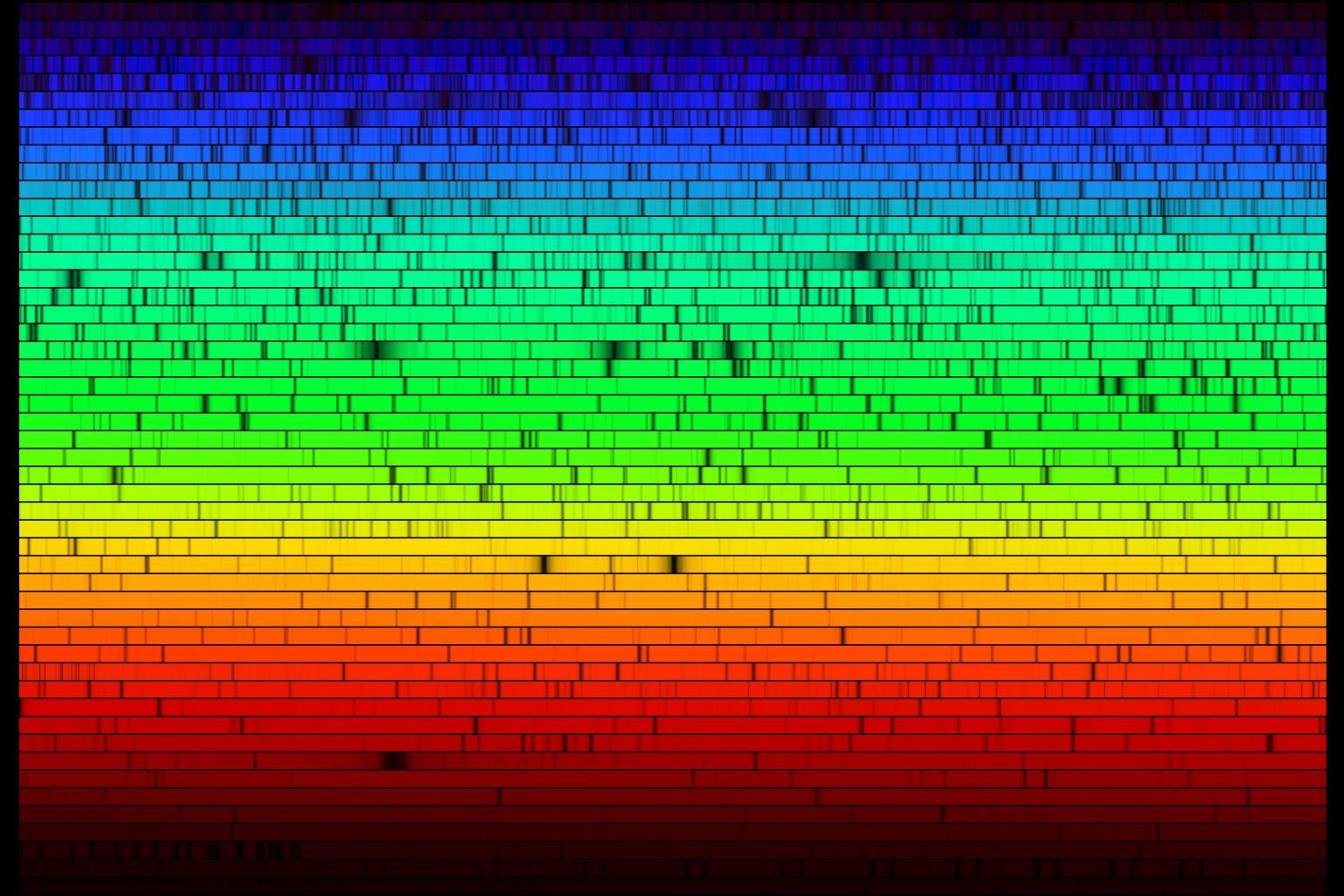
sun_spectrum Photo Source: Absorption Spectrum The photo above is the full absorption spectrum of the sun.  The black lines come from the different chemical elements within its atmosphere, and this is true for all stars!  Different elements absorb and emit light at different wavelengths from one another.  Scientists have conducted (here on earth) experiments to determine what wavelengths of light are emitted by the elements. This means that we can determine what elements are present within another star simply by looking at its spectrum!  Just one of the many things that light tells us about our universe.


Posted in Light, Physics, Stars | Tagged , | Comments Off on Absorption Spectra

Blog Post #4: The Twilight Saga

If you’re like me, then the concept of “twilight” has recently become a little confusing. In class, twilight has been referred to meaning when the Sun is no longer visible and there is no sunlight in the sky. In my past experience, however, it seems that twilight more commonly means that there’s a little bit of light left, but not much. There are actually 3 different definitions of twilight and therefore, three different times at which these twilights occur, and understanding the difference between them can turn into quite a…. saga. *cue laugh track*

Here’s the breakdown:

Astronomical Twilight: In the context of this class, this is the twilight with which we are most familiar. It is the darkest of the three and occurs when the center of the Sun is 18 degrees below the horizon. If there is no light pollution, at this point in time, all stars visible to the naked eye will be observable in the sky.

Nautical Twilight: This twilight occurs when the center of the Sun is 12 degrees below the horizon. This is the first time in the morning and the last time at night where structures on the horizon are visible, and also the last time in the morning and the first time at night that relevant astronomical navigation tools are fully visible and useful to the naked eye.

Civil Twilight: This is the twilight with which I was most familiar before starting this course. It occurs when the Center of the Sun is 6 degrees below the horizon. At this time, some of the brightest stars in the sky may become visible. (Fun Fact: Venus is known as the “Morning Star” and “Evening Star” because it is visible during Civil Twilight!) Outdoor activities are still possible without artificial light, but this time of day marks a turning point: headlights are to be turned on, night time hunting regulations go into effect, etc.

Below is an illustration that I found helpful, along with 3 pictures taken of the sky at each twilight:

300px-Twilight_subcategories.svg

Wikipedia

2373184

Tracking the Light


Posted in Class, Light, Sun | Tagged , , | Comments Off on Blog Post #4: The Twilight Saga

Weight is just a number!

IV-b3393

picture from storejpg.com

Weight IS just a number-it’s simply the product of the mass of an object and the force put on that object due to gravity!  Since the number is dependent on gravity, it’s totally logical that, since the force of gravity from the Sun is different in different locations in the Solar system and mass remains the same (close enough, imagining that the object could be at all these places in the universe at the same time), the weight of these objects will also change.  This change is proportional to the gravitational force on the planet, with the proportionality constant being the object’s mass!  This site is a lot of fun for seeing what you, or your favorite object that you know the mass of, would weigh in various other locations in the Solar system.  It’s interesting to see the effects of both distance from the Sun and mass of the solar body on the gravity there, and thus the effect on weight!  For example, a 200 lb person on Earth would weigh only 75.6 lbs on Mercury and 472.8 lbs on Jupiter.  This may be opposite of what one would initially think since Mercury is so close to the Sun and Jupiter is further away, so it seems like you should feel a lot more force due to gravity on Mercury, but you cannot forget to factor in the masses of the two objects! Jupiter is more than 5700 times more massive than Mercury, explaining the huge difference in gravity and the further object actually experiencing more gravitational force from the Sun.  Overall, I had a lot of fun playing around on this site, and it definitely helped me understand a lot more about how the effects of both distance AND mass factor into the force of gravity on each of these solar bodies!


Posted in Class, Instruments | Tagged , , , | Comments Off on Weight is just a number!

What Comes After Hubble?

The Hubble Space Telescope, in use for about 25 years, will soon have to be retired in the next 5-10 years. Plans for a successor telescope eventually materialized into the James Webb Space Telescope, pictured below as a full scale model in Austin, TX.

1280px-James_Webb_Telescope_Model_at_South_by_Southwest
Source: Wikipedia

As big as a tennis court and as tall as a four story building, the James Webb Space Telescope is the largest space telescope ever built. It is scheduled to launch in October 2018. The telescope features a segmented 6.5 m diameter primary mirror. Below is the JWST mirror in comparison with the Hubble mirror.

1280px-JWST-HST-primary-mirrors.svg
Source: Wikipedia

The primary scientific mission of this telescope has four main goals: to search for light from the first stars and galaxies formed after the Big Bang, to study formation and evolution of galaxies, to understand formation of stars and planetary systems, and to study origins of life. While the Hubble measured visible and ultraviolet light, the JWST will make its observations in near-infrared light.

Funding was briefly suspended in 2011, but the telescope remains on schedule and within budget as of last December. I, for one, hope the JWST launches as planned because it could open our eyes to things we have never seen before.

Source


Posted in Instruments | Tagged , , , , , | Comments Off on What Comes After Hubble?

The first navigational tool

kamal_big

Image from kaloujm.com

People have been using the sky as their source of navigation for years, and one of the first tools made for the purpose of aiding in navigation (that wasn’t a body part!) was the kamal.  The exact date is unsure, but it’s estimated that this tool came into use around the fifth or sixth century.  While it looks simple, made of just a piece of wood and some string with strategically tied knots along its length, it was highly effective at measuring relatively small angles, allowing ancient navigators to determine their latitude.  It’s used by placing one end of the string between your teeth and extending out the wooden portion attached to the other end of the string an appropriate distance from your face such that the horizon is along the bottom of the wooden board and the star of interest (usually Polaris) to use for navigation is along the top of the board.  The angle is then measured by counting the number of knots which are tied into the string, and this number corresponds to a certain degree of latitude.  There were clear limitations to this tool, as it had a limit with it’s size and that it could only measure a set (pretty small) amount of angles, so it was only very useful in equatorial regions where Polaris remained very near the horizon.  While we have come a long way in navigational tools over the last several centuries, it’s really awesome to see how something so simple can be such a powerful tool when resources and knowledge are limited.


Posted in Class, Historical, Instruments | Tagged , , | Comments Off on The first navigational tool

LIGHTS? OR ELECTROMAGNETIC WAVES?

When we talk about light in our daily life, usually we only talk about visible lights. However, light can include any kind of electromagnetic waves. Lights in visible spectrum are the only lights which can be received and recognized by human eyes. From the very left to the right of the whole spectrum, lights of different wavelengths do very different kinds of work. Electromagnetic wave of very high frequency and very low wavelength such as γ ray contains very high level of energy. It is usually emitted when a star does fusion in its core. Because γ ray has great energy, it can be very dangerous when humans contact it unprotected. It can easily destroy some DNA connections and cell constructions and lead to diseases like cancer.

Visible-spectrum

X ray is also a light of high energy, but it’s not as dangerous as γ ray for usually the energy of X ray is less than γ ray. X ray was discovered by Dr. Röntgen and now is widely used for medical purposes as X ray can easily pierce flesh but can’t pierce bones and metals. So doctors can cast X rays on human body to check the status of bones.Chest X-Ray Image

Visible lights are what make our world colorful, but actually they only occupy a very small region of the spectrum. Because of the different dispersion of Photoreceptor cells in different people, everyone can perceive slight color difference while looking at the same object.

Infrared locates at the right of visible light on the spectrum. These waves have really low energy but can disseminate for a very long distance before they degrade. When we listen to the radio, we should know radio wave is a kind of infrared. Radio towers transmit sound waves into electromagnetic waves and send them around, and our cars can receive the radio waves and transmit them into sound waves so we can listen to radios.


Posted in Class, Light | Tagged , | Comments Off on LIGHTS? OR ELECTROMAGNETIC WAVES?