Great events and figure in the time of Isaac Newton

Isaac Newton

GodfreyKneller-IsaacNewton-1689

25 December 1642 – 20 March 1726/7(due to different calendars)

What happened during Newton’s lifetime?

1. English Revolution It was a bourgeois revolution, during which the bourgeois destroyed the last feudalism in Britain, bringing democratic ideas to people.

2. Glorious Revolution This revolution was the overthrow of King James and his policies of religious tolerance. It was the start of modern English parliamentary democracy and marked the establishment of constitutional monarchy.

Who lived at some time during Newton’s lifetime?

Voltaire (November 21, 1694 – May 30, 1778), who was a French writer and philosopher during the age of enlightenment, was an advocate of freedom and a critic of Catholic. His idea inspired many other philosophers later in the French revolution, so that’s why he was regarded as a forerunner of the French revolution.

Reflection: Every time when I look back into the past, I am always surprised of how those great people made such epochal ideas. They are like the gifts from God for they brought light to the previous world that was full of darkness. Since Copernicus started to deny the geocentric model in the early 16th century, it was not until the 18th century that most people finally acknowledged that the geocentric model supported by the Church was totally wrong. During the 200 years, generations of scientists put all their effort in astronomy in order to establish a model that can correctly display the configuration of the universe. Eventually, we are able to see the beauty of the universe and research the unknown behind its darkness nowadays because of the achievement of astronomers in the past 500 years. Great appreciation to them!

Picture from Google image


Posted in Historical | Tagged , , | Comments Off on Great events and figure in the time of Isaac Newton

What happend while Galileo Galilei was alive?

Galileo Galilei 15 Feb. 1564 — 8 Jan. 1642

Justus_Sustermans_-_Portrait_of_Galileo_Galilei,_1636

Galileo Galilei lived a pretty long life. So what happened during that time period?

1). Under the rule of Suleiman the Magnificent, Ottoman Empire achieved its peak for ruling Middle East, East Europe and North Africa, controlling the land merchant way between Europe and Asia.

2). Because of the immigration of European population to the new world, diseases such as smallpox were brought to America and dramatically decreased the population of native Americans of Aztec, Inca and Maya civilizations. (See 16th Century)

And who else great lived when he was alive?

On 26 April 1564, William Shakespeare was born, a number of great English literature masterpieces were produced and Shakespeare became a legend of English society at that time. His work includes Hamlet, Othello, King Lear, and Macbeth. All best literature masterpieces of human history. Shakespeare died on 23 April 1616. His lifespan was much shorter than Galilei but nobody can deny his contribution to the spiritual world of human kind.

800px-Shakespeare

Reflection: It is interesting to find out that astronomers at that time were kind of linked at that time. Former astronomers’ work usually represent as a base or an inspiration. The similarity of Galileo Galilei’s Law of Inertia and Newton’s First Law makes me guess that Newton must have read Galilei’s reports. Among these five major astronomers, Nicholas Copernicus no doubt can be regarded as a forerunner who wrote to disprove Church’s false theory of astronomy. Since the first warrior made the flag, there will be followers holding it, waving it. Science discovery against Church was a war without guns and powders but with papers and pens. Scientists spoke for truth regardless of the danger to be persecuted by the Church. True warriors they are.


Posted in Historical | Tagged , , | Comments Off on What happend while Galileo Galilei was alive?

Historical Astronomers in Context: Isaac Newton

Credits: Encyclopedia Britanica
Credits: Encyclopedia Britannica

Major Contributions: Isaac Newton (1642 – 1726) established the most basic principles used in physics and astronomy. He is known for developing the idea of gravity and transposing the micro events occurring on Earth to the macro motion of celestial bodies like the Moon. He realized that the reason why objects fall on Earth has to be the same reason why celestial objects orbit each other. He constructed the concept of gravity and developed the most basic laws defining motion in the universe known as Newton’s Laws of Motion. This had the most major impact on astronomy but he also did extensive work in the area of optics and mathematics. He managed to break down a beam of light into the color spectrum, thus proving that color is a property of light. This also helped him built the first refracting telescope which provided much clearer image of the sky using mirrors. All of those contributions make Isaac Newton a crucial part of the development of physics and astronomy the way we know it today. A great source of Newton’s detailed biography is Encyclopedia Britannica.

Historical events of the time:
1665 – The Great Plague that was going through Europe reached London. Because of that Newton had to go back home. His journals show that time he spend home was the most productive time for his major contributions to physics. (Source: Encyclopedia Britannica).
• 1688-9 – The Glorious Revolution occurs on the British Isles when King James II of England is overthrown and England is transformed into a constitutional monarchy (Source: Wikipedia).

Historical figure of the time:  John Locke (19 Aug 1632 – 28 Oct 1704) – He was a major philosopher whose works have large impact on today’s government systems. He defines the three basic human rights of life, liberty and property. (Timetoast).

Reflection: It was very interesting to realize what kind of a time Sir Isaac Newton lived in. I have always knows that his work was revolutionary to the field of science but I have never thought about the fact that he lived in a period of dramatic changes in almost every area of the life of a person. He was contemporary with philosophers like Locke. He was also born very shortly after Descartes died and Descartes’ theory had a major impact on Newton and his pursuit of the real principles behind physics and motion. It was also time of constant political change. It seems only fitting that such a time of revolutionary thinking produced Isaac Newton and his findings.

Sources: Encyclopedia Britannica, Wikipedia, Timetoast


Posted in Class, Historical | Tagged , , | Comments Off on Historical Astronomers in Context: Isaac Newton

Historical Astronomers in Context

Galileo Galilei: 2/15/1564- 1/8/1642

Brief Profile

Galilei is known as the “father of science” as well as the “father of modern physics”. He discovered the different phases of Venus via a telescope and also discovered for moons that orbited around Jupiter. Galilei also spent time studying the Sun, in particular he looked at sunspots and the significance of sunspots.

Events/ Figures in Galilei’s Lifetime

In 1607, the English founded Virginia in the Americas. This was part of the expansion into the Western hemisphere, which was done by all major European countries.

In 1636, Harvard College was founded in Cambridge in the Massachusetts Bay Colony. This was named after a minister named John Harvard.

Reflection

The one thing that stood out to me during my research of these astronomers and specifically their lifetimes, was how close together they were. Excluding Copernicus, all of the other astronomers lived at overlapping times as the others, which to me shows that astronomy and the studying of our universe were quintessential to those times. I also did not know that Harvard was named after a minister, so it was interesting to learn something about one of the most influential universities in the world. On the same note, I also did not know that Massachusetts was called the Massachusetts Bay Colony at one point. This exercise was interesting way to gain perspective on history. I would have never thought that looking at the birthdays of astronomers would have lead to me learning more about the backstory of Harvard!

References

“Galilei Galilei.” Wikipedia. Web. 28 Jan. 2015.

< http://en.wikipedia.org/wiki/Galileo_Galilei#Timeline >.

“History of Harvard University.” Harvard University. Web. 28 Jan. 2015.

< http://www.harvard.edu/history >.

“William Shakespeare.” Wikipedia. Web. 28 Jan. 2015.

< http://en.wikipedia.org/wiki/William_Shakespeare>.

Wood, Maren. “The Founding of the Virginia Colony.” Learn NC. Web. 28 Jan. 2015.

< http://www.learnnc.org/lp/editions/nchist-colonial/2029 >.


Posted in Class, Historical | Tagged , , , , | Comments Off on Historical Astronomers in Context

Historical Astronomers in Context

Johannes Kepler is arguably one of the most important astronomers in history.  Kepler was born on December 27, 1571 and died on November 15, 1630.  During his lifetime he was an apprentice to the famous astronomer Tycho Brahe, continuing Brahe’s work after his death. During this time Kepler developed his three laws of planetary motion, which are still prevalent and taught in astronomy classes like ours to this day.  These laws describe the orbit of the planets around the Sun, including the shape of the orbit, the speed throughout different parts of the orbit, and the average time to make a full orbit around the Sun relative to other planets.

During Kepler’s lifetime, there were some other famous historical events going on.  One of which is the Long War between the Habsburgs and the Ottomans in Hungary caused by territorial debates.  This war lasted 15 years from 1591-1606.  Another famous event (that is very near and dear to our hearts) is the founding of Jamestown, Virginia as the first permanent British settlement in North America on May 14, 1607.

Another historical figure who lived during this time is famous sea captain and navigator Sir Francis Drake.  Drake lived from 1540-1596 and is most famous for being only the second explorer (the first British explorer) to circumnavigate the world in one expedition.  This trip took him three years to complete from 1577-1580.

It’s so interesting to note as I looked through what are considered to be “important events” of the time, and this truly was a time of rapid growth and expansion.  All of the key events include discovering new land (*cough* and soon after fighting over who gets to own this new land…*cough*), some new invention, some change in law in the Church.  This was a time when knowledge was growing at a pace faster than we may have ever seen it before.  This is true for astronomy too.  Looking at all of these great astronomers who made so many HUGE advancements in our scientific knowledge and seeing that they all lived within this span of a couple hundred years is just incredible.


Posted in Historical | Tagged , , | Comments Off on Historical Astronomers in Context

Zodiac Signs

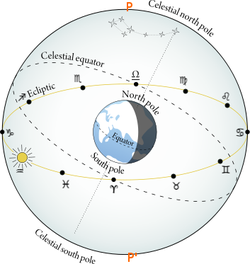
Hi! Have you ever opened a newspaper or magazine, and seen an astrology page showing horoscopes for people with different zodiac signs? Zodiac signs are twelve signs ( Aquarius, Pisces, Aries, Taurus, Gemini, Cancer, Leo, Virgo, Libra, Scorpio, Sagittarius, Capricorn) that correspond to roughly a month a year. The signs were named for the 12 constellations that remain close to the sun during different parts of the year. People fall into categories based on when their birthday’s fall in the year, and are said to hold characteristics that are associated with certain signs. For instance, I’m a Taurus, and Taurus’ are said to be outspoken and stubborn. The subject of astrology, which focuses on Zodiac or ‘star signs’, was first record in ancient Mesopotamia almost 4000 years ago. Zodiac signs are associated with other elements of space, like planets and elements. The interest in Zodiac signs and their potential impact on ones’ personality and life has spouted several professions, like astrologers and sign readers. People who work in these occupations make a living by consulting clients and giving them advice and predictions based on their horoscope and Zodiac signs. While some may scorn the reliability and accuracy of astrology, I believe that it is fascinating to learn what has come of observing the different constellations that lie close to the sun every month. To learn more information on the history of Zodiac signs and their relevance in society today, click here250px-Sign_cusps


Posted in Class | Tagged , , , | Comments Off on Zodiac Signs

The Vast Size and Scale of the Universe

Hello! The world may seem so large, but when you look at the size of the Earth compared to the Universe, it is actually very small. The Earth represents only a tiny fraction of our Solar System and galaxy. When you consider that the Milky Way Galaxy is an astronomically small portion of the entire universe. One interesting exhibit that puts this into perspective is the Scales of the Universe exhibit at the American Museum of Natural History in New York City. The exhibit is outdoors and shows a 3D representation of our entire Solar System and galaxy to scale. The exhibit is interactive and informative, and has several kiosks to read more information on the universe. I haven’t been to this exhibit myself, but learning about through my research has led me to conclude that the Universe is enormous, and is so much more than just our world. Next time I am in New York City, I will definitely check out the Scales of the Universe Exhibit to learn more information on just how big our universe really is.

Scales of the Universe Museum

Scales of the Universe Museum


Posted in Universe | Tagged , , , , , | Comments Off on The Vast Size and Scale of the Universe

A Ghostly Eclispse?

This week, people have noticed that there was a very odd appearance that made the moon look different. They noticed that there was a very slim crescent moon that also shows the black silhouette of the rest of the moon. Although it does look like a eclipse, experts have weighed in and determined this phenomenon to be Earth shine. Earth shine occurs when light from the Earth bounces and reflects off the moon. This is what gives the moon its occasional ghostly and lunar-like appearance. Whenever I looked at the sky, I never really thought about why the moon had a ghostly appearance. Finding this article presented me with some information that I can apply if I were to impress someone with my astronomy knowledge.

Click on the picture of the moon in earth shine mode and for the article.

635574734465382145-0121-Ghost-moon


Posted in Class, Science | Tagged , , , | Comments Off on A Ghostly Eclispse?

Biggest Thing in Universe

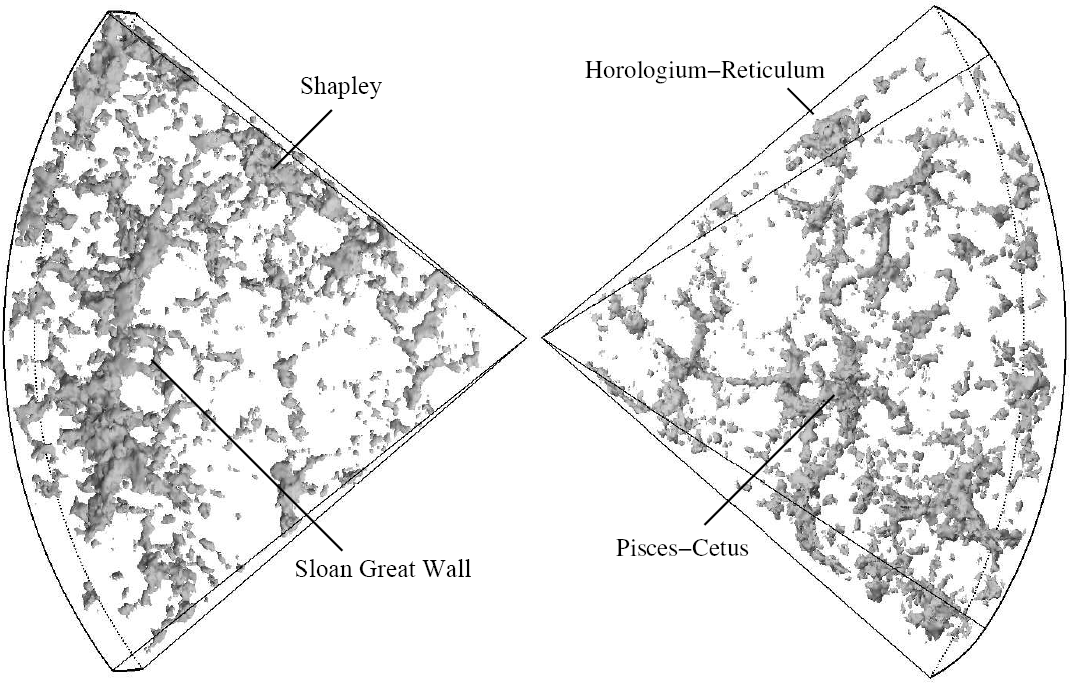
Things in the universe comes in all shapes and sizes, there are planets thirty times heavier than Jupiter, stars thousands of times larger than our sun, galaxies millions of light years wide… However, what is the largest object in the universe? For a long time the answer used to be the Sloan Great Wall – a cosmic structure formed by a giant wall of galaxies located around one billion light-years from Earth, measuring 1.38 billion light-years (1.30×1025 m) in length.

The Sloan Great Wall in a DTFE reconstruction of the inner parts of the 2dF Galaxy Redshift Survey Author: Willem Schaap

The Sloan Great Wall, a structure that is 1/60 of the diameter of the observable universe, is shockingly only 1/7th the size of the Hercules–Corona Borealis Great Wall, the current largest and the most massive structure known in the observable universe.

This enormous image shows Hubble’s view of massive galaxy cluster MACS J0717.5+3745. The large field of view is a combination of 18 separate Hubble images. Using additional observations from ground-based telescopes, the team was able to map the filament’s structure in three dimensions, the first time this has ever been done. The filament was discovered to extend back from the cluster core, meaning we are looking along it. Credit: Hubble Space Telescope

Here is a video offering more insight on the Hercules–Corona Borealis Great Wall.

Posted in Universe | Tagged , , , | Comments Off on Biggest Thing in Universe

Biggest Thing in Universe

Things in the universe comes in all shapes and sizes, there are planets thirty times heavier than Jupiter, stars thousands of times larger than our sun, galaxies millions of light years wide… However, what is the largest object in the universe? For a long time the answer used to be the Sloan Great Wall – a cosmic structure formed by a giant wall of galaxies located around one billion light-years from Earth, measuring 1.38 billion light-years (1.30×1025 m) in length.

The Sloan Great Wall in a DTFE reconstruction of the inner parts of the 2dF Galaxy Redshift Survey Author: Willem Schaap

The Sloan Great Wall, a structure that is 1/60 of the diameter of the observable universe, is shockingly only 1/7th the size of the Hercules–Corona Borealis Great Wall, the current largest and the most massive structure known in the observable universe.

This enormous image shows Hubble’s view of massive galaxy cluster MACS J0717.5+3745. The large field of view is a combination of 18 separate Hubble images. Using additional observations from ground-based telescopes, the team was able to map the filament’s structure in three dimensions, the first time this has ever been done. The filament was discovered to extend back from the cluster core, meaning we are looking along it. Credit: Hubble Space Telescope

Here is a video offering more insight on the Hercules–Corona Borealis Great Wall.


Posted in Universe | Tagged , , , | Comments Off on Biggest Thing in Universe