The Search for Habitable Exoplanets

Earlier this month, the Kepler space telescope spotted three planets of Earth-like size orbiting in a nearby star’s “habitable zone,” or the area around the star in which water could exist in liquid form on a planet’s surface. However, the planets they found, along with the other 26 Earth-like exoplanets found thus far, do not perfectly mimic our own planet and have been deemed uninviting to life as we know it.

After searching thousands of systems and discovering close to 2,000 planets outside our solar system, none look promising of supporting human life should we ever need to find a new home, which begs the question: is our system unique? Given the infiniteness of space it seems unlikely, but we have yet to prove that true. Perhaps the conditions that brought about our home, with days just long enough to warm our surface, but not so long that our ground is cooked, and a million other chance occurrences, really do make us one of a kind.

Source: http://www.iflscience.com/nearby-star-has-three-planets-slightly-larger-earth-one-habitable-zone


Posted in Exoplanets | Tagged , , , | Comments Off on The Search for Habitable Exoplanets

Skysafari3-Very cool app

skysafari screenshot

Skysafari3 three is an app similar to Stellarium but it can be used on your phone and iPad as well. It is also much easier to use and the pictures of the sky that can be viewed on it make the sky look a lot more beautiful than with Stellarium. You can use your current location or observe the sky from many different locations as well. Also, if you are wondering about the history of any constellations, stars, or planets, there are descriptions written by astronomers from all over the world that explain just what your looking at. I found this very helpful in explaining what I was viewing and it gave me a better understanding of the universe. There is also a “skychart” which can be viewed by holding your phone or iPad up to the sky and the chart moves while you move. This can pinpoint where you are in the world. This app simply makes looking at the sky fun and interesting.


Posted in Class, Universe | Tagged , , | Comments Off on Skysafari3-Very cool app

Are We Always Living in the Past?

rising sun

It takes light time to travel any distance. It takes light one-second to travel to Earth from the Moon, and about 8 minutes for light to reach Earth from the Sun (Bennett). So really when we look up at the moon, we are seeing the Moon one-second ago, and when we first see the sun rise, we are seeing the Sun as it was 8 minutes ago. As we look farther and farther into space, the further back in time we are looking. But how does this translate on earth? Is it true that every time we see something, we are seeing it as it was in the past? If we see a person 1000 yards away, it takes a fraction of a second for their image to reach us, so we are seeing them as they were however long ago their image takes to reach us. The concept that we are seeing everything as it was in the past is mind blowing and brings up the subject of time travel and if it is really possible.


Posted in Class | Tagged , , | Comments Off on Are We Always Living in the Past?

El Castillo

Chichen_Itza_3
http://en.wikipedia.org/wiki/El_Castillo,_Chichen_Itza

They say anyone can build a bridge that stands up, but it takes an engineer to build one that barely stands up. While this quote might be slightly exaggerating the engineering prowess of the average Joe, the fact is that building things accurately is difficult. The architectural and structural accomplishments of the Italian Renaissance are made all the more remarkable by the fact that instruments were imprecise and calculations had to be done by hand. What is even more impressive is when pre-modern structures are built with astronomical occurrences in mind. A prime example of this is El Castillo at Chichen Itza. This pre-colombian Mayan temple to Kukulkan, the Mayan serpet deity, was build to create an image of its god on the spring and fall equinoxes. On these days, the afternoon sun hits the northwest corner of the pyramid in such a way that the steps cast a serpent-like shadow along the northern staircase. This shadow runs the length of the staircase, connecting to the carved stone head of Kukulkan at the base.

http://en.wikipedia.org/wiki/El_Castillo,_Chichen_Itza


Posted in Class | Tagged , , , | Comments Off on El Castillo

What Does It Mean to Have a Zodiac Sign?

Lots of people are aware that they have a Zodiac sign – a symbol associated with the time of year that they were born. “I’m a Capricorn,” or “Watch out for him, he’s a Leo,” are phrases that we use without really understanding what they mean. So what exactly does it mean to have a Zodiac sign?

The twelve astrological, or Zodiac, signs originate with the Babylonians around 2,000 B.C. (American Federation of Astrologers). These early astrologers had a thorough understanding of how the Sun seemed to move throughout the sky and how constellations – groups of stars – seem to circle the Earth during the course of one year. Though they believed that the contents of the universe rotated around the Earth, they observed correctly that certain groups of stars seem to return to the same place in the sky at the same time each year. The Sun appears to be closest to one of the twelve constellations at predictable times throughout the year. For example, the Sun is closest to the constellation Leo from mid-July to mid-August. The Babylonians assigned each constellation a name and designated each a period of days on the modern calendar, so that every day of the year was associated with a certain constellation.

In short, the astrological sign associated with a certain period of time on our calendar, a phase of thirty days at the end of one month and beginning of another, is derived from the constellation to which the Sun is closest during those days.

There is a twist in this story that the Babylonians did not consider, however. Since 2,000 B.C., astronomers have discovered that the Earth precesses on its axis, wobbling slightly like a top spinning on a table that stars to shake after a few seconds of spinning. This wobble actually occurs in a predictable cycle of 26,000 years, which slowly causes the time at which we see certain constellations in the sky to change. Halfway through the cycle, 13,000 years after the constellations were first observed, their locations will actually be completely reversed. Leo will be closest to the Sun in late January to early February. 26,000 years is a very long time, but it has been nearly 3,000 years since the Babylonains first delineated certain Zodiac signs. The effects of precession are already being seen, so some Zodiac signs really do not represent their true times on the calendar. People born at the beginning or end of an astrological period may, in fact, have a different Zodiac sign, as the Sun is closest to a different constellation during that time of year (Wikipedia).

Because this cycle will just continue to change as time goes on, it may just be easier to stick with the Zodiac signs determined by the Babylonians. For this reason, Z

A map of the Zodiac constellations (Before It's News)

A map of the Zodiac constellations (Before It’s News)

odiac signs actually give us a peek into the cultural and astronomical history of our world!


Posted in Class, Historical, Stars | Tagged , , , , , , | Comments Off on What Does It Mean to Have a Zodiac Sign?

Introductory Post

Hello blog community! This is Farhan, and below is a photo of a canal through the neighborhood in which I grew up!

38770639                                                              Dhanmondi Lake


Posted in Class | Tagged , , | Comments Off on Introductory Post

So on the Topic of Space Though

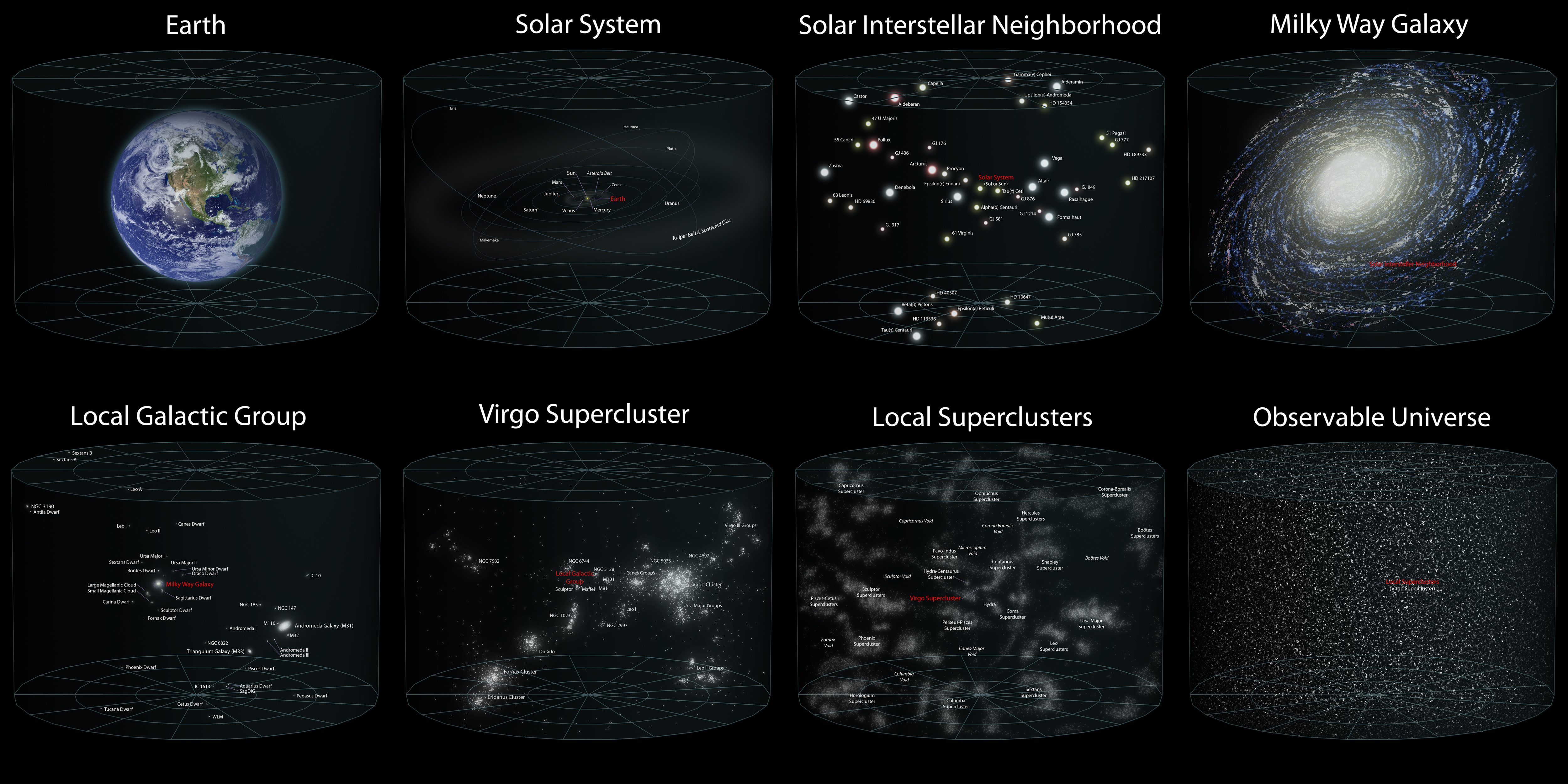
I mean, it’s been said that perspective is everything right? The thing is, there’s some things that we can’t even wrap our perspective around. There’s really really small things, like the million little individual microbes/cells doing their own thing on the end of your left pinky. Then there’s things that are just… They’re just huge. Like, how could something even be so big? Take a look at this picture:

universe
Taken from google – found here The Universe is Huuuge

Like, what?? Have you ever stared into space? You’re seeing a fraction of a centimeter outwards into a void that stretches further than we can even imagine. I mean shoot, even the things that we can see are super far away. It’s almost too much to think about. Personally, I’m super excited to see what comes of it.


Posted in Class, Universe | Tagged , , | Comments Off on So on the Topic of Space Though

A Mole of Moles

Like most freshmen at Vanderbilt, I took Chemistry 102a during my first semester. On the first day of class, we (ostensibly, seeing as I slept through it) discussed the concept of a mole. A mole is a unit of measurement, generally used to describe the number of atoms or molecules of something, of which there are usually a lot. One mole comes out to 602,214,129,000,000,000,000,000, known as Avogadro’s Number, or roughly one trillion trillion. Incidentally a decent approximation of the number of grains of sand on the earth, one trillion trillion is by all reasonable measures an unfathomably large number for us. An amusing XKCD page deals with the question, “What would happen if you were to gather a mole of moles in one place?” Assuming one mole (the animal) weighs about 75 grams, a mole (the unit) of moles (the animal) comes out to roughly 10^22 Kg, which is slightly more than half the mass of the moon. If placed on the surface of the earth, the mole of moles would span the entire globe with an average thickness of 80 kilometers (the upper edge of our atmosphere), exterminating all life on earth in the process. Released into space, gravity would compress the moles into a planet-like sphere replete with a molten core of moles and volcanic-like surface activity. The following diagram shows the mole of moles to scale with the earth and moon:

moles_scale
https://what-if.xkcd.com/4/

“There might be a billion habitable planets in our galaxy. If we colonized them, we’d certainly bring mice and rats with us. If just one in a hundred were populated with small mammals in numbers similar to Earth’s, after a few million years—not long, in evolutionary time—the total number which have ever lived would surpass Avogadro’s number.” – XKCD

The universe is unfathomable massive. It’s funny to think that even on earth, a location so puny and insignificant when compared with essentially anything else in the universe, we still deal with numbers more massive than the number of planets in the universe. With estimates around 1,000,000,000,000,000,000,000,000, or 10^24, planets, it’s absurd that a similar number of moles would take up a space the size of the moon. Crazier still, one mole of water weighs in at 18.0152 grams, or about a tablespoon and a fifth.


Posted in Class, Universe | Tagged , , , | Comments Off on A Mole of Moles

A Human Perspective of the Cosmic Calendar

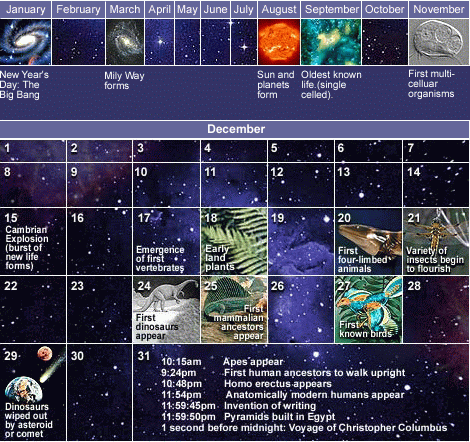
In this blog post, I will be discussing the advent of the Cosmic Calendar. Astrophysicists developed the Cosmic Calendar as a method to visualize the expansive history of the universe. The 13.8 billion-year history of the Universe is condensed into a single year. In this visualization, the “explosion of space, time, matter, and energy” known as the Big Bang Theory occurs at midnight of January 1st, and the present time occurs at midnight of December 31st. The Cosmic Calendar is scaled for there to be 438 years per second and 37.8 million years per day. Using this scale, it isn’t until 10:30pm on December 31st that humans come into existence!

The Cosmic Calendar is a fascinating concept, as puts into perspective how infinitesimal the presence of mankind has been throughout the vast time span of the universe. The late astronomer Carl Sagan encapsulates this idea, describing how “all of human history would occupy an area the size of [his] hand, if the Cosmic Calendar [were] to be scaled to the size of a football field.” The Cosmic Calendar is a great way to see how far-reaching and vast the universe truly is.

From Wikipedia

From the Astronomical Society of the Pacific


Posted in Historical, Universe | Tagged , , | Comments Off on A Human Perspective of the Cosmic Calendar

We Are the Universe

When we look up at the night sky or try to count the number of galaxies we think might exist – a number with a trailing line of zeros – it can be hard to conceptualize just how big our universe really is. That can make us feel separated; how could human beings infinitesimally small compared to their own planet, let alone the entire universe, play any part in the cosmic story unraveling around them?

It’s important to remember that our planet is just as much a part of the universe as any star we see out in space. Every one of us, and everything we touch or see or do, is made of the universe. Let’s think about this in terms of the Big Bang and the material created during the start of the universe.

As far as we know, there was nothing before the Big Bang, which we think happened about fourteen billion years ago (The implications of the term “nothing” raise more questions, of course – see Stephen Hawking’s article here for more.). The first atomic particles were created during the moment that this explosion happened, and in the first few minutes of the universe’s existence, hydrogen and helium were created in a process called nuclear fusion. 

This hydrogen and helium were released, free to travel outward in all directions. Accompanied by photons – small particles of energy in the form of light – some of the particles collected in areas that were denser. These concentrations of particles swirled together over time to form stars and galaxies like the ones we see in our night sky today.

These stars continued to create hydrogen and helium at their cores by fusing together atomic nuclei. Though it took billions of years, (more on life cycles of stars at Space.com) some of these stars eventually exhausted the fuel at their cores and started to die. The end of this process involved stars exploding in giant supernovae and then collapsing into black holes. During a supernova, pressure and temperature reach such high levels that fusing together even more atomic nuclei can create new elements. In regular cores of stars, there is not enough heat or pressure to enable these reactions. All other elements aside from hydrogen and helium were created from supernovae – carbon, neon, oxygen, silicon, iron – elements that we hear about every day (Smoot Group).

When a supernova happens, these elements are projected out into space. In turn, they collect with hydrogen and helium in other denser areas of space and collect into stars, galaxies, cosmic material like asteroids, and planets like Earth. So every ring of Saturn, every crater on the Moon, every person on planet Earth is made of material that was produced in the very cores of stars. Material that was constructed during the Big Bang is part of the ground that we walk on and the energy that we use, and more dirt and dust from space falls down to Earth every day. 

We are an active part of the aging universe. Elements that were catapulted through space and into the center of stars and back out again are the same elements that run through our veins. It’s easy to feel like space is far away, but it’s also important to remember that we are, in a very literal sense, the universe.

Illustration of a supernova

Illustration of a supernova (Supernovae.net)


Posted in Class, Universe | Tagged , , , , | Comments Off on We Are the Universe