Star Walk

As a student in the astronomy lab last semester I was told to download the Star Walk application because it would help during observing labs.  When I first downloaded it I assumed I would use it for a couple of labs and then delete it and use the space for a new version of Flappy Bird (this does not actually exist).  As it turns out I didn’t delete the app.  Since then I’ve used the app in the Bahamas, where I was able to point out Jupiter from the beach (light pollution isn’t a problem on the beach).  While the app does not get everyday use, it is one of my favorite apps to use.  This app has given me the opportunity to give the illusion that I am smart by pointing out distant stars and constellations. I would strongly recommend this app to anyone who enjoys observing the sky or likes to seem smart in front of their friends.

star walk

App made by: Vito Technology


Posted in Stars | Tagged , | Comments Off on Star Walk

Strange Light Found on Dwarf Planet Ceres?

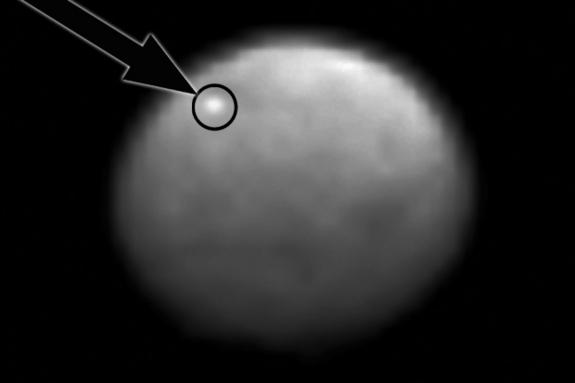
Scientists claim to have spotted a strange bright light or object recently on the surface of Ceres, a dwarf planet and the largest object lying within the Asteroid Belt of our solar system. The following picture was taken of the planet as NASA’s Dawn Spacecraft flew in toward the object on January 13th. What is interesting in particular is that Ceres, at roughly 600 miles in diameter, is believed to contain roughly twenty percent of its mass in fresh water, which is even more freshwater than that located on Earth at any given time. Furthermore, geysers and volcanic activity has been monitored and proven to occur on the planet’s surface, suggesting a rather active object in what is normally seen as a rather dull part of the solar system. Could this perhaps be a sign of life beyond Earth? Let’s wait and see.

NASA_Finds_Mysterious_Bright_Spot-892b6e53798653467072a3663e110db4

ALIENS?! Read about it here.


Posted in Aliens, Class | Tagged , , , , , , , | Comments Off on Strange Light Found on Dwarf Planet Ceres?

Blog #2: Eclipses

Both in class and while reading the textbook, I found myself particularly fascinated by the phenomena of eclipses. Although it would be extremely cool to see eclipses every month, the fact that they do not occur very often because the moon’s orbit is tilted by 5° with respect to the ecliptic makes them so special and spectacular. As the textbook mentions, my fascination with eclipses is not unique, for many cultures have a rich history connected to eclipses, from ancient Greek legends to predictions of future eclipses by the Babylonians and the Mayans.

Personally, I find it easier to understand and conceptualize eclipses from the geocentric perspective. In this perspective, solar eclipses occur the sun gets covered by the moon, and lunar eclipses occur when the moon gets covered up by Earth’s shadow. I never before realized how many factors contribute to both lunar and solar eclipses. I am particularly amazed by how quickly totality of solar eclipses passes; totality only lasts for a maximum of about seven minutes. With this in mind, I will be sure to be outside (maybe on the rooftop of the parking garage on 21st , where we observe in astronomy labs) on August 21, 2017 to view the next total eclipse of the sun in Nashville.

While the brevity of solar eclipses surprised me, the color of the moon during lunar eclipses also sparked my interest. The moon appears to be red during lunar eclipses because Earth’s atmosphere bends light. Although a distance equal to 30 Earths lined up next to each other separates the moon and the Earth, they still influence each other significantly. I have always been curious about eclipses and wrote them down as one of the topics that I wanted to discuss in class, so I am very glad to now be able to understand and explain exactly what eclipses are and why they occur.

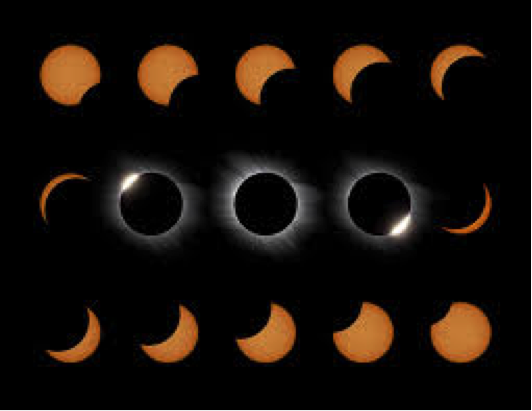
solareclipseSolar Eclipse: http://www.nikonusa.com/en/Learn-And-Explore/Article/h20zakgu/How-to-Photograph-a-Solar-Eclipse.html

lunareclipseLunar Eclipse:http://www.skyandtelescope.com/astronomy-news/observing-news/total-lunar-eclipse-09262014/


Posted in Class | Tagged , , , | Comments Off on Blog #2: Eclipses

The Vast Size and Scale of the Universe

Andromeda_galaxy_2

Recently I saw this link on Facebook and I decided to check it out. I had no idea what I was in for. We have been talking about our galaxy and our nearest neighbor, The Andromeda Galaxy, a lot in class and this picture just released by NASA gives us a better idea of what exactly we are talking about when we reference our neighbor.

Everyone knows that we are a tiny speck on a tiny spec orbiting another tiny speck in this vast universe. But knowing something and understanding it are two totally different things. Watching this video and seeing part of the Andromeda Galaxy so clearly makes you realize how big our own galaxy is in relation to that and how small we really are inside of it. The crazier thing is to think about how we aren’t even that large of a galaxy. There are so many other galaxies out there that we have not found and may not ever find. The universe is so vast and even with the help of this video I still don’t think it is possible to really fathom just how huge it is.


Posted in Galaxies | Tagged , , , , | Comments Off on The Vast Size and Scale of the Universe

Andromeda Galaxy

This picture…Wow.  Cliché as it may be, this 1.5 Billion pixel picture fascinates me.  To view this picture in its entirety, one would need 600 HD TVs.  While the picture is cool and would look great above my bed, I wonder if there are any implications of this picture.  According to NASA, this picture will become the benchmark for precision studies of these types of galaxies.  This picture will help astronomers interpret light from similar galaxies at much farther distances.  This picture does have real tangible uses to it.

When record breaking things happen, especially is a scientific category, I like to think big picture on what it means.  While some may see this as just a picture, I see this picture and I marvel as how far we have comes in terms of observing space.  Just as a computer runs through a code and discovers a monumental number in a sequence, astronomers push the boundaries of what was once thought impossible.  While the picture may not solve wars or make Vunet work consistently, it is a small step in the expansion of technology that leads to the breakthroughs that get all the news attention.  The people that would call it a picture would be right; however the implications reach far past the Andromeda Galaxy.


Posted in General | Tagged , | Comments Off on Andromeda Galaxy

Tennessee will be treated to a total eclipse in 2017

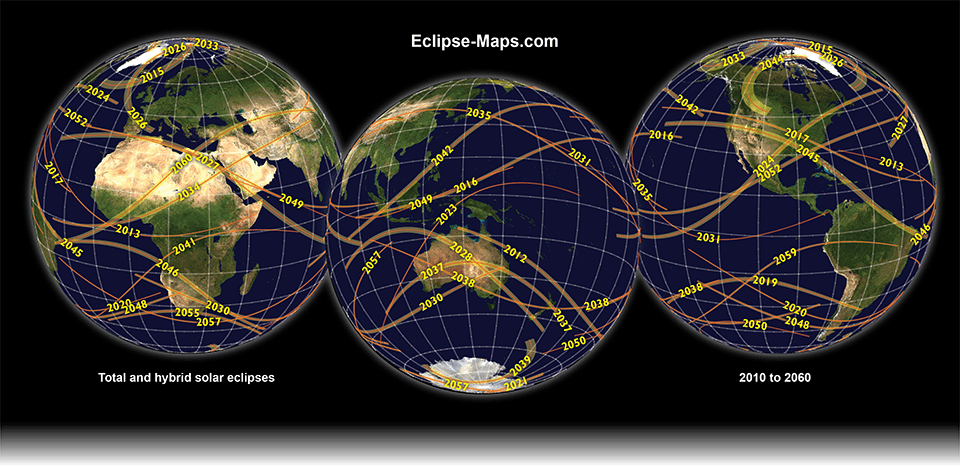
Due to the constant nature of the laws of physics, scientists can predict future eclipses with remarkable accuracy. These events are caused by the moon partially or (more rarely) totally obscuring the Sun’s path to the Earth. During solar eclipses we are able to see the Sun’s outermost halo, called the corona, which is usually washed out in the Sun’s brightness. Many Americans can look forward to a total eclipse in 2017, which will be the first time many of us will see one, and possibly the only time until 2045.


Posted in Class, Observables | Tagged , , | Comments Off on Tennessee will be treated to a total eclipse in 2017

Just how small… or big… am I?

The Known Universe

This video really puts into perspective the true size of the observable universe.  Some say this makes us insignificant, but I disagree.  I think that our ability to map the nature of the universe to such an extent makes us quite significant! Realize that everything we know about the universe came solely from observing incoming light from outer space, and what we know about physics.  Mapping all of that is an impressive feat.  It’s an even more impressive feat for beings as small as people!


Posted in Light, Physics, Universe | Tagged , | Comments Off on Just how small… or big… am I?

The scale of supermassive black holes is mind boggling!

Crazy black hole video!
They say learning about astronomy is a great way to feel insignificant, and nowhere is this more apparent than in the study of supermassive black holes. The amount of matter contained within these beasts is impossible to comprehend without visual aids. The black hole in the center of the Phoenix cluster contains more matter than 1 billion Suns! When one considers that the Earth’s diameter is 109 times smaller than the sun, it becomes apparent that our brains cannot accurately fathom such massive amounts of matter.

Even though this black hole could easily swallow our entire solar system without any hesitation, we needn’t worry: the phoenix cluster is located over 5.7 billion light years away!


Posted in Class, Universe | Tagged , , | Comments Off on The scale of supermassive black holes is mind boggling!

Want to know your real sign?

Cosmo magazine may be giving the cosmos the best PR around, thanks to the back of their magazine. Every Cosmopolitan has a section near the back dedicated to the astrological horizon- i.e., horoscopes. Whether we think it’s a sham or not, it’s fun to read about what the month will supposedly hold according to the great wisdom of the universe (thankfully, only about a quarter of the population believes in astrology) and may be one of the only times that day/week/month we focus on the stars.

Unfortunately, these unsound divinations are even more inaccurate because of the moving position of the constellations. There are 13 (not twelve, as tradition will tell you) constellations along the zodiac, or the annual path of the sun among the constellations (remember, constellations are the regions of the sky marked with patterns of stars, not the actual stars). Your astrological sign is meant to represent the constellation that was closest to the sun on the day you were born. The problem is that these signs were assigned based on the position of the sun almost 2000 years ago, and since then precession has had it’s way with our perception of the position of the Sun and the stars. Precession is the gentle wobbling of the earth due to its spinning that changes the direction of the Earth’s axis, like a spinning top. As the Earth precesses, our perspective of the night sky changes as the tilt changes.

And as of right now, with the Earth having moved about 1/13 of the way through its current 26,000-year precession cycle since the signs were assigned, we’re about a month off from the actual position of the Sun among the constellations. This means that our horoscopes, in every magazine on every newsstand, are about a month off… and still missing a sign.

Here is an accurate (?) list of the astrological signs, Ophiuchus included:

Capricorn: Jan. 20-Feb. 16

Aquarius: Feb. 16-March 11

Pisces: March 11-April 18

Aries: April 18-May 13

Taurus: May 13-June 21

Gemini: June 21-July 20

Cancer: July 20-Aug. 10

Leo: Aug. 10-Sept. 16

Virgo: Sept. 16-Oct. 30

Libra: Oct. 30-Nov. 23

Scorpio: Nov. 23-29

Ophiuchus: Nov. 29-Dec. 17

Sagittarius: Dec. 17-Jan. 20


Posted in Stars | Tagged , , , , | Comments Off on Want to know your real sign?

Faster than the Speed of Light

In summer of 2013, the New York Times published an article about NASA’s (then) newest project. Physicists and engineers were trying to determine whether “warp drive” might one day be possible. Warp drive, for those of you who are not Trekkies, is traveling faster than the speed of light or 3.0 x 10^5 km/s, and thus far has only been achieved by space, not humans.

The idea is to use the already expanding universe -something that has been happening for the past 13.7 billion years or so- to create a sort of “warp bubble.” By expanding space on one side of a spacecraft and contracting it on the other in this bubble, the spacecraft would be pulled from one direction and pushed toward the other. Dr. Harold G. White, a NASA physicist and advanced propulsion engineer heading the project, gave us the helpful imagery of stepping on a moving sidewalk like they have in airports.  He’s been designing instruments to warp the trajectory of a photon and change the distance it travels in a particular area to test the plausibility of faster-than-light travel. What makes it even better is that because the instruments are so sensitive and were picking up earthly vibrations that distorted the observations, the team now works in a floating lab. His team has also been working on advances to make the mechanics less improbable, including a ring to go around the spacecraft to significantly reduce how much energy would be necessary.

The endgame to mastering such a feat would be shortening space travel from tens of thousands of years to weeks and months. So why would Einstein dictate “thou shalt not exceed the speed of light” when that kind of interstellar convenience is only a few groundbreaking discoveries to manipulate the fabric of space and time away? Maybe because when our favorite man of steel travels faster than the speed of light, he also rips through the fabric of time and it may be best to leave that kind of power to the superheroes.


Posted in Instruments, Light, Space Travel | Tagged , , , | Comments Off on Faster than the Speed of Light