BLOG#2 LOOK AT THE SKY

As now it is winter recently, Orion (actually part of Orion which looks like a large sandglass) (PS: I took a picture of Orion but it was too dim to be seen.) becomes the most visible constellation during nighttime on the sky. Sometimes the tail of Ursa Major is also visible when the sky is clear and whether is cold. As the very end of the tail is toward east and the whole body of the bear is located in the north part of the sky, it’s only visible on the Wyatt Lawn in Commons or it will be blocked by buildings.

orion2UrsaMajorMessier_smhttp://mail.colonial.net/~hkaiter/starweb0809/SECTION5/izzyweb5/izzyweb5_images/UrsaMajorMessier_sm.jpg

During daytime thanks for the tilt and of the Earth and its revolution around the Sun we can easily figure out where south is because Nashville has higher latitude than the Tropics of Cancer.

Nashville, TN - Google Mapshttps://www.uploady.com/#!/download/agFXca05KNM/WXp6xOZd9L4fyoSS


Posted in Class | Tagged , | Comments Off on BLOG#2 LOOK AT THE SKY

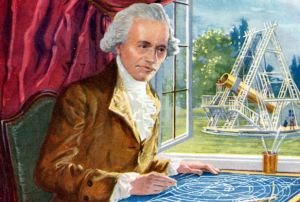
William Herschel believes in ghosts!

williamherschel

picture from: www.redorbit.com

One of my favorite moments in the Neil deGrasse Tyson-hosted show Cosmos: A Spacetime Odyssey takes place in the first moments of one of the first few episodes.  It “flashes back” to the early 1800’s, showing a cartoon involving the famous astronomer William Herschel and his young son, John, walking along the beach on a clear evening.  John looks up at his father and asks, “Father, do you believe in ghosts?”, to which Herschel responds, “Why yes my son”.  Upon seeing his son’s reaction, he clarifies “Oh no, not in the human kind…no, not at all. But look up, my boy, and see a sky full of them”

The young boy has a response typical to the way most would likely respond: confusion and curiosity as to why his father is referring to the stars that they see every night, day after day, as ghosts.  Without a clear understanding of physics and astronomy, and probably even with a good understanding of the subjects, it’s certainly a difficult thought to wrap your head around.  Due to the vast distances that a majority of the stars in our night sky are located away from our planet Earth, along with the limitation that light can travel no faster than well…the speed of light, the light emitted from these stars may take eons to travel to our eyes allowing them to become visible to us.  Some of this light takes SO long to get to us, that there becomes a very real possibility that the stars we are just now beginning to see have already died long ago.  This leaves us with just an image of a body that in our current time, doesn’t exist.  Now, that sounds pretty ghost-like to me!  Although it may not be the most scientific way of describing things, I think that William Herschel was certainly onto something FAR ahead of his time, and something that is still a difficult topic for many to wrap their head around, when he talked to his son about our “sky full of ghosts”.


Posted in Historical, Light, Universe | Tagged , , , , | Comments Off on William Herschel believes in ghosts!

Blog Post #1: What would happen if you threw a baseball at the speed of light?

This web page gives us the answer. Basically, if any object with mass were moving at that speed, especially within our atmosphere, the result would be detrimental. The air molecules would not have the chance to flow around the baseball and the baseball would just collide straight into every particle it reached, which would result in these atoms fusing to the surface of the ball and releasing gamma rays (which travel at the speed of light). These gamma rays will continue to radiate outward as the ball moves and will tear apart the molecules in the air, causing the entire atmosphere around the ball park to be completely torn apart. The ball will shed particles which will hit more molecules in the atmosphere causing more fusion to take place. While all this is happening in just a few nanoseconds, the poor batter hasn’t even seen the pitcher let go of the ball because that light is traveling at the same speed as the ball. Once the ball reaches home plate, the entire park has become one huge bubble of plasmised air and the effects on the surrounding town would be similar to a nuclear explosion.

So be satisfied with your fastball. At least it doesn’t level your hometown.

download (1)

wallpaperswide.com


Posted in Class, Light | Tagged , , , | Comments Off on Blog Post #1: What would happen if you threw a baseball at the speed of light?

Total Solar Eclipse

People have been fascinated with total solar eclipses. Part of that fascination comes from how rare they are. Solar eclipses occur every 18 months on average, but what makes them so rare is that they are visible from limited number of locations on Earth. It ends up being that a particular location would observe a total solar eclipse every 360 years on average. This has sparked people’s fascination with the event. But there also some spectacular views in the sky during a solar eclipse. The most beautiful are the Baily’s Beads and the Diamond Ring. Baily’s Beads occur in the final moments before totality when the majority of the Sun disc is covered, a sliver of the Sun’s photosphere shines through the valleys on the Moon’s surface and is blocked by the surface’s mountains. The resulting image is one of a string of uneven pearls or beads. This can be observed in Figure 1 below. The other event comes in the very last moment before totality. The Diamond Ring is composed of the Sun’s corona shining around the Moon’s disc creating a ring and the final beam of light from the Sun’s disc shining through. That final beam of light appears as a blob on the ring, so it looks like a diamond ring. This one can be seen in Figure 2. Because of such incredible images, people continue to be fascinated with total solar eclipses. Sources: Space.com, Exploratorium

Credits: Exploratorium
Credits: Space.com
Credits: Space.com

Posted in Class, Observables, Sun | Tagged , , | Comments Off on Total Solar Eclipse

Traveling Faster Than The Speed of Light

Can you possibly travel at a speed faster than the speed of light? Scientists think it might be possible even without violating Einstein’s theory that the speed of light is the “galactic speed limit.” Some theoretical models show that in the early stages of the universe, right after the Big Bang, space expanded at a pace faster than light. Dr. Harold White from NASA thinks that it might be possible to make space carry a spacecraft at a speed faster than the speed of light. Such thing he calls warp drive, where the space in the front of the spacecraft expands and space on the back of it contracts, propelling the spacecraft at a high speed. This would not violate Einstein’s theory because it would be space moving the spacecraft and not the spacecraft generating that speed on its own. This is purely theoretical, but Dr. White is attempting to demonstrate it on a smaller scale in a lab in NASA. His team is using extremely sensitive equipment like interferometer to cause a slight warp in the trajectory of a photon. The instruments are so sensitive that the lab has to be floating on top of a system of pneumatic piers in order to isolate seismic noise. The project is still in the very early stages and there is no significant proof that it is possible for humans to make this happen, but the opportunity is there. Such a discovery would change cosmic travel drastically making trips between stars last just a couple of weeks or months. Source: New York Times

Credits: The Daily Galaxy

Posted in Class, Light, Space Travel | Tagged , , , | Comments Off on Traveling Faster Than The Speed of Light

Introduction

Hey here,

I am Kewei Xu. I am an Electrical Engineering Major with a Computer Science Minor. I   I sometimes forget to do assignments like this one. Did you read the previous sentence as “I sometimes” or “I I sometimes”?

By me
Selfie by me in China

Posted in Class | Tagged , | Comments Off on Introduction

Planets bigger than Earth beyond Pluto?

Could it be possible that planets larger than the size of Earth lie beyond Pluto? According to researchers, the behavior of far-out celestial bodies far from the sun (such as Sedna and Pluto), seems to suggest so.  Such bodies, called “extreme trans-Neptunian objects” (or ETNO’s), should generally have an orbital distance of roughly 150 AU and near zero inclination (how much they alternate in “height” while in orbit), but actual numbers seem far off. Rather, most such ETNOs are now believed to have semi-major axes ranging from 150 – 525! AU beyond the sun, with inclinations of over 20 degrees! The only apparent suggestion, according to scientists, is that objects even more massive than Earth must lie in the most distant reaches of the solar system, tugging these ETNOs in such a way as to drastically affect their orbits. Could we actually have yet to discover the most massive planet in our system? Only time will tell.

I wonder what the sun looks like out there. Read more here.


Posted in Class | Tagged , , , , | Comments Off on Planets bigger than Earth beyond Pluto?

Light Travel Time and Observing Extraterrestrial Life

NASA-HS201427a-HubbleUltraDeepField2014-20140603

http://en.wikipedia.org/wiki/Hubble_Space_Telescope#mediaviewer/File:NASA-HS201427a-HubbleUltraDeepField2014-20140603.jpg

A topic that has really intrigued me is the speed of light and the time it takes for light to travel. The above image was taken by the Hubble Space telescope of galaxies billions of light years away. Some of these galaxies even extend back in time to only a few hundred million years of the Big Bang. It had not occurred to me that looking into space is essentially a time machine. All the stars or galaxies that can be seen are from millions and billions of years in the past because the light is taking that long to reach us.

To me, this has interesting repercussion in regards with searching for extraterrestrial life. For example, suppose at this current time, there is an advanced civilization somewhere in the Andromeda galaxy, which is 2.5 million light years away. But if they only developed within the last 40,000 years like humans did, we could observe the Andromeda galaxy and see no traces of their civilization. It would 2.5 million years until traces of their civilization could be observed through telescope. By 2.5 million years in the future, humans on Earth could be long extinct. Because of the time light travels, we could potentially never know about a civilization existing on another world at the same time as us.


Posted in Aliens, Light, Observables | Tagged , , , | Comments Off on Light Travel Time and Observing Extraterrestrial Life

The Cosmic Calendar

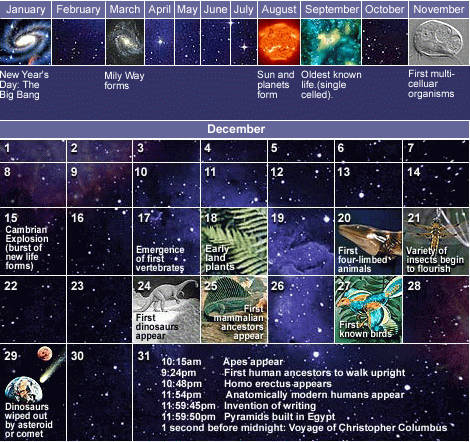
The universe is a staggering 14 billion years old – most of us can’t comprehend that length of time, so to put things into perspective, one can fit the entire history of the universe into one calendar year. With this “cosmic calendar,” the universe’s lifetime can be more easily understood by you and me. The cosmic calendar begins on January 1 with the Big Bang, with the Milky Way Galaxy forming between February and March (astronomers with differ on the exact times of galaxy formation). Our very own Solar System and planet Earth are not born until August/September, which makes sense because the Earth is estimated to be about 4 billion years old, which is approximately one-third of the universe’s age. Compared to the rest of space, our planet is still relatively young. However, our own human race is still in its infancy compared to the rest of the universe – the very first upright, walking humans don’t arrive until about 9:00 PM on December 31. To the rest of the universe, our existence has only been a blink of an eye. The cosmic calendar really puts into perspective just how young we are compared to the masses of planets, stars, etc. Humanity is just the most recent chapter in the very long history of the universe.


Posted in Class, Historical | Tagged , , | Comments Off on The Cosmic Calendar

Hubble revisit the “Pillars of Creation”

Hubble has captured a new visible-light image of the famous “Pillars of Creation.” after nearly 20 years later.

Photo:left: NASA/ESA/STScI/J. Hester and P. Scowen (Arizona State University); right: NASA/ESA/The Hubble Heritage Team (STScI/AURA)
Pillars_ThenAndNow (1)

Posted in Class | Tagged , | Comments Off on Hubble revisit the “Pillars of Creation”