What is Next?

Learning about the solar system and our entire universe has made me more curious about astronomy. At the beginning of the semester, I had trouble wrapping my head around the vastness of the universe. The number of stars, planets, and galaxies is unbelievable, especially because there is still so much that we don’t know. Although there is still much to learn, it is amazing how far humans have come in such a relatively short amount of time. The technology we have developed has allowed us to do things that seemed impossible less than 100 years ago. It makes me wonder where we will be 100 years from now. I am intrigued most by the possibility of life in other places. From what we have learned about habitable environments and extremophiles, I would not be surprised if living organisms were discovered on another world in my lifetime. There could even be another intelligent civilization out there and maybe with more technology we will be able to detect it. I am excited to hear about what scientists discover in the future.


Posted in Universe | Tagged , , , | Comments Off on What is Next?

Another Earth?

One of the biggest questions we have grappled with in the latter portion of class is whether or not there are any earth-like planets. Well, we now have a planet that may be quite similar to Earth. This has been given the name Kepler-186f. It is the same size as Earth, and has temperatures that would allow for liquid water. The major difference is that this planet is exposed to copious amounts of radiation. It has been called a habitable planet however, we are unsure if it actually is. The planet is 500 light years from Earth. It will be interesting to see what we find out about this planet in the coming years as technological advancements are made.


Posted in Class | Tagged , , | Comments Off on Another Earth?

You live where?!?!


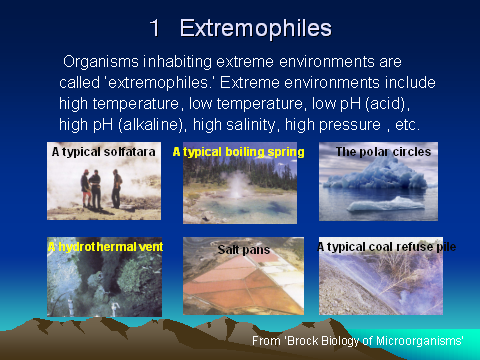
Extremophiles are organisms that live under extreme conditions. There are several different categories for extremophiles, but the category I find most fascinating are extremophiles. Can you imagine living in an environment that is over 250 degrees Fahrenheit? I cannot. However, these organisms can. These organisms were discovered at Yellowstone National Park in 1966. There are special adaptations that these organisms have that allow them to thrive in these very hot environments. The first are their proteins and nucleic acids that have made special modifications. Additionally, lipids saturated with fatty acids act as an insulation device.


Posted in Class | Tagged , , | Comments Off on You live where?!?!

Technology in Astronomy

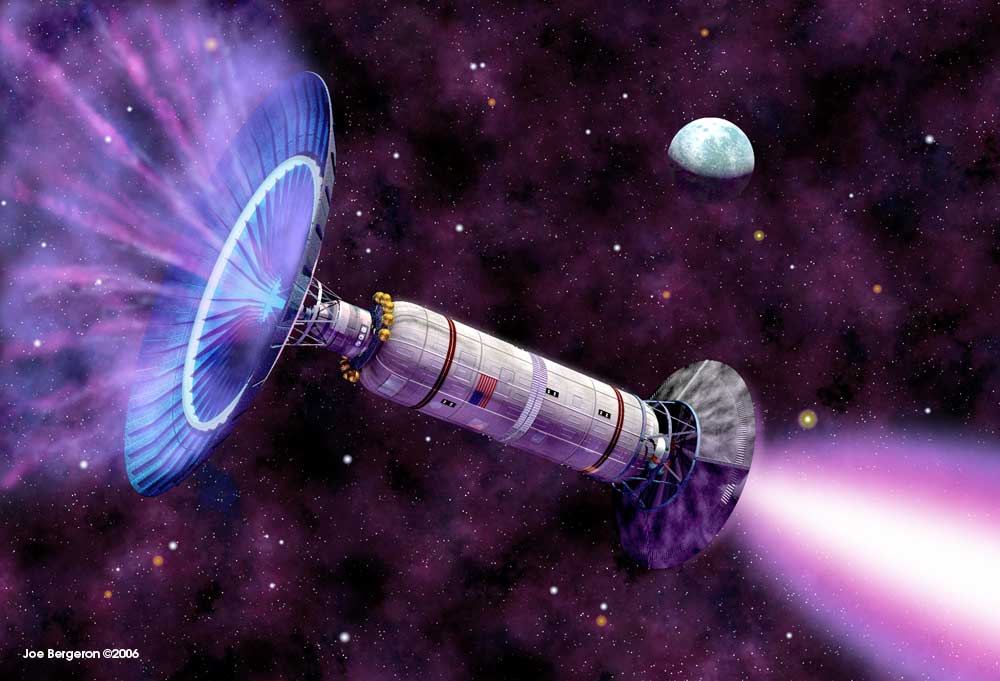
bussard

On of the most interesting parts of taking astronomy has been learning about current and future technology that can be used to observe the universe. Probably the coolest example is technology that could make interstellar travel possible. Such a thing isn’t feasible in the near future, but just knowing it is conceptually possible is mind blowing.


Posted in Class | Tagged , , | Comments Off on Technology in Astronomy

Extremophiles

2

The presence of extremophiles makes the possibility of life off Earth way more likely. In our solar system alone, there are many places humans could not live but extremophiles could. Even on Venus it is possible that extremophiles could live in the upper atmosphere (though that’s about it for Venus). Unfortunately, finding life in the form of extremophiles would not be as cool as finding something intelligent.


Posted in Class | Tagged , , , | Comments Off on Extremophiles

My Changing Perspective of the Universe

My Changing Perspective of the Universe

Image Source

Prior to my enrollment in this class, I rarely thought about the Universe around me. Furthermore, I never truly comprehended the vastness of the Universe. In fact, although I do have a better understanding about the immense size of the cosmos, I feel as though I still cannot fathom the true size of our expanding Universe. Accompanying my realization of the immensity of the cosmos, was my growing belief that there is life existing outside of our Earth. These thoughts were fueled by the class’s analysis of the Drake Equation, and by our study of extremophiles and habitable zones. Prior to my exposure of such topics, I never seriously considered the possibility of extraterrestrial life. As we continued to consider the possibility of life elsewhere, I began to think that all our efforts at finding extraterrestrial life are restricted to finding life like that of our own. I feel as though we subconsciously ignore the possibility of extremely weird life that we cannot even comprehend that may exist elsewhere. Then again, the study of extremophiles is our first step in that direction. I plan to go into further research of our efforts at extraterrestrial contact, and hope that one day our efforts may actually become successful. In comparison to my view of the Universe before I took ASTRO 201, I regard the cosmos in a much more colorful light, full of possibilities and secrets that we have yet to uncover.


Posted in Aliens, Class | Tagged , , , | Comments Off on My Changing Perspective of the Universe

SETI Institute

The existence of life outside of planet Earth is one of the greatest mysteries, but the SETI (Search for Extraterrestrial Intelligence) Institute is trying to solve it. Given our understanding about life and the vastness of the universe, it is not unreasonable to believe that there is life out there somewhere. So far, scientists have not discovered any living organisms in our galaxy, much less any intelligent life, but they are trying. The possibility of intelligent life may seem more unlikely than small living organisms, however, if an intelligent civilization was out there it might be easier to detect from a great distance. Therefore, the goal of SETI is to detect other intelligent civilizations in our galaxy. To do this, SETI sends signals into space and continually develops new technologies to search for signals from other civilizations in our galaxy.

SETI

SETI’s Alien Telescope Array searching for signals from space

To better understand the possibility of the existence of life on other planets, the Institute created the Carl Sagan Center. Scientists at the center use astrobiology to help answer questions about the history, habitable environments, and prevalence of life. They use observations and modeling to strive to understand the individual factors of the Drake Equation in order to guide their search for life. No one knows if we are alone in the universe, but people are working hard to answer that question. I personally have to believe that there is something else out there. The universe is too large and amazing to not to host other forms of life.


Posted in Aliens | Tagged , , | Comments Off on SETI Institute

New Zealanders

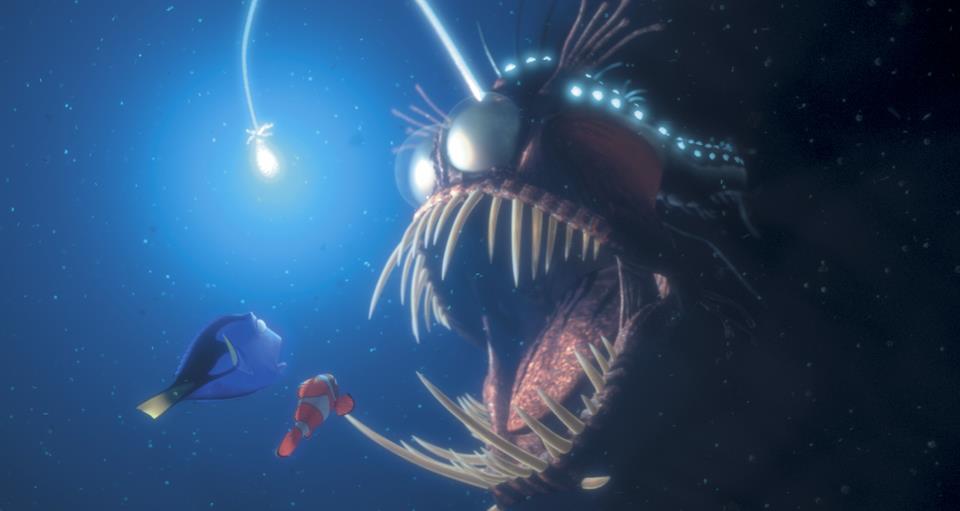
Nemo

Picture from here.

Improvise, adapt, and overcome. That’s what the Marines say. That’s what Life does, when you put it under extreme circumstances. The Anglerfish is one example of this adaptation and in this post, I’d like to take a look at some much simpler examples known as extremophiles.

My parents recently took a trip to New Zealand for their 25th anniversary. Looking through the pictures from their trip, I thought I’d really like to go there one day. The country has a smattering of landscapes and also a variety of wildlife. From whales to penguins to all kinds of wild birds, the country boasts an enormous breadth of creatures. How about those species we don’t normally think of though?

Extremophiles – Nature’s equivalent of Bruce Willis in Die Hard. These organisms thrive in extreme physical conditions. The kinds of extremophiles that live in New Zealand include thermophiles and acidophiles, which live in the hot springs such as those in Rotokawa. There are cyanobacteria in other hot springs around New Zealand. These bacteria derive energy from the sun and can produce oxygen through photosynthesis. That concludes our tour of New Zealand.


I’d like to thank my source.


Posted in General | Tagged , , | Comments Off on New Zealanders

The Fabric of Time

vortex1_crop


Einstein

In later years of Einstein’s life he decided that the evolution of three-dimensional existence is flawed, and that in actuality we exist in a four-dimensional universe. When Einstein’s lifelong friend Besso died he wrote a letter to Besso’s family stating that even though Besso had died before him it did not matter because “…for us physicists believe the separation between past, present, and future is only an illusion, although a convincing one.”

One of the most difficult issues of modern physics is the means to which we can combine Einstein’s Theory of Relativity and Quantum Theory, both of which have been proven to govern this vast expanse we inhabit. Closest we have come to understanding how these two theories imply that time is merely a direction through space is the theory developed by Stephen Hawking and Jim Hartle known as the No Boundary Proposal. The theory essentially introduces a 2nd reference of time known as Imaginary Time. The following quote sums up the implications of the No Boundary Proposal, “the universe would be completely self contained and not affected by anything outside itself. It would neither be created no destroyed. It would just BE.”

This concept absolutely fascinates me. This class has further opened my eyes to the complexities of this universe. I most definitely learned much about our world, but what I learned most evidently was that we know so very little.

Hawking’s theory offers me a glimpse into a plausible and beautiful convergence of science and God. Time will tell.


Posted in Science, Universe | Tagged , , , | Comments Off on The Fabric of Time

Bussard Ramjet: Interstellar Travel

Interstellar Travel

Bussard Ramjet: Interstellar Travel

Ramjet

Interstellar travel is travel between stars. Interstellar travel is much more difficult than interplanetary travel because of the distance differences. Interplanetary travel is generally on the scale of astronomical units, while interstellar travel is measured with light-years. The 100 Year Starship is a joint venture with NASA and DARPA to work toward achieving interstellar travel within the next 100 years. One of the proposed means of propulsion for such a ship is the Bussard Ramjet, which was proposed first in 1960 by the theoretical physicist Robert Bussard. The proposed ramjet is a fusion rocket that uses large magnetic fields to compress hydrogen until fusion occurs. All “fuel” would be collected from interstellar medium. Once fusion occurs the released energy is directed by the magnetic fields as rocket exhaust and the ship is propelled through space.


Posted in Space Travel, Stars | Tagged , , , | Comments Off on Bussard Ramjet: Interstellar Travel