Whilst it is true we have a lot more to discover about the Universe, we have dramatically increased the knowledge we have on the Universe in recent times. Indeed, just my astronomy textbook is about 750 pages. All this learning, yet we can never know enough about the Universe. It just makes me think sometimes, I wish I just lived in the good old Greek civilization where Aristotle’s ideas were unchallenged and the Universe very simply looked something like this: The earth at the center and 55 concentric circles around which contained all the other celestial bodies. Since they moved in perfect circles, the Universe had no beginning nor no end. Quite simple really, and didn’t cause any headaches unlike the complexities of modern astronomy.
X-Ray vision. Sounds pretty cool right? In a discussion of which superpower one could have, it would rank right up there as a people’s favourite. The reality however is a bit of a letdown. Most things in everyday life like people, clothes and houses do not emit X-Ray vision which means you would have very little to see. You could be that weird kid who hangs around in hospitals hoping to see X-Rays being emitted from X-ray machines but that’s about it. Even if your eyes could somehow emit X-Rays, the images you would see would not really be too glamorous like this:
Newton’s third law of motion tell us that for any force that is applied there is always an equal and opposite force. Physics and Astronomy are tightly intertwined. I thought the example of a plane captures this idea and is quite interesting. Planes must maintain certain altitudes. This is controlled by the wing of the plane (as shown above). The balance created by the wing allows a plane to maintain a certain altitude. The thrust that drives a plane forward comes from forcing air backward as the engine propels the plane forward.
In Star Wars: A New Hope, Han Solo claims to have made the Kessel Run in only 12 parsecs. It is at this point that a general outcry raises from the physicists who know that a parsec is a unit of distance, not time. But when one knows more about Star Wars, it all makes sense. The Kessel Run is a smuggling route that goes by/through the Maw Cluster, a sector of space full of black holes. In order to prevent a ship from being sucked into the black hole, enough momentum must be attained to escape the black hole’s gravity. By having greater momentum, the ship can fly closer to the black hole without falling into its gravity well. By skimming the black holes like that, one can fly in a straighter path and cut distance off the route. So flying the Kessel Run in only 12 parsecs is a legitimate brag to make.
Planets are like ogres, they have layers. As you approach the center of the planet, mass is skimmed off until the effective mass of the planet is zero at the center. At this point, the planet’s gravity affects you in equal and opposite directions, so there is essentially no gravitational force. Everywhere other than the center of mass of the system has effective gravity and so the term zero-gravity is almost always used incorrectly. What people refer to as zero-gravity is actually perpetual free-fall, in essence the constant application of only gravity.
This brief and to the point video breaks down the nature of Einstein’s famous equation E = mc^2. Using the simple analogy of a right triangle, it shows how an object with mass can never achieve light speed. In everyday life, the “pc” component of Einstein’s equation doesn’t matter, as objects can rarely travel significantly fast enough. Thinking of the equation as a right triangle helps visualize how the small “pc” leg has a negligible impact, and the E and mc^2 legs are essentially equal. Conversely, the video explains how massless photons’ energy is directly proportional to their momentum. Overall, this video gives a nice visual representation of Einstein’s full equation, and explains why we typically use an abbreviated form.
To this point in history, we have created some pretty impressive telescopes. We are now able to see things that we could scarcely have even conceived of a hundred years ago. But even with the incredible advancements we’ve made so far, there’s good reason to think that we can even make what we have now seem inferior and lackluster. As far as telescopes are concerned, the most promising vehicle for such change at this point is interferometry.
Essentially, this means linking multiple telescopes together and, by measuring the effect of interference between them, creating an angular resolution that would only otherwise be attainable by a tremendously larger telescope. We already use interferometry for radio waves and other long wavelengths, but advancements are making it possible to work on shorter and shorter wavelengths. Just think of what we would be able to observe with large networks of linked telescopes, especially if we put them in space to avoid the atmosphere. We would have images that would make anything we currently have pale in comparison. If you want to read more about interferometry, I’d suggest this.
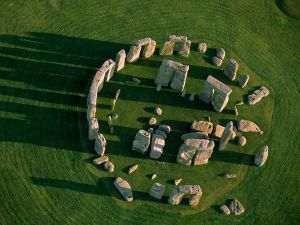
Archaeoastronomy is a relatively new field that combines the disciplines of archaeology and astronomy; in it, scientists piece together the astronomical discoveries of ancient people by analyzing the remains from their civilizations. It is a very interesting and informative field that provides great insight into developments of various cultures that we don’t have written records or explicit information about. It also attempts to understand how the astronomical structures fit into the culture of different societies, especially their religion and mythology. Archaeoastronomy began with analysis of the structures at Stonehenge and the development of theories first about it as a temple to the Sun and more recently about it as an astronomical calculator. This field has analyzed structures from around the world and across hundreds and hundreds of years, spanning from previously mentioned Stonehenge to Machu Picchu and 15th century Chinese observatories.
Lawrence Krauss is a cosmologist and theoretical physicist famous for being one of the first scientists to posit that most of the energy of the universe resides in empty space. The video above is called “A Universe from Nothing” and I would like to comment on a few parts of the video that will hopefully encourage you all to watch it and reflect on its conclusions.
One of the age old questions that has baffled humans for centuries is “Why is there something rather than nothing?” or worded differently, “How can something come from nothing?” Krauss attempts to approach this issue from a scientific perspective. I will cover a few of his more interesting points.
The Energy of Nothing Empty space is empty, right? Actually no. Consider the following picture:
This picture shows the empty space inside a proton and all of the virtual particles popping in and out of existence Inside it.
The empty space inside a proton (between the quarks) can be simulated as such. These are virtual particles constantly popping in and out of existence on a very short timescale. Interestingly enough, once you account for all this energy everywhere in the universe, you find that 70% of all the energy in the universe is contained in empty space. This is what scientists refer to as dark energy.
Total Energy of the Universe If the total energy of the universe is non-zero, then the big bang would have needed some sort of external energy at the beginning to “jump start” it. However, if the total energy is exactly 0, random quantum fluctuations as shown above it is reasonable to expect a universe to come seemingly from “nothing.” Krauss makes just this argument but as a caveat, reminds his audience that this is still a very new area of physics and nothing concrete regarding “before” the big bang has been proven yet.
End of the Universe The final point made in the video is explaining how the universe will end. The expansion of the universe is actually speeding up over time, and eventually, the galaxies around our own will be moving away from us faster than the speed of light. This means that approximately 2 trillion years in the future, any intelligent life that observes the universe will discover scientific facts as we know it, and yet will incorrectly determine that their galaxy is alone in a vast empty, eternal void. All evidence of the big bang will have disappeared. This is a very interesting point to reflect on. Falsifiable science will produce incorrect result. It makes you wonder if there is anything that we know to be true now that we might learn to be completely wrong given different observational viewpoints, just like our friends 2 trillion years in the future.
Hopefully this overview gives you the desire to watch this video; its definitely worth the time.
So guys let’s face it: when it comes to space, a lot of us just don’t know a lot about how to get up there. Quick quiz for you: is the following statement true or false? In order to get to orbit, we shoot a rocket straight up and then once it gets into space, we turn it off and then we’re in orbit.
If you said false, skip the rest of this post.
If you said true, unfortunately you’re incorrect. The thing about orbit is it needs to be achieved. It’s an accomplishment of sorts. An accomplishment that requires firing our rockets (once we get high enough) HORIZONTALLY. Why, you ask? Well, the thing is, in order to orbit at a certain velocity and distance from the Earth, gravity needs to supply just the right amount of force to act as the “centripetal force” in circular motion.
Basically, (force of gravity)=(mass)(velocity)^2/(radius) where the velocity is tangential to the circular orbital path. If we fire our rocket straight up, the rocket will come nearly straight back down.
A great graphic can be seen here. This picture shows how the rocket must be fired in the “prograde” (forward) direction so that it doesn’t fall back to Earth.
Well guys, consider one more misconception corrected.