GPS

GPS, or global positioning system, is the most commonly used celestial navigation source in today’s society, which I also use on a regular basis. From giving me directions when I am driving to telling me my exact location, GPS has become vital in most people’s daily lives. The global positioning system was originally designed for the military in the late 1970’s, but has now found a place in civilian life. It functions by using a set of satellites that orbit the Earth, which transmit a radio signal. This signal is then picked up by the navigation system or a device with GPS capabilities and the device then calculates location by knowing where the satellites are in orbit, then calculating location relative to them.

 GPS has also been implemented for security reasons and following trucks that might be transporting precious cargo. But with devices that can utilize GPS, tools have been created to block GPS signals, which commonly called GPS jammers. Because the GPS signal is relatively weak, it only takes a device that can emit a stronger radio signal to overcome the GPS radio waves and distort it. Recently, scientists have begun to research ways to create stronger GPS signals or devices that can evade the jammer and reach its intended receiver. One technique is to use directed antennas that point at the satellites and can avoid the jamming, but these antennas are often expensive and are primarily used in the military. A more cost effective way is to use eLoran, a low frequency radio signal that uses land based receivers, and because the land based receivers are often closer, this helps prevent jamming. The world of GPS has been constantly evolving since the 1970’s, with GPS becoming stronger and more robust in response to a growing usage of jammers and jamming technology.


Posted in Class | Tagged , , | Comments Off on GPS

A New Generation of US Spaceflight

A new era of spaceflight is underway in America. The Space Shuttle program was retired in 2011 and ever since, if NASA wants to send an astronaut so space, they must buy a ticket on the Russian Soyuz rocket. But this status quo of depending on another nation to carpool to space is about to change. NASA has been funding the designing, building, and testing of a new rocket and capsule system for bringing Americans to space. It is called the Orion Program, named after a mythical Greek figure, just like the Apollo, Gemini, and Mercury programs before it.

The Orion capsule, which sits upon the Space Launch System (SLS) rocket, draws more similarities to the Apollo capsule, rather than the Space Shuttle, since Orion is a multi-stage, one time use rocket, which re-enters Earth and deploys parachutes before a soft landing in the ocean, rather than the more airplane-like and reusable design of the Space Shuttle. Thus it is more appropriate to relate Orion to Apollo. The new capsule is designed to hold a crew of 4 astronauts, as compared to Apollo which held 3. 

orion capsule

It also boasts a 5 meter diameter heat shield to protect the crew during re-entry, a full meter greater than Apollo. The larger size of the capsule is best judged by 5.9 cubic meter volume, which is more than 50% more space than Apollo. The cockpit has been updated from 60’s era technology of gauges, dials, flips and switches to touchscreen computers and state of the art display features (as well as powerful computers as opposed to the computers on Apollo which had less memory than modern day calculators!). Furthermore, the Service Module of Orion is larger and more spacious than Apollo’s, plus it houses two, 3 meter radius solar panels which extend off the sides in order to supply more power to the craft than ever before.

orion life systems

Read more about Orion on NASA’s website, here! Or, here in this great article.

Just for comparative reference, here is a figure showing the Orion rocket side-by-side with the Apollo Saturn V on the left, the Space Shuttle second from the left, and the Aries 1 rocket third from left which is currently used to bring cargo up to the International Space Station:

orion vehicle comparison


Posted in Space Travel | Tagged , , , | Comments Off on A New Generation of US Spaceflight

Eratosthenes Measures the Earth

How do you measure the circumference of the Earth? It’s not like you can take out a meter stick and lay it end to end hundreds of thousands of times. Today with satellite technology and GPS we can easily complete this task and get an extremely precise answer: 40,075.017 kilometers. But how might a Greek scientist living in 3rd century BC Egypt accomplish such an undertaking?

The answer is ingenious. It always amazes me how brightest of minds comes up with the most remarkably clever solutions to seemingly impossible questions. Who wakes up in the morning and declares, “I want to measure the circumference of the Earth?” or any other crazy question of that type? Talk about taking on the some of the greatest challenges head on.

But I digress, how did a man named Eratosthenes find an answer to a presumably unattainable question? He did so by harnessing the power of the Sun and his knowledge of basic geometry. Eratosthenes lived in the Egyptian city of Alexandria, but had a correspondent in Swenet (now modern day Aswan). Eratosthenes’ friend in Swenet told him about a well in town that one could see all the way down to the water on the day of the Summer Solstice at Noon. This may not sound all that exciting but what that really means is that there is no shadow on this special day of the year. Even the lack of a shadow may not seem all that earth-shattering, but the lack of a shadow means that the Sun is directly overhead, at the zenith.

Eratosthenes pocketed this information and then observed the Sun in his home of Alexandria on the Summer Solstice at Noon. What he found was that shadows were cast in Alexandria and thus the Sun was not directly overhead. So, being a curious man, Eratosthenes pulled out his trusty gnomon (an ancient tool for measuring angles), and measured the angle of sunlight at Alexandria. What he found was that the Sun was about 1/50th of a circle from the zenith at Noon on the solstice. This comes out to roughly 7.5 degrees. Next, using basic theorems of geometry, he equated the angle of sunlight to the angular distance between the two cities as measured from the center of the Earth. Now knowing the angle is only half the battle in determining a measurement for the Earth’s circumference. Eratosthenes needed a measurement of the metric distance between the two cities. The story says that, as any right-minded man would do, he hired an army to march from Swenet to Alexandria and keep count of the number of steps they took during their journey. The marching soldiers related their steps to the Egyptian unit called the stadia, which translates to 157.5 meters, and came up with 5000 stadia between the cities. When a little algebra is applied, this comes out to about 700 stadia per degree of Earth. Now multiplying by 360 degrees and changing units from stadia to meters, you get 39,690 kilometers as the circumference of the Earth, which is a 1.6% difference from our current accepted value! 1.6% off! There are modern day experimental labs which strive for anything less than 5% error, never mind less than 2%!

It astonishes me how the grandest questions often have the cleverest, yet simplest solutions. More often than not in astronomy, scientists must come up with clever, indirect methods of measurement, since the objects that astronomy deals with are too big and/or too far away to measure directly. But the thrill of exploration and the innate human desire to learn has driven the brightest minds of every generation to come up with new and ingenious ways to come up with answers to the biggest of questions, using nothing but wit and basic mathematical principles.


Posted in Historical | Tagged , , | Comments Off on Eratosthenes Measures the Earth

Historical Astronomers in Context

Sir Isaac Newton 1642-1727

Quite a smart man was Newton. He invented calculus. (pause in amazement) He also came up with the aptly named Newton’s Laws of Physics (or the 3 Laws of Motion). These three rules were a significant upgrade to the system astronomers were using at the time. We have the Law of Inertia, which helps explain the earth’s axis shift every 13,000 years. We have the Law of Acceleration, which tells us that the heavier an object is, the more force it will take to accelerate it. Lastly, the Third Law: Every action has an equal and opposite reaction. I’m not talking about when your girlfriend doesn’t talk to you for three days because you forgot it was y’all’s 30 day anniversary. I mean that when you push against the wall, you are also being pushed back.

Here’s a few things that happened during Newton’s lifetime. He was also alive during the lifetime of Robert de la Salle.

1665: The Great Plague of London: This epidemic killed about a fifth of the population of London at the time, 460,000. It was followed by a very big fire.

1666: The Great Fire of London: Burned about 370 acres of London and lasted for four days. Both the plague and the fire caused the people of Britain to rethink urban living and even living in general.

Robert Cavalier de la Salle: A French explorer who claimed Louisiana for France. Mr. La Salle lived from 1643 to 1687 when he was killed by mutineers.

I never really thought about Louisiana being discovered at the same time that Isaac Newton was inventing calculus but surprisingly, those were happening simultaneously.  I always think of Calculus as an ancient tool but it is really quite new.


Posted in Historical | Tagged , , | Comments Off on Historical Astronomers in Context

Historical Astronomers in Context

2.

Galileo revolutionized how we observe the heavens. Although he did not invent the telescope, he used it as a scientific instrument and published his results (Van Helden, 1977). We have built upon his work and have made countless discoveries about space thanks to his work.

3.

a. In 1609 Kepler published his laws of planetary motion which described how planets orbited the Sun (Aiton, 1969). In 1611 the King James Bible was first published in England (McGrath, 2008).

b. We are not exactly sure when William Shakespeare was born, but he died April 23rd, 1616. He is widely regarded as the greatest English-Writer of all time for his classic plays, sonnets, narratives, and collaborations (Schoenbaum, 1987).

4.

During the time many of the astronomers were alive, the world was ripe for innovation. The renaissance and reformation periods were going on as well. People were looking at the world differently and this came from questioning societal and religious norms. Much of the climate of the period was rooted in new scientific discoveries from the likes of the astronomers we are examining. Therefore, it is a reasonable statement that we owe much of the progression of from the 1500s-1600s to the astronomers we are studying.


Posted in Class | Tagged , | Comments Off on Historical Astronomers in Context

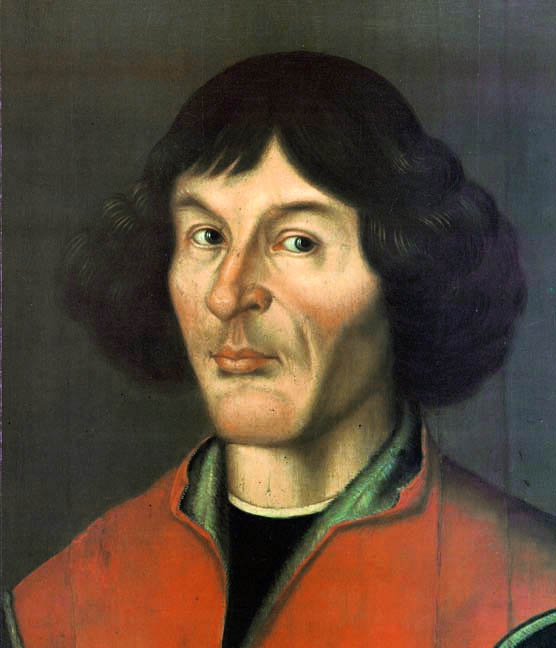
Nicholas Copernicus

Nikolaus_Kopernikus

The Life and Times of the Infamous Nicky C

2) Nicholas Copernicus is famous in the world of astronomy for his thesis on the heliocentric model of the universe. Though naïve in his assumption of purely circular orbits, Copernicus’s paper on heliocentricism, de revolutionibus orbium coelestium, was published posthumously so he never experienced whiplash for his assertions.
3) Other major historical moments that occurred were Columbus’s first arrival in the Americas in 1492 when Copernicus was reaching the end of his teenage years. This event brought a whole new side of the globe to the attention of Europeans. In 1510 a smaller scale event occurred when Peter Henlein invented the pocket watch. The pocket watch is significant because it was the first handheld machine that became fashionable to carry. This invention would be built upon and tinkered with all the way up to present day.
a. Perhaps the most famous and most interesting contemporary of Nicholas Copernicus was Leonardo DaVinci. DaVinci was the definition of a renaissance man having made fame in: art, inventing, architecture, mathematician, and writer. Leonardo was one of the first people to ever seriously hypothesize about a flying machine. His artwork remains as some of the most highly valued pieces in the world.
4) The most interesting part of this research was realizing just how much of a standout event Copernicus’ work was for his time period. Over the 16th century Copernicus’s ’43 announcement remains a cornerstone discovery of the renaissance and enlightenment period.


Posted in Historical | Tagged , , | Comments Off on Nicholas Copernicus

Historical Astronomers in Context: Johannes Kepler

Johannes Kepler (27 December 1571 – 15 November 1630) is well-known in astronomy for his three laws of planetary motion. He worked for Tycho Brahe where he analyzed Brahe’s observations. Brahe was convinced that the planet’s orbits were circular. However, Kepler could not accept this because Mars did not follow this pattern. He used his and Brahe’s observations to discover that the orbits of the planets were elliptical rather than circular.

Historical Events in Kepler’s Lifetime:

In 1620, the Mayflower landed in the New World (America). It was carrying the Separatists that fled from England in search of religious tolerance.
In 1582, the Gregorian calendar was implemented by Pope Gregory XIII.
Another historical figure during this time was Queen Elizabeth I. She was the leader of England during the Spanish Armada which is considered to be the England’s greatest military victory.

It was interesting to see all the events that happened during the 59 years that Kepler was alive. He saw great leaders and major changes to the world as we know it today as well as creating a few of those changes himself.


Posted in Historical | Tagged , , | Comments Off on Historical Astronomers in Context: Johannes Kepler

Historical Astronomers in Context

Tycho Brahe(1546-1601)

There was a civil war in Scotland between 1562 and 1594.  This was due to the Catholic and Protestant divide in the country.

France was also divided by religion and had the French Wars of Religion between 1562 and 1598.

Michelangelo , born: 3/6/1475,  died: 2/18/1564

Michelangelo was an important artist who made the famous David sculpture.

It was interesting to realize that many things were going on in the arts and sciences and the lots of the world was divided regarding religion.


Posted in Historical | Tagged , , | Comments Off on Historical Astronomers in Context

Nicholas Copernicus: Historical Astronomers in Context

Nicholas Copernicus (1473-1543) was the earliest of the historical figures we are studying. As the first astronomer to publish a work detailing the Sun’s centrality in our universe (rather than Earth), Copernicus’ treatise against the Christian religion was vital in understanding human existence in relation to the universe around us.

During the time in which he lived, two other major historical events were the end of the War of Roses in England (1485 – the country is united under King Henry VII and Elizabeth of York) and the completion of the Sistine Chapel in the Vatican in Rome, Italy (1512 – Michelangelo’s work is among the greatest art accomplishments to date). Also during this time, Christopher Columbus was considered to be the most influential explorer of the world, discovering the continental United States and a number of other Caribbean islands.

By reviewing the context of the 15th and 16th centuries, we can best summarize this time period with one word – discovery. At this point in history, the human race was exploring the depths of the world, in terms of artistic capabilities, scientific theories and human nature.


Posted in Historical | Tagged , , , | Comments Off on Nicholas Copernicus: Historical Astronomers in Context

Historical Astronomers in Context

Sir Isaac Newton improved on Kepler’s three laws of planetary motion by showing how the processes that determine orbital motion also determine motion of objects on Earth. He provided a strong mathematical understanding of these laws and why they worked.

In 1666, the Great Fire of London was ignited, destroying as much as 80% of the city. This event is one of the most well-known fires in history.

When Newton was near the end of his life, the city of New Orleans was founded (1718). This city would go on to become one of the most prosperous in the New World.

During his lifetime, the philosopher John Locke created several of the most important works of his generation. His ideas were very influential in his time, contributing to revolutionary spirit in the Americas and in France, and remain so today.

Doing this research was very informative, and allowed me to put historical events into perspective. I had studied many of these events before, but without realizing how close in time they were. It’s interesting to imagine Newton and Locke living at the same time; it makes me wonder what they thought about each other.


Posted in Historical | Tagged , , | Comments Off on Historical Astronomers in Context