Middle Man Mars

The terrestrial worlds are known to be Mercury, Venus, Earth, the moon, and Mars. While they all have some similarities to one another, like rocky surfaces and much smaller sizes than relative to the remaining planets in the solar system, they also have many differences. Venus and Earth are alike in ways that the other terrestrial planets are not, like their size, surface features, and molten core. The moon and Mercury also share striking similarities between their sizes, surface features, and non-molten core. Mars on the other hand, is sort of in the middle of the pack. Its size is larger than the moon and Mercury’s, but smaller than Earth and Venus. Mars used to have a molten core, but no longer does, giving it certain features that resemble the moon and Mercury and others that resemble Earth and Venus. For instance, Mars has stream beds which mean it must have had running water at one point in its lifetime like Earth does now, but it is also cratered in some areas which means that there is no longer any active volcanic-like activity on it like the moon and Mercury are now. All in all, the combination of these surface features allows Mars to stand out and be unique when compared to the rest of the terrestrial worlds.

This image shows a combination of stream beds and craters on Mars’ surface, showing how it is similar to Mercury and the moon in one way, and Earth and Venus in another.

By AstroBiology

Posted in Class, Terrestrials | Tagged , , | Comments Off on Middle Man Mars

Putting the “Super” in Supernova

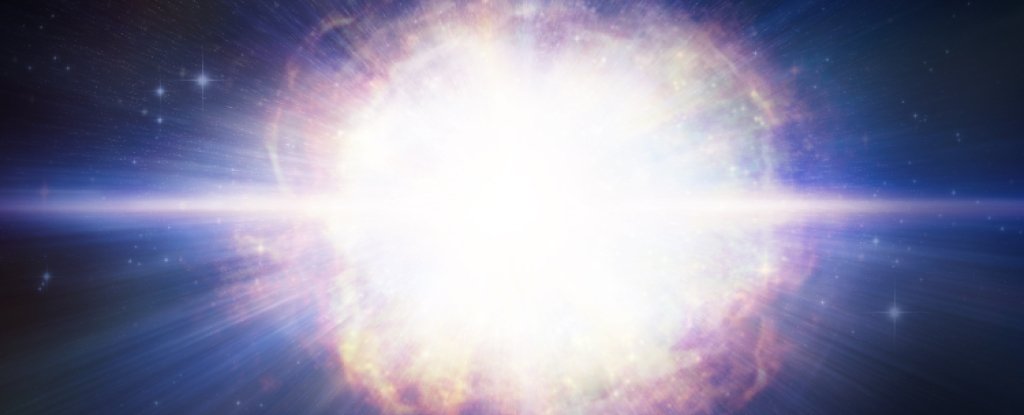
Image of most powerful supernova explosion ever recorded (SOURCE)

Within the past year, astronomers have made an incredible discovery about 4.5 million light years away from us. A supernova, but not just any supernova, the most powerful supernova recorded in history ever spotted by astronomers. This explosion is so powerful that astronomers did not even know that it was possible to have such a powerful supernova in our galaxy. The energy that was released from this supernova equated to about, “10 times more energy than the sun will emit during its entire lifetime,” truly putting into context the nature of such an explosion. According to astronomers researching this supernova, in order to create such a massive explosion the star must have shed a shell of material that made up about half of its mass before actually blowing up. This would mean that the explosion smashed through the shell, “like a wrecking ball,” at a speed of almost 4600 km/s which in turn would create a massive blast of radiation. Not only is this interesting that this supernova was the most massive one we have ever observed, but questions surrounding this explosion point to the fact that when modeling supernovas in the past we have never seen a star lose half of its mass about a decade before the actual explosion. This leads many astronomers to wonder what would have caused something like this to happen, and can potentially lead to us learning more about supermassive stars that may have existed in the early beginnings of our universe. Did you know that this discovery was made? Comment your reactions down below!

Posted in Class, Historical, Light | Tagged , , | Comments Off on Putting the “Super” in Supernova

The Sun

Source: Explora

It is fascinating to think about the Sun. As we all know, it is our solar system’s star. The Sun’s energy, in the form of heat and light, is absolutely essential to all life on Earth. Plants need the Sun in order to go through photosynthesis and live, animals need the Sun for its food sources, the Sun radiates heat to Earth’s surface, and Earth would be completely dark without the Sun, among other things.

The Sun is a main sequence (specifically, yellow dwarf) star that is composed mostly of hydrogen and helium. Its energy is generated by the process of nuclear fusion where hydrogen nuclei become helium. The surface temperature of the Sun is 5500o C. It is crazy to consider just how massive the Sun actually is. The Sun accounts for over 99.8% of the solar system’s mass. The Sun is not even particularly big for a star (red giants, the largest known stars, are much bigger). Yet, within the solar system it is absolutely massive (no pun intended). The Sun’s diameter is around 110 times the diameter of Earth, meaning roughly one million Earths could fit inside of the Sun.

A really interesting thing to observe on the Sun is sunspots. Sunspots are darker areas on the Sun that are cooler than the surrounding area (that is why they appear darker). Sunspots are around 1,727o C cooler than the rest of the Sun. Even still, a hypothetical single sunspot alone in the night sky would shine 10 times brighter than the Moon at its brightest. Sunspots are usually observed near the equator and are almost never found at latitudes greater than 70 degrees. Sunspots last anywhere from a few days to a few months. Sunspots indicate intense magnetic activity, so they usually are seen with other phenomena on the Sun, such as solar flares and coronal mass ejections. Sunspots seem small compared to the massive Sun, but sunspots have been observed as big as Jupiter.

Because the Sun is so fascinating, I have some fun facts to share! The Sun is almost a perfect sphere — in fact, it is the closest thing to a perfect square observed in nature. The Sun also rotates from West to East, which is the opposite direction from Earth. Lastly, the Sun will one day be almost Earth’s size because it will collapse after it undergoes its red giant phase and becomes a white dwarf. It will have a similar volume to Earth’s volume because its mass will be retained. Don’t worry, though. The Sun won’t collapse for a long time, and humans won’t be around because of other reasons anyway.

Posted in Class, Sun | Tagged , , | Comments Off on The Sun

Wormholes

Ever wonder what exactly a wormhole is? The concept behind a wormhole basically is a way to shortcut your way to a distance extremely far away. I tend to think of it as having two dots on a piece of paper, and then folding that paper in half to have the point laying on top of one another. Instead of traveling all the way across the paper, you can just go “down” and be right at the location that you wanted to be at. The possibility of a wormhole is feasible (they are consistent with Einstein’s theory), but there is no evidence to this date that they actually exist. If wormholes were to exist, they would greatly influence space exploration, as they could potentially allow us to go to galaxies and locations billions of light years away. Below is a photo of the concept of a wormhole.

By ScienceNews
Posted in Class, Space Travel | Tagged , , | Comments Off on Wormholes

Moon Rock Mischief!

Image Courtesy of The Atlantic

Apparently theft isn’t exclusive to Earth! In 2002, college NASA interns Thad Roberts, Tiffany Fowler, and Shae Saur stole more than $20 million worth of moon rocks from the Johnson Space Center in Houston, Texas. How did they pull it off, exactly? An elaborate heist that eventually ended in an FBI sting operation. In May 2002, another accomplice, Gordon McWhorter, helped them find a buyer. The client, an amateur Belgian mineralogist, promptly notified the FBI, who continued the correspondence from there by posing as the mineralogist’s sister-in-law. [1] Getting into the facility was easy enough- all they had to do was show their IDs to security under the guise that they were working late, and they were in. [2] They used a code emailed to them from a former coworker, and they made it into Building 31 North, which housed all of the moon rocks collected thus far in a vault devoid of oxygen. Thad and Tiffany put on their wetsuits (equipped with oxygen tanks, which gave them 15 minutes of air) but ran into trouble with the lock on the safe itself. As it turns out, the code was not written on its label (as Thad had previously assumed by watching a coworker read the label and open the safe); rather, it was an algorithm that helped the employee remember the combination. The duo then decided to wheel the entire safe out using a dolly, which they eventually stashed in the motel room they were staying at. They threw out the safe itself (along with notebooks which had 30 years of research in them) and moved the samples to Fowler’s apartment. [1] A week later, on the 33rd anniversary of the moon landing, Thad, Fowler, and McWhorton met their “client” in a restaurant in Florida. Right before the swap was to be made, 40 FBI agents descended upon the scene, arresting the trio. They were all arrested and eventually sentenced. [1] Thus concluded the heist that was, quite literally, out of this world! Do you know any other crazy crime stories related to astronomy?

Posted in Class, Historical, Science | Tagged , , , | Comments Off on Moon Rock Mischief!

What if the Carrington Event Occurred Today?

Frederic Edwin Church’s 1865 painting “Aurora Borealis”

Are we ready for a Carrington-level event today? The short answer- not really. In 1859, Richard Carrington observed “two patches of intensely bright and white light” (a solar flare followed by a coronal mass ejection) on the surface of the Sun. The next morning, brilliant red, green, and purple auroral displays appeared as far as the Bahamas, Cuba, El Salvador, Hawaii, and Jamaica. [1] They were so bright that people were able to read the newspaper in the middle of the night and miners in Colorado woke up to begin their morning shift! However, it was also powerful enough to disrupt telegraph machines, consequently causing fires in some places and even shocking some telegraph operators. [2] Looking at this event, it’s difficult not to wonder what its modern-day equivalent would be like. In terms of cost and recovery time, a modern Carrington event is estimated to cause $1-2 trillion damages in the first year and take around 4-10 years for the planet to fully recover. [1] Most elements of society would be threatened- electric grids (especially those that are more interconnected, which are more prone to a domino effect), electronics (including GPS, which relies on satellites), and even astronauts in space if they are unprotected. [2][3] According to Scientific American, “unlike other threats to our planet, such as supervolcanoes or asteroids, the time frame for a cataclysmic geomagnetic storm… is comparatively short.” [4] However, scientists are taking important steps to prepare for the next event, including using new spacecraft to better understand the Sun’s behavior to help with better forecasting. [5] To open this up for discussion, in the event of a Carrington-level catastrophe, what will be your favorite activity (that doesn’t use electronics or electricity) to partake in? For me personally, I’ll definitely take up gardening if I can get a good source of water! Gardening might be difficult without Google’s help though 😦 On a more serious note, do you think an event such as this one will be as catastrophic as it sounds? Are we doing as much as reasonably possible to prepare for this?

Posted in Class, Historical, Sun | Tagged , , | Comments Off on What if the Carrington Event Occurred Today?

Historical Astronomers in Context

Nicholas Copernicus (Feb 9th, 1473- May 24th, 1543)

Copernicus was born just 5 years before first Spanish Inquisition. The Spanish Inquisition was a tactic by the catholic monarch ruling over Europe to spread Catholicism all across territories they controlled. They deployed officers to target individuals engaging in heresy, that is displaying beliefs or actions that is contrary to the norm—In this case, anyone who didn’t follow strict Catholicism, namely Jews. Also, during Copernicus lifetime was when Christopher Columbus first set sail on his way to Asia and ended up landing in the Americas.

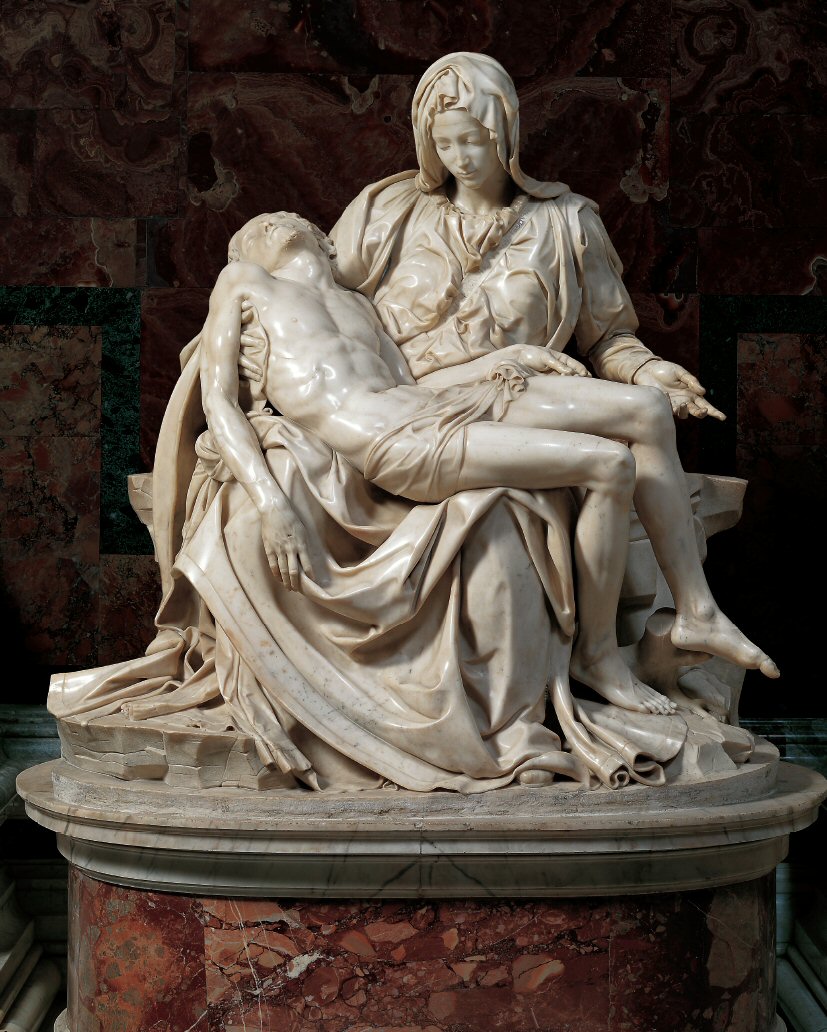
Copernicus live during the time with Michelangelo, who was born on March 6th, 1475 and died on February 16th, 1564. Michelangelo was famous for his sculptures, paintings, and architecture during the Italian renaissance. Some of his most famous works is his painting on the ceiling of the Sistine chapel at the Vatican, depiction of the creation of Adam from the book of genesis, and his sculpture of David.

Hindsight is always 20/20 and in astronomy I feel as though it is easy to criticize how wrong the knowledge of the world was in 15th century and earlier. But after diving a little bit into Copernicus’s era, I realized that A LOT was happening in the world back then. I doubt that most people cared dive deep into whether the sun or the earth was the center of the universe when they had wars to wage, inquisitions being conducted, and Michelangelo’s art to fond over. I mean we still hadn’t even understood our own planet, just ask Christopher Columbus. It’s simple to look at the past as whole but you take the time to see how much took place in just a decade in the past, you start to cut the people of yesteryear some slack, and praise those like Copernicus who challenged the status quo even with everything going on in the world at their time.

Posted in Historical | Tagged | Comments Off on Historical Astronomers in Context

Spacecraft in the Milky Way

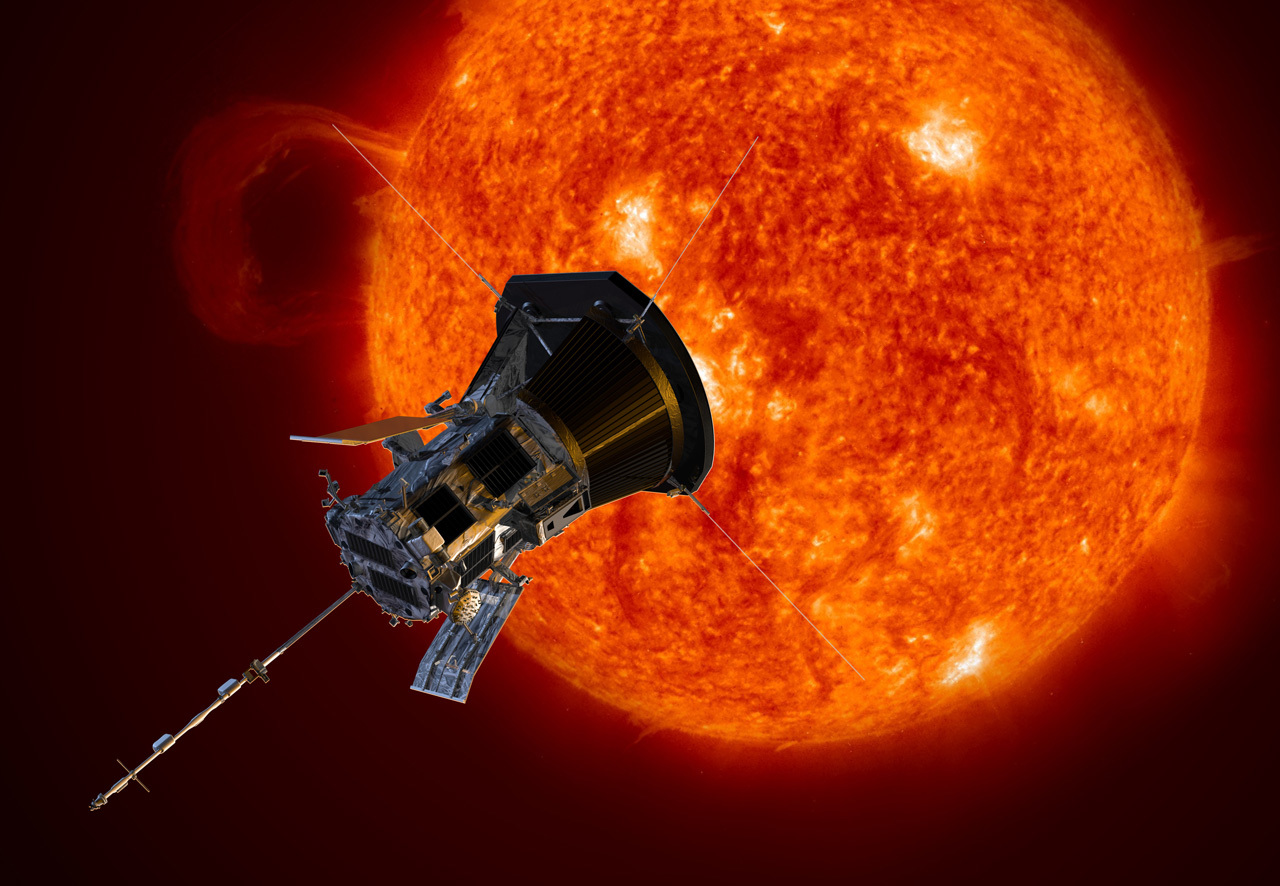
Parker Solar Probe Imagined

Since 1958 over 250 spacecraft have entered our solar system to explore and have given a little bit more insight to the huge universe around us. One of those spacecraft, Parker, is on a mission to get seven times closer to the Sun than any other spacecraft before. Parker was launched in 2018 by the US and is on a 7 year mission, where it will orbit the Sun 24 times to sample the Sun’s atmosphere, giving humans insight into space weather. Another spacecraft is Gaia, launched in 2013 by the European Space Agency. Gaia’s goal is to create the most realistic 3D map of the Milky Way by measuring the motion of the Milky Way’s stars orbiting the center. Overall, there are a lot of active spacecraft gathering information every day that gives us a little bit more insight into the vast unknown of space.

Posted in Instruments, Space Travel | Tagged , | Comments Off on Spacecraft in the Milky Way

History of Telescopes

See the source image
A sketch of what the earliest Reflecting Telescopes would have looked like (Source).

While there were some objects artificially resembling telescopes in the ancient world, and even some used for sighting, the first modern telescope would have been the work of a Dutch glasses-maker named Hans Lippershey, in 1608. This is merely the first documented one though, as he was the person to file a patent, and the design seems to have existed before. Regardless, this is the best we have to go off of, and in the following year of 1609, Galileo made improvements to the optics of Lippershey’s design, resulting in a telescope of roughly 23x magnification and recorded the first known astronomical observations with a telescope! 

In 1611, Kepler then improved on the design of telescopes by suggesting the use of convex lenses to achieve a wider field of view. This would eventually overtake Galileo’s design for common use, though not for a long time. In 1668, Isaac Newton would provide the next great leap forward for telescopes by pioneering the reflecting telescope, which used a combination of mirrors to preserve the light being taken in by the telescope, as opposed to other lenses which distorted it. Eventually, in the 1700s, easier production of curved mirrors would become a reality, allowing the concentration of reflected light which aided telescope magnification greatly, and in the 1800s, massive telescopes would start to be constructed that would allow even greater magnification and detail. And that is where we’ll leave the story, as it moves into the world of orbital telescopes and radio and x-ray telescopes!

Posted in Historical | Tagged , , , | Comments Off on History of Telescopes

Nabta Playa

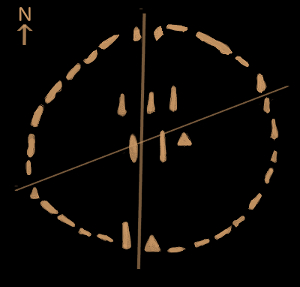
Nabta Playa is the world’s first astronomical site, having been built at an estimated 7000 years ago.  For reference, this was when the Neolithic Revolution was occurring, and agriculture was first being practiced.  In order to assist with this, the Nabta Playa stone circle was built, about 700 miles south of the Great Pyramid of Giza in what is today Egypt.  During this time, civilizations were moving through a much wetter Sahara.  One civilization in particular, known now for domesticating and sacrificing cattle, built this astronomical site atop and radiating out from a burial mound of cows.  This location, at one point in time, was an oasis in the desert and would fill with water during certain seasons.  Different nomadic groups would stop there before moving on to the next.  For the first time, the civilization that worshiped cattle stayed in one place for a longer time and began to farm the land.  Because of this, they built the Nabta Playa stone circle to be aligned with the sun and stars, which served two purposes.  

Firstly, it tracked the summer solstice, which would mark the arrival of monsoon season.  This allowed for them to know when to plant and when to harvest crops.  Additionally, it assisted with celestial navigation.  During monsoon season, the land surrounding the stones would be fully covered with water.  This allowed for the stars to reflect onto this seasonal lake and align with the circle, making navigation much easier than tracking the sky.  Although there are many examples of massive stone circles around the world, Nabta Playa is the first.  Up until a few decades ago it was buried in sand, so unfortunately it is less well known than many of the famous archaeoastrological sites.  Despite this, it is incredible to think that it was built for the first examples of agriculture and that people were making the connections between the sky and the earth so many thousands of years ago.

The stones of the Nabta Playa circle and the two primary lines of sight

Posted in Class, Historical, Observables | Tagged , , | Comments Off on Nabta Playa