Evolution of Spectroscopy

Image Source

Spectroscopy describes the study of the interaction between matter and the wavelength of the light it produces, although this definition has been updated to include anything measured as a function of frequency or wavelength.

Isaac Newton was one of the first people to demonstrate that light from the Sun could be scattered into a spectrum of colors. He built a machine with a small opening to focus the light, a lens, a prism, and a screen that would show the results. This was the very first spectroscope. The first spectral lines were observed by Joseph Fraunhofer, who saw dark lines in the continuous spectrum when the light was scattered enough. Later discoveries of the significance of these spectral lines came from Gustav Kirchhoff, a German physicist who established that each element had its own corresponding spectrum.

Spectroscopy has been used in pretty much every aspect of science, but we’ll specifically be focusing on its applications in astronomy. One of its main uses is telling scientists which elements are present in a star. Each element produces a unique spectrum that astronomers can use to identify a star’s composition. Besides this, scientists can also identify the density and temperature of that particular element in the star. They can also learn about how the star is moving, the mass of the star, and much more all from spectral lines. Without spectroscopy, much of the universe would still be unknown to us today.

Posted in Class, Historical, Physics | Tagged , , | Comments Off on Evolution of Spectroscopy

Mound 72

Image Source

Mound 72 is a very interesting example of the knowledge early Native Americans had about astronomy in at least 950 CE. Mound 72 is the sight of one of several “woodhenges” created by the Cahokia people of south west Illinois. These woodhenges were all relatively identical in relation to the positioning of the wooden posts encompassing the area. They all included posts at cardinal North, South, East and West, as well as markers for the sunrises and sets of the equinoxes and solstices. Similar to Stonehenge, it is believed that religious ceremonies happened inside the bounds of the circle. Another thing that sets this woodhenge apart is the fact that the mounds were set 30 degrees off the East/West line, which is different the way they were usually oriented– east/west or north/south. This different orientation is actually along the same line of the summer solstice sunrise/winter solstice sunset for the location. Archeological interest in Mound 72 goes even past its astonishing placement, but to the fact that it was a mass burial grave for over 100 young men and women. This area is the subject of much inquiry as it has many unanswered questions. The women in the burial were of a different ethnic composition and social class as the men, and there is another burial on the other side of the woodhenge that is of men who were brutally killed, missing everything from heads to hands. Though exactly what is up for contention, Mound 72 was a place very significant to the Cahokia people, and their use of advanced astronomical knowledge to denote it lends itself to the fact the pre-Columbian Native Americans were much further ahead than given credit for.

Posted in Class, Historical | Tagged , , | Comments Off on Mound 72

Reflecting Telescopes

Telescopes have allowed us to bring what is far and mysterious up close and personal. Scientists and astronomers have built telescopes for a variety of uses, whether it’s for imaging, spectroscopy, or time monitoring. Within the realm of telescopes, there a two main types: refracting and reflecting telescopes. Between the two types, reflectors are the type mainly used in current astronomical research.   

Mechanics of a Reflecting Telescope (Source)

Reflecting telescopes use two mirrors to reflect the light coming in into a focus. The primary mirror, which gathers the light, reflects it onto a secondary mirror that lies somewhere in front of it. This secondary mirror then focuses the light into one spot, where a recording device, such as our eyes or some type of instrument, takes it in. There are three main variations of reflecting telescopes: Cassegrain, Newtonian, and Nasmyth focus. These variations differ in the where the light is ultimately focused as well as the possession of a third mirror within the Nasmyth-focus type.  Reflecting telescopes are primarily used in astronomy due to being more practical and easier to construct. While refracting telescopes required two high-quality lenses, reflecting telescopes need only one. Reflecting telescopes also placed most of its weight at the bottom, making it far easier to stabilize than refracting telescopes. Throughout history, reflecting telescopes have helped astronomers discover new star systems and further examine ones we known, helping us broaden our knowledge of the universe as a whole.  

Posted in Class, Light | Tagged , , , | Comments Off on Reflecting Telescopes

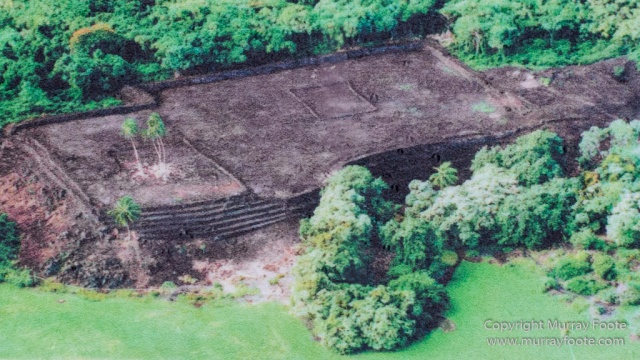
Pi’ilanihale Heiau

Pi’ilanihale Heiau is located on the island of Maui, Hawai’i. It’s the largest shrine on the island, and throughout all of Hawai’i. Temples like this one are custom throughout ancient Polynesia, and many individual households would build their own smaller, personal household shrines. In face, “Pi’ilanihale” directly translates to “house of Pi’ilani.”

The structure extends over three acres of land, but its grandest feature is an enormous platform in the center supported by volcanic stone walls. The entire structure is more expansive than a customary football field! While the primary purpose of this monument was for religious ceremonies, it was constructed in such a way that some of its structures point to certain constellations, important for indicating the timing of planting seasons.

Archaeology, Hawaii, Heiaus, History, Kahanu Gardens, Landscape, Maui, Photography, Pi'ilanihale Heiau, seascape, Travel
Photo by Murray Foote

What’s left of the monument dates back to 1294, which is actually 400 years earlier than archaeologists had previously determined!

Posted in Historical | Tagged , , | Comments Off on Pi’ilanihale Heiau

Weight and Altitude

Most people know that if you were to take your weight on the earth and then the moon, you would weigh a lot less on the moon. But what about your weight with different altitudes on the earth? Surprisingly your weight also changes with varying altitudes. If you were to take your weight at sea level and you weighed 150 pounds and then you weighed yourself at 10,000 feet above sea level you would find your weight to be 149.92. This is due to the gravitational force being less as the distance to earth increases. Although this might not seem like a big deal it is quite significant because it helps reconfirm the idea that as distance increases for an object the gravitational force between the two decreases.

Posted in Universe | Tagged , , | Comments Off on Weight and Altitude

The Tides of Mont-Saint-Michel

Mont-Saint Michel at Low Tide

As many know, the Moon causes the tides to occur all over our planet. But those same people may not know the place that has the largest change in high and low tides. Said place is an islet and commune called Mont-Saint-Michel. Off the coast of Normandy, France, it has an accessible walkway to its village, with the low tide being about nine miles from the shore, except for some hours where the walkway becomes swallowed up. During the spring months, the sea level rises nearly 50 feet from the low tide. Over twenty times a year this dance between high and low tide occurs at the abbey. The sanctuary has the highest spring tides in Europe and the difference is visible to the public, creating a huge tourist attraction.

The Moon’s pull obviously has something to do with this, but so does the Sun’s. Since the Sun also has a gravitational pull on the Earth’s oceans, when the Sun and Moon align, their pulls combine and have an immense effect, creating a spring or “flood” tide at Mont-Saint-Michel. To see this incredible phenomenon in action check out these videos at Mont Saint Michel – Tide in Time-Lapse HD and The Magical Mont-Saint-Michel: an Island once more at high tide. Would you want to see this one day in person? Does this make you think about the Moon’s effect on other parts of the planet? Let me know!

Posted in Class, Historical | Tagged , , , , | Comments Off on The Tides of Mont-Saint-Michel

Vanderbilt Dyer Observatory

Vanderbilt Dyer Observatory

Looking for a place to up your stargazing? Vanderbilt University has an observatory just 20 minutes away from campus! The Dyer Observatory has a 24 inch reflecting telescope. This means that the telescope uses one or more mirrors to reflect light from space to form an image for the viewer. One of the advantages of using a reflecting telescope is that it will allow the viewer to see more than other types of telescopes. This is because the types of glass used in other types of telescopes, as opposed to the mirrors used in a reflector, absorb some of the wavelengths of light coming from space before they can get to the viewer. The three main types of reflecting telescopes are Newtonian, Cassegrain, and Gregorian. Each type shares a similar model in that they use mirrors to capture the image but differ in how many mirrors and how those mirrors are arranged within the telescope. Another example of a reflecting telescope that you might be more familiar with is the Hubble Telescope!

Posted in Stars | Tagged , , , | Comments Off on Vanderbilt Dyer Observatory

Newgrange

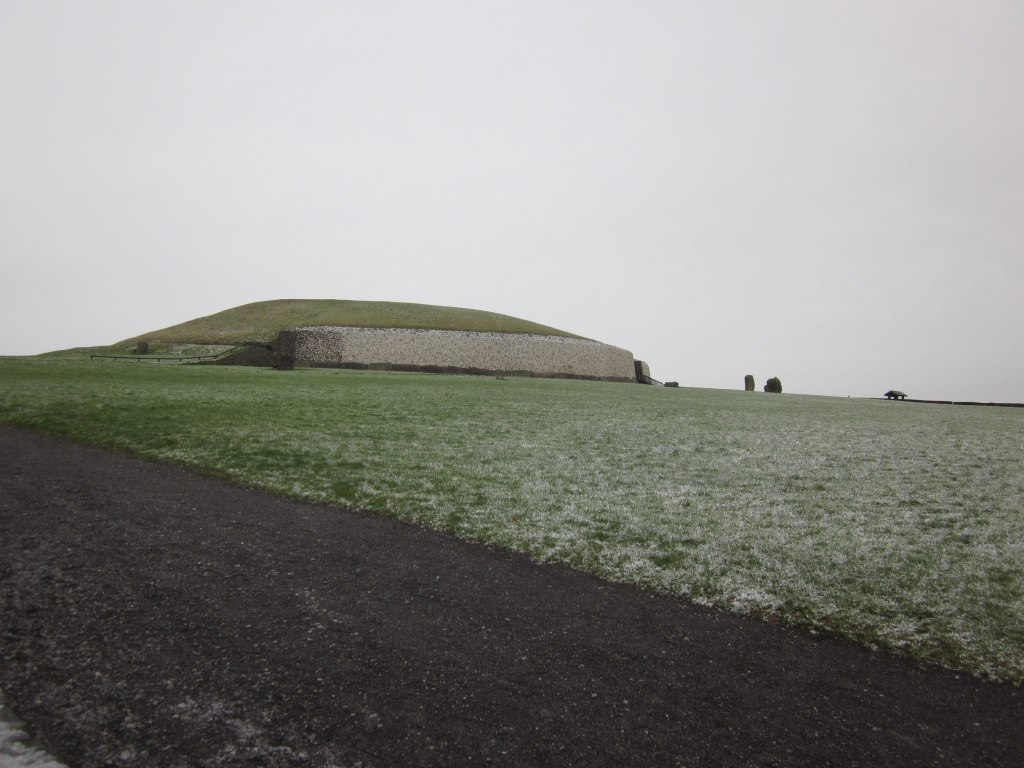
When reading up on archaeoastronomy, I was immediately fascinated by Newgrange, a structure located in Ireland. This fascination was not only due to my slight obsession with Ireland, but also because of its age. It was built roughly around 3200 BC, meaning it is actually older than the Egyptian pyramids and Stonehenge! On the outside, Newgrange looks like a mound surrounded by a stone wall, and on the inside, there are passages and tombs.

Newgrange was first perceived as just a passage tomb, but after more inspection by archaeologist Michael O’Kelly, it was shown to have some sort of astronomical, and possibly religious, purpose. Not only was it a burial site, but also a monument. On the winter solstice, sunlight shines through an opening as the Sun rises and illuminates the passage along which people are buried. Here is a video showing the phenomenon, along with more explanation of the difference in light shining in when it was built compared to today. The exact purpose of this feature and the structure itself is largely unknown, though it has roots to the mythology of the area. There are debates whether the original purpose was from a religion that worshipped the dead or a religion more astronomically based, possibly trying to capture the Sun’s light on the shortest day of the year.

It is truly an amazing feat of architecture for people in 3200 BC, considering they would have lacked many tools that would aid in the building. Many of the stones in the structure are massive, and the wall surrounding it would have taken many many years to complete. It also shows a strong understanding of the Winter Solstice being the shortest day of the year, and a remarkable precision in allowing the light in as the Sun rises that day.

Photo of Newgrange by Joshua J. Mark

Posted in Historical, Light, Sun | Tagged , , | Comments Off on Newgrange

Spectroscopy and Stars

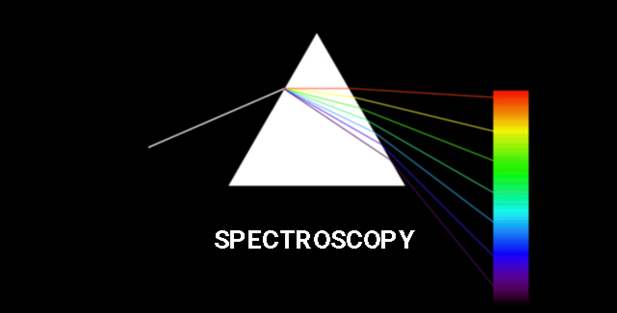
Spectroscopy Light Prism

While it may seem impossible to be able to identify the types of elements that stars billions of light years away are made of, scientists discovered a way to do exactly that. In the 1850s, Kirchhoff and Bunsen managed to identify what the black lines in light spectra meant, and it allowed them to identify elements that make up the light being shown through their invention, the spectroscope. The spectroscope shows dark lines within a spectrum of colors, these black lines show which wavelengths are being absorbed and therefore which elements are present because each element’s wavelengths are absorbed by a different areas on the spectrum.

Posted in Stars | Tagged , , , , | Comments Off on Spectroscopy and Stars

Newton and His Laws

Isaac Newton is a household name for his invention of calculus, laws of motion, and realization that gravity exists in the heavens (contrary to Aristotle’s beliefs!). College students that have studied introductory physics or math may have been exposed to Newton’s three laws of motion, but how exactly are they relevant in the context of astronomy? Let’s restate them and provide some astronomical context:

            Newton’s First Law: an object moves at a constant velocity (or stays at rest) unless acted upon by an outside force. This law explains why the spaceships we launch do not need fuel after they are in space; without air resistance or friction in space, ships can simply move at a constant velocity without a need for thrusters (hint: a net force!). 

            Newton’s Second Law: mass multiplied by acceleration equals force. Large planets can exert a greater gravitational force on, say a comet, than a smaller planet would—mass is a direct factor in the determination of force (stay tuned for a future post on the Universal Law of Gravitation). 

            Newton’s Third Law: each force has an equal and opposite reaction force. Celestial objects, or any objects for that matter, exert forces on each other. You heard that right—that same gravitational force that keeps you grounded to Earth is also being exerted on Earth by you! 

From The Science Explorer

While this brief blog post is not an exhaustive astronomical explanation of Newton’s laws, I do hope it provided a little more context than simply F = m • a.  

Posted in Physics | Tagged , , | Comments Off on Newton and His Laws