The Thirty Meter Telescope

Currently, the largest single-aperture telescope in the world, the Gran Telescopio Canarias, spans 10.4 meters (about 32 feet). This telescope can see 500 million light-years deep into space, which was thought to be impossible out of a single, segmented reflecting telescope until it was built in 2006. While 10.4 meters is large, astronomers worldwide felt that they wanted to see deeper into space. They wanted a massive, extremely large telescope (ELT) with a width of THIRTY (30) meters that can see 13 billion light-years into space.

The so-called Thirty Meter Telescope (TMT) would cost $1.4 billion, and the initial design started almost 15 years ago. Several issues involving location selection and permit approval for TMT have slowed down construction considerably. The main issue is that the massive mirror’s preferred location is on a sacred mountain in Hawaii, Mauna Kea. Although there are several telescopes in the Mauna Kea Observatory grounds, the construction of TMT was too much for Native Hawaiian leaders who have led protests against its construction in defense of their sacred land (see more HERE). Following years of debate in courts and blockades on the island, if construction was approved, it would not begin again until late 2021. With this timeline, the telescope will be completed in mid-2027. For now, if Hawaiian leaders support TMT, we can only imagine the images it will produce in the future!
Posted in Class, Instruments | Tagged , , | Comments Off on The Thirty Meter Telescope

The Disappearing Road

Tides are produced by the difference in the gravitational force of the Moon on the near and far side of Earth; this force causes tidal bulges on the side of Earth facing the Moon and the side of Earth opposite the Moon. During Earth’s rotation, high tides happen when a place goes through the tidal bulges while low tides happen as the place is midway between the tidal bulges. The Sun also has tidal forces on Earth, but they are only about half as strong as the Moon’s tidal forces on Earth.

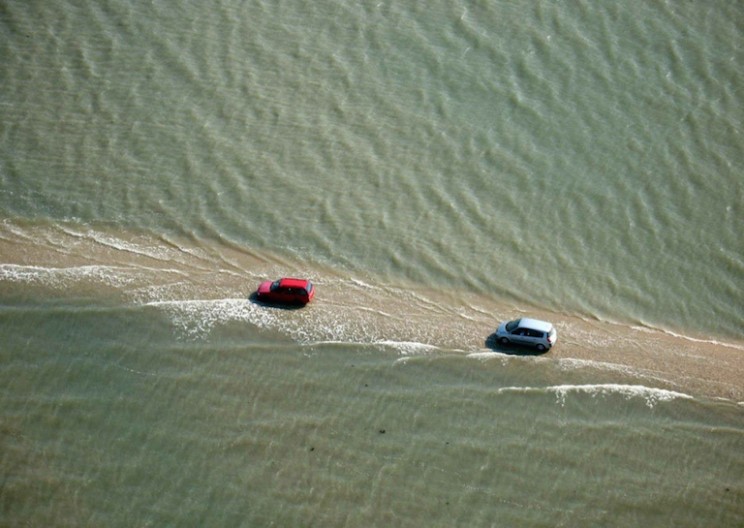
The Passage du Gois is approximately a 2.5 mile road that connects the island of Noirmoutier to Vendée, France. The road is only available for about one or two hours twice a day. At all other times, it is submerged under about 4.3 to 13.1 feet of water. Crowds of tourists and locals walk, cycle, or drive across the road as well as hunt for shellfish during low tides. If someone is stuck on the Passage du Gois while the water level is quickly rising, there are numerous rescue towers they can climb up and wait on until they can safely travel on the road again. There is a yearly race, called Les Foulées du Gois, where participants run across the road between the low and high tides. The Passage du Gois was also apart of the Tour de France bicycle race in 1999 and 2011. To see the tides in action, watch this time lapse video.

As an avid traveler, this destination is definitely going on my list of places I want to visit with relaxing and watching the tides as one of top things I plan to do there. I am probably not going to walk across the road for fear of being stranded on it between the tides. Has anyone visited this road or been to another location that is similarly affected by the tides? Would you ever participate in the Les Foulée du Gois?

Cars traveling across the Passage du Gois (taken from Interesting Engineering)

Posted in Class | Tagged , , , , | Comments Off on The Disappearing Road

Spectroscopy

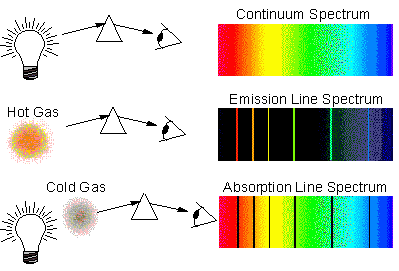
Spectroscopy is the act of “fingerprinting” stars by observing their spectra. A spectrum is produced by filtering light through a prism, resulting in a rainbow of color. There are three different types of spectra: continuous, emission, and absorption. A continuous spectrum is produced when the light of a hot, dense object is directly filtered through a prism. This creates a full and uninterrupted, or continuous, rainbow of light. An emission line spectrum is produced when atoms in a warm cloud of gas emit light at certain specific wavelengths, creating a dark spectrum with lines of color. The lines of an emission spectrum is determined by the composition of the gas cloud. Lastly, the absorption line spectrum is essentially the opposite of an emission spectrum. It is produced when the light from a hot, dense object is filtered first through a cooler gas cloud and then sent through a prism. The cool cloud absorbs certain wavelengths of light according to its composition, leaving dark lines in the final spectrum. The lines in emission and absorption spectra show which elements make up the cloud through which the light came. That is why I referred to the process of spectroscopy as “fingerprinting”–it is a way to determine the composition of heavenly objects.

Picture Source

How incredible is that?! We do not have to bring stars or other light-emitting space objects into our earthly labs to be able to observe them. We can simply use the light that they radiate to determine the composition of the universe. As time goes on and as we make more technological advances, we are able to receive more light from the universe that opens our eyes to the make-up of the cosmos.

In the beginning, when God said “Let there be light,” He knew that what He was speaking into existence was not simply stuff by which we can see and move around. Light acts as more than a physical guide–it is also an intellectual guide. Light carries information that we do not have access to from the surface of the Earth. Light is a source of energy. Light makes plants grow. Light makes beautiful rainbows. Light allows us to have FM radio! 🙂 

Beyond these things, God sent His only Son, Jesus, to be the Light of the world. Jesus is the light that “shines in the darkness, and the darkness has not overcome it.” He is our eternal Source, sustaining us with purpose and joy and hope and peace and love. Thank God for the Light!

Posted in Class, Light | Tagged , , , | Comments Off on Spectroscopy

Tides

Image via TimeandDate

In 1687 Sir Issac Newton discovered that the tides of the ocean on Earth are primarily caused by the gravitational pull of the Sun and the Moon. This idea was supported by his universal law of gravity that asserts that any piece of matter in the universe will attract any other with a force varying directly as the product of the masses and inversely as the square of the distance between them.

Thus under this law, it can be seen that the moon and sun both pull on the Earth, causing a bugle in the oceans that creates the tides. However, what has a larger pull, the Sun or the moon? While the Sun’s gravitational pull on the Earth is around 177 times greater than that of the moon, it is in fact the moon that is a larger controller of the tides. This discrepancy comes from the moon’s proximity to the Earth. In comparison with the Sun, the moon is extremely close to the Earth and thus has a tide-generating around twice as big.

Inertia, the tendency of an object to stay in motion, also affects the tides. The spinning of the Earth creates a centrifugal motion which causes the oceans to also bugle on the side facing away form the moon, as seen in the photo above.

Posted in Class, Physics | Tagged , , , | Comments Off on Tides

A New Method of Fighting Cancer?

Absorption spectra for various element examples (Source)

While absorption spectra can often be associated with the use of identifying particular patterns in which gases absorb the energy from a light source, we must also acknowledge that the chemical composition of certain elements can be determined depending on where the lines are present within a absorption spectra. Interesting developments are currently taking place in the world of science in which scientists are using the ability of absorption spectra to identify certain chemical compositions in the prediction of prognosis’ for various types of cancer! (Scientific Reports) These findings are incredibly interesting and potentially valuable to the world of science, since this field has been hardly explored according to many scientists in the community. In predicting the survival and recurrences of tumors, these studies have shown that utilizing absorption spectra in prediction of these partially chemical components gave back efficiencies that ranged from 75-100% specific to esophageal cancer. This means that, if given more time and resources to explore different variations of cancer, the benefits in utilizing absorption spectra can drastically increase in possibly predicting and preventing the spread of cancer in the body. Did you ever think this would be possible? Comment down below any reactions you have! 

Posted in Class, Light | Tagged , , | Comments Off on A New Method of Fighting Cancer?

Celestial Navigation in Disney’s Moana

Comparison of Moana using celestial navigation and a diagram of Polynesian techniques
from the Conversation

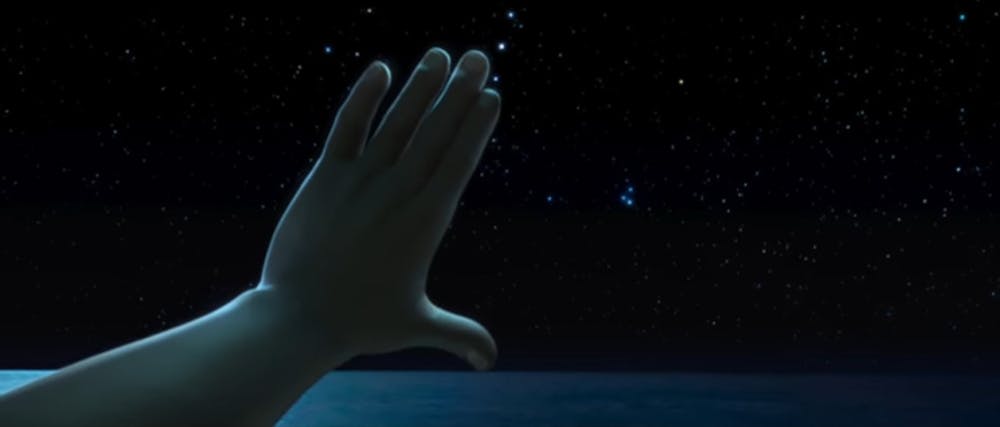
Celestial Navigation was essential for Polynesian voyagers, and the Disney Film Moana does a very good job of depicting legitimate techniques. During the film’s production, Disney created a group of experts on the matter, including Polynesian elders and locals, called the Oceanic Story Trust. Their goal was to advise on cultural accuracy. Thousands of years ago, voyagers would memorize star charts, including rise and set times, in order to determine their locations. They would use their hands to find angles between stars and figure out their latitude specifically. This technique is best used with Polaris, called Hokupa’a in Hawaii. Moana uses her hands for navigation when learning to sail from Maui. In the film, she positions her hand around the constellation Orion, indicating that she’s moving eastward taking time and location into account. Celestial navigation was an incredibly important and necessary part of Polynesian life, and it is fantastic that Disney took steps to ensure accuracy. Has astronomy shown up in other movies you like? Comment below!

Posted in Class, Stars | Tagged , , | Comments Off on Celestial Navigation in Disney’s Moana

Celestial Navigation

People have been using the stars to navigate for most of humankind. Six hundred years BC a philosopher called Thales of Miletos taught people to use the Little Bear constellation to navigate. What’s crazy is that those are the same stars that we say today! Despite there being other stars to navigate, the most common one is the North Star. You can find the North Star by finding the Big Dipper and following the line made from the outer bowl to the Little Dipper’s last star in the tail. Once you find the North Star, you can find your latitude by counting how many of your stacked fists it takes to reach the North Star from the horizon. Each fist represents 10 degrees north of the equator! Longitude, however, is a lot more difficult to calculate, so I still wouldn’t delete my compass app after reading this post!

Source

Posted in Class, Stars | Tagged , , | Comments Off on Celestial Navigation

Retrograde Motion

Those in the realm of astrology are more than familiar with Mercury retrograde. During these unsettling periods, Mercury’s influence over matters of transportation and communication is altered which causes many unfortunate issues to arise. That is, of course, astrology’s interpretation of retrograde motion. In astronomy, retrograde motion simply describes the reversed direction planets seem to move with in the sky. Normally, planets appear to move west to east relative to the positions of background stars—this is called prograde motion. During retrograde motion however, the planet’s path is reversed and they appear to move east to west. Periods of retrograde motion are entirely predictable as they are governed by the orbital periods of planetary objects.

Retrograde Motion
Retrograde Motion-Photographed, Cseligman

These periods of apparently reversed motion are caused by the Earth passing another planet by during its orbit around the sun. Retrograde motion is apparent because the planets do not actually reverse the direction of their orbits. In order to truly comprehend retrograde motion, it is better to show rather than tell how it works. So, here is a cool video demonstrating it perfectly with some pretty helpful visuals!

Posted in Class, Terrestrials | Tagged , , | Comments Off on Retrograde Motion

Why we Should Thank our Atmosphere

On the spectrum of light, the two most energetic rays are x-rays and Gamma rays. They have the shortest wave lengths meaning they have the highest frequency and energy. Both Gamma and x-rays differ from everything else on the spectrum because they can penetrate clothing and skin. This is important because when Gamma rays pass through us, they can alter our DNA and make cell reproduction increase, which is of course essentially what cancer is.

By Engg Forum

The other sources of radiation are not ionizing like Gamma, X-rays, and UV. As you can see from this image, it takes something super strong — like concrete or lead — to stop some of the stronger rays. Ever wonder why they cover parts of your body with lead when you are getting an x-ray? (Have any of you ever experienced this? Drop a comment! When I broke my leg I remember them specifically covering my neck, chest, stomach, and male parts in a lead suit when taking the x-rays) This is to ensure the x-rays don’t do any permanent damage to your body which could cause cancer. Thankfully out atmosphere does this for us all the time! Our atmosphere blocks out Gamma and most x-rays from interacting with us on Earth by absorbing them. On behalf of every living thing, thank you Mr. Atmosphere!

Posted in Class, Light | Tagged , , | Comments Off on Why we Should Thank our Atmosphere

The Gravity of Neutron Stars

Apart from black holes, neutron stars are the densest objects in the universe – excluding some other weird stuff. These unique and very dense things can form after a star goes supernova and collapses. If the star is massive enough, the collapse will force protons and electrons to smash into each other to form neutrons. The resulting body can contain two times the mass of our Sun in a package only 12.5 miles in diameter – which is smaller than Nashville. Neutron stars are no black holes, but they still exhibit an impressive gravitational pull that is 200 billion times what we experience on Earth.

Image from SciTechDaily

Things this dense have a lot of really strange effects on gravity. If you were to drop an object 1 meter off the ground of a neutron star, it would hit the surface just like it would here on Earth (aside from it traveling at around 14 km/s). However, it wouldn’t be shaped the same way as if it had fallen on Earth. The parts of the object further away from the neutron star will experience a different gravitational pull than the parts of the object closer to it, and because the neutron star is so dense, this difference is quite drastic. In fact, this difference is so great that the object would be stretched apart into a stream of stuff, a process called spaghettification. So, while neutron stars are pretty interesting, and have a cool name, being anywhere remotely near one is a bad idea, as you would no longer be alive 💀.

Posted in Class, Stars | Tagged , , | Comments Off on The Gravity of Neutron Stars