Solar Probe Plus

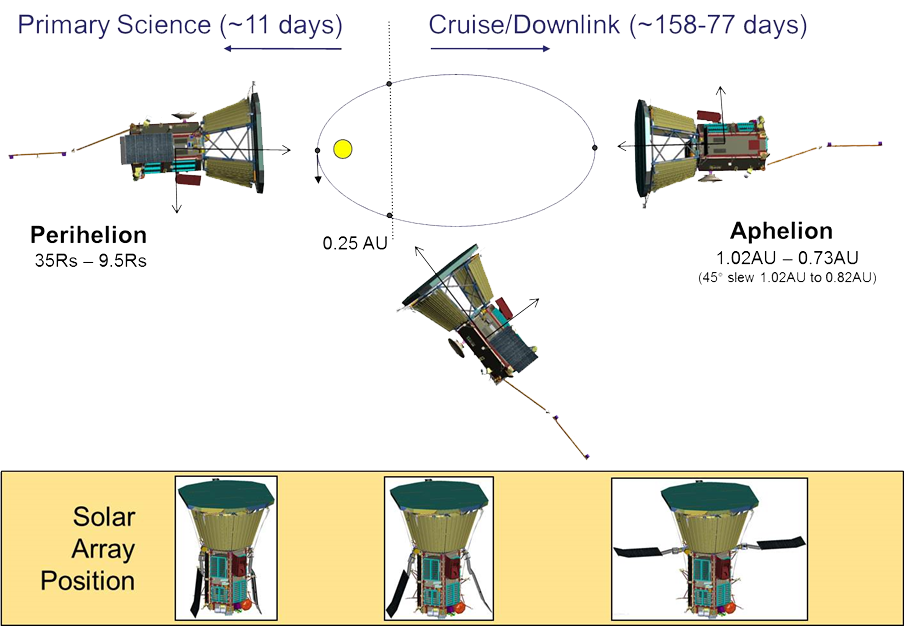
In 1976, NASA’s Helios 2 spacecraft set the current distance record by orbiting the Sun with a closest approach of 43.4 million kilometers. Even though this is barely inside the orbit of Mercury, the intense heat close to the Sun has previously prevented any closer observation. The Goddard Space flight Center “Living with a Star Program” hopes to change this. In 2018, NASA’s Solar Probe Plus is expected to launch from Cape Canaveral and begin a six-year journey to its closest approach to the Sun. Using seven Venus flybys to bleed off orbital energy and fall closer to the Sun, the spacecraft will enter a highly elliptical orbit with a record setting distance of closest approach of 6 million kilometers.
concept-of-operation
Solar Probe Plus Orbit

At this distance, the Sun is 500 times brighter than at Earth. To protect the sensitive instruments, the probe will be protected with a 4.5 inch thick carbon composite heat shield and will be actively cooled with large radiator arrays.
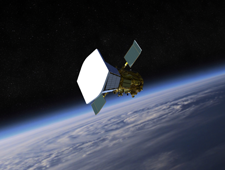
solar_probe_plus_mission_226x170px
Solar Probe Plus Heatshield

Using the data collected at close range astronomers hope to learn about the energy flow on the surface of the Sun, why the solar corona is hotter than the surface of the sun, and what accelerates the solar wind. Historically, the Sun has only been observed from around the equator, because the orbit of the Earth and other planets in the Solar System is approximately in the plane of the Sun’s equator. Solar Probe Plus will use the Venus flybys to increase its orbital inclination and better observe the solar poles.

Sources:

Solar Probe Plus

Living With a Star


Posted in Class, Sun | Tagged , , , , | Comments Off on Solar Probe Plus

Solar Probe Plus

In 1976, NASA’s Helios 2 spacecraft set the current distance record by orbiting the Sun with a closest approach of 43.4 million kilometers. Even though this is barely inside the orbit of Mercury, the intense heat close to the Sun has previously prevented any closer observation. The Goddard Space flight Center “Living with a Star Program” hopes to change this. In 2018, NASA’s Solar Probe Plus is expected to launch from Cape Canaveral and begin a six-year journey to its closest approach to the Sun. Using seven Venus flybys to bleed off orbital energy and fall closer to the Sun, the spacecraft will enter a highly elliptical orbit with a record setting distance of closest approach of 6 million kilometers.

concept-of-operation
Solar Probe Plus Orbit

At this distance, the Sun is 500 times brighter than at Earth. To protect the sensitive instruments, the probe will be protected with a 4.5 inch thick carbon composite heat shield and will be actively cooled with large radiator arrays.

solar_probe_plus_mission_226x170px
Solar Probe Plus Heatshield

Using the data collected at close range astronomers hope to learn about the energy flow on the surface of the Sun, why the solar corona is hotter than the surface of the sun, and what accelerates the solar wind. Historically, the Sun has only been observed from around the equator, because the orbit of the Earth and other planets in the Solar System is approximately in the plane of the Sun’s equator. Solar Probe Plus will use the Venus flybys to increase its orbital inclination and better observe the solar poles.

Sources:

Solar Probe Plus

Living With a Star


Posted in Class, Sun | Tagged , , , , | Comments Off on Solar Probe Plus

Blog #1

Astronomy is one of the oldest sciences. Something about the night sky has fascinated people for centuries. Even in early civilizations, people have demonstrated keen interest in both watching the sky and making observations about the phenomena they observed. Despite its long history, astronomy has evolved over time to reflect new technologies available for observation and study. Perhaps the most fundamental of these innovations was the telescope. Today, technological innovation allows even the most novice of astronomers to make astute observations of the night sky with little more than their cell phone. Generally speaking, astronomy apps that aid in identification of celestial bodies (also called sky-charting apps) rely on a cell phone’s internal GPS to identify where on Earth you are located and use that to create a map of the stars, planets, clusters, and other celestial bodies that are near you. Here is a list of 4 apps that may be relevant to some of the topics that we discuss in this course and will definitely help as you continue to observe the night sky!

  1. Sky Safari uses images from the Hubble Space Telescope and NASA spacecrafts to display a map of the sky at any location-but with a temporal twist. The app is also capable of displaying the position of celestial bodies up to 1 million years from the current date.
  2. Pocket Universe is an app designed to map out the sky that lies in front of a user and gives recommendations for celestial beings that may be visible.
  3. Night Sky 4 is another great sky charting app that is relatively simple to use and is capable of identifying all the usual celestial bodies along with satellites. Furthermore, the visual display of this app includes 3D graphics that can better guide an observer.
  4. The NASA App is slightly different from the apps described above, but can be used as a great resource for information on NASA’s latest activities and missions and provides an enormous amount of information about planets, constellations, and other celestial bodies (along with fabulous videos and pictures of them). Plus, the app is free!

Sources: Best Science AppsWhat is Astronomy?Astronomy Apps

51508034
Photo Source

Posted in Class, Instruments, Science | Tagged , , , , , | Comments Off on Blog #1

Blog #1

Astronomy is one of the oldest sciences. Something about the night sky has fascinated people for centuries. Even in early civilizations, people have demonstrated keen interest in both watching the sky and making observations about the phenomena they observed. Despite its long history, astronomy has evolved over time to reflect new technologies available for observation and study. Perhaps the most fundamental of these innovations was the telescope. Today, technological innovation allows even the most novice of astronomers to make astute observations of the night sky with little more than their cell phone. Generally speaking, astronomy apps that aid in identification of celestial bodies (also called sky-charting apps) rely on a cell phone’s internal GPS to identify where on Earth you are located and use that to create a map of the stars, planets, clusters, and other celestial bodies that are near you. Here is a list of 4 apps that may be relevant to some of the topics that we discuss in this course and will definitely help as you continue to observe the night sky!

  1. Sky Safari uses images from the Hubble Space Telescope and NASA spacecrafts to display a map of the sky at any location-but with a temporal twist. The app is also capable of displaying the position of celestial bodies up to 1 million years from the current date.
  2. Pocket Universe is an app designed to map out the sky that lies in front of a user and gives recommendations for celestial beings that may be visible.
  3. Night Sky 4 is another great sky charting app that is relatively simple to use and is capable of identifying all the usual celestial bodies along with satellites. Furthermore, the visual display of this app includes 3D graphics that can better guide an observer.
  4. The NASA App is slightly different from the apps described above, but can be used as a great resource for information on NASA’s latest activities and missions and provides an enormous amount of information about planets, constellations, and other celestial bodies (along with fabulous videos and pictures of them). Plus, the app is free!

Sources: Best Science AppsWhat is Astronomy?Astronomy Apps

51508034
Photo Source

Posted in Class, Instruments, Science | Tagged , , , , , | Comments Off on Blog #1

Blog #2: HAT-P-2’s Heart

A very appropriate post for Valentine’s Day.

NASA’s Spitzer Space Telescope has discovered a unique quality of a star and its orbiting planet that are some 370 light years away. The gravitational interaction between the two cause some vibrations in HAT-P-2 when its orbiting planet HAT-P-2b gets close.

HAT-P-2b is a planet with a mass eight times bigger than that of Jupiter. It is very warm and orbits its star, HAT-P-2, closely. HAT-P-2, on the other hand, is about 100 times more massive than HAT-P-2b. The gravitational interaction between the two gives HAT-P-2b an elliptical orbit where it spends most of its time far from the star. The “heartbeat” of the star is caused when the planet gets closest to the star and its gravity almost ‘rings’ the star like a bell, giving the appearance of these pulsations. 

The announcement of this event ends with an important quote from Julien de Wit, postdoctoral associate at the Massachusetts Institute of Technology, Cambridge. 

“There’s more to learn from studying stars in systems like this one and listening for the stories they tell through their ‘heartbeats.'”


Source: Spitzer Space Telescope


Posted in Class, Exoplanets, Stars | Tagged , , , | Comments Off on Blog #2: HAT-P-2’s Heart

A new class of black holes is found

The movie Interstellar makes more and more people curious about what black hole is. The special effects team working on Interstellar no doubt make the movie undoubtedly wonderful and also it end up advancing people’s knowledge of black holes at the same time.

int_wps_1920_worm
Picture from Interstellarmovie

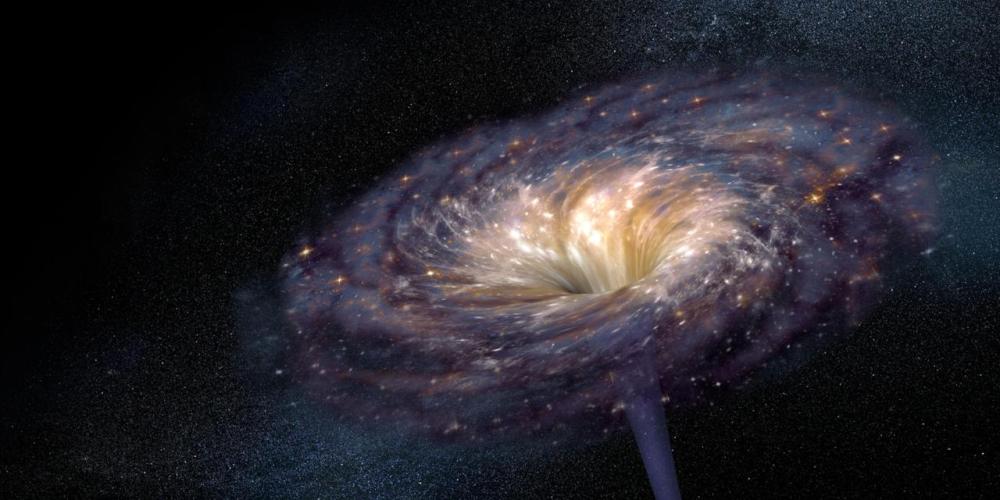
According to Wikipedia,A black hole is a region of spacetime exhibiting such strong gravitational effects that nothing—not even particles and electromagnetic radiation such as light—can escape from inside it.The theory of general relativity predicts that a sufficiently compact mass can deform spacetime to form a black hole.

p02rz7np
Picture from BBC Earth

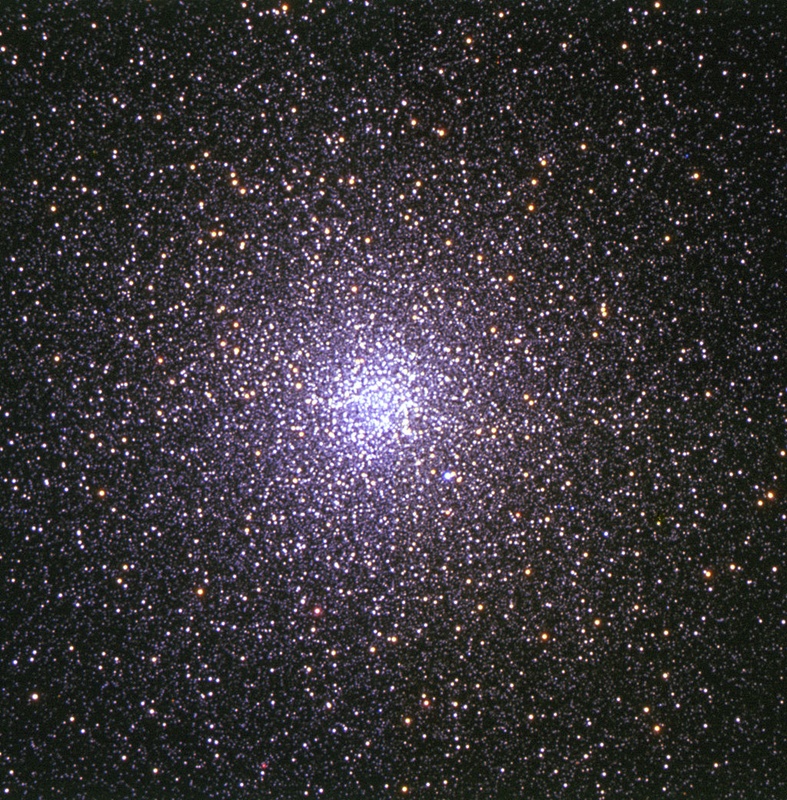
The star cluster 47 Tucanae, located about 13,000 to 16,000 light years from Earth, is a dense ball of stars. Hundreds of thousands of stars compacted into a 120 light-year span give off gamma rays and X-rays and more energetic events, but to date, no black holes had been found there. The center seemed ripe for opportunities to find one, but a lack of tidal disruption events and a jumble of stars hard to sift through obscured finding any lurking black holes there.

the_globular_cluster_47_tu
Globular cluster 47 based on data from FORS1. Picture from Astronomy Magazine

“Astronomers found that a black hole of 2,200 solar masses is lying at the center of 47 Tucanae. Until now, though, astronomers have typically only found black holes of below 100 solar masses or above 10,000, the latter of which are the behemoths that power galaxies. These intermediate-mass black holes are believed to be seeds of supermassive black holes. As black holes feast, they gain mass.”–from Astronomy Magazine.

Finding more mid-range black holes can be hard. Black holes, especially larger ones, typically clean their general area of debris. And astronomers keeps on studying them and trying to find them in the immense universe. I do hope that human’s knowledge about the black holes can be further extended in the near future!


Posted in Class | Tagged , , , | Comments Off on A new class of black holes is found

Blog #3: Asteroid Mining

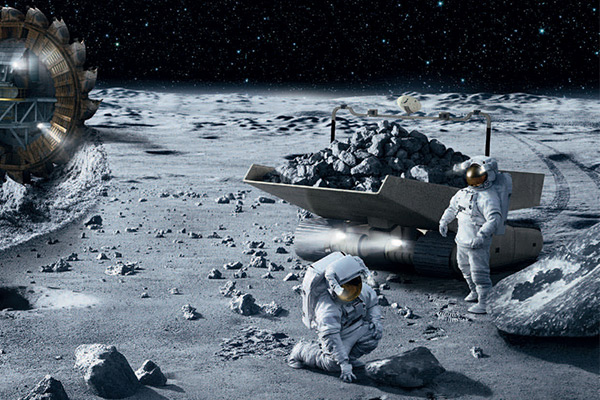
asteroid-mining-1
Representation of Asteroid Mining

We commonly think of asteroids simply as left over debris from when the planets were formed, but researchers believe that we will be able to harness resources from them within the next 10 years. The most common type of asteroid, C-type, contains up to 20% water as well as various metals. The presence of water has a potentially useful application, that is to be converted into rocket fuel. If this practice is perfected, rockets will have a far less restricted distance that they can travel, allowing for exploration farther away than has ever been done before by humans. In addition to water, platinum group metals, which are valuable and have other useful applications, are also found in many asteroids. Planetary Resources, an asteroid-mining company based in Washington, believes that they will be one of the first to contribute to the just started asteroid-mining market. Planetary Resources has already launched their first probe into space and believes that they might be the first to use resources from asteroids, in as little as 5 years. These new developments do have the potential to create problems, and there will need to be some sort of organizational system in place before the market for asteroid-mining grows too large. While harnessing resources from asteroids complies with the Outer Space Treaty of 1967, Congress is looking into legislation regarding asteroid-miners’ property rights.

An interesting video about the basic elements of asteroid-mining can be found here.

Sources: Asteroid Mining May Be a Reality by 2025

Posted in Class | Tagged , , , , | Comments Off on Blog #3: Asteroid Mining

Eclipses

Eclipses have been used to increased drama in books and movies for over a century. One specific example that comes to mind is the novel Delores Claiborne by Stephen King. A main focus of the story is around a solar eclipse during which the main character’s father dies in a suspicious way, depicted on the cover art below.

doloresclaibornenovel
Wikipedia

The story hinges on the reader understanding what a solar eclipse is. By context clues one could come to the conclusion that it created widespread darkness during the day, but what actually is a solar eclipse?

Solar Eclipse

A solar eclipse occurs when a new moon comes between the sun and the earth. This casts a shadow on the earth, causing darkness in certain areas for up to 7 minutes.

screenshot_orig
Solar Eclipse 

The moon casts a  total shadow (it reminds me of the opposite of holding a magnifying glass in  sunlight) on a small portion of Earth and a partial shadow on a larger portion. The difference. The difference in viewing a total eclipse verses a partial eclipse (using protective glasses or lenses, of course) is shown below.

eclipse-types

If you’re thinking, “Hey, that looks cool, I hope I get to see one of those someday”, then you’re in luck! On August 21, 2017 an eclipse will occur over the US, with a total eclipse being visible here in Nashville, TN! This will be the first total solar eclipse visible in the United States in over 38 years! Make sure you have a good viewing spot (and some protective glasses) between 1 and 1:30 CDT 🙂

tse2017-usa


Posted in Class | Tagged , , | Comments Off on Eclipses

Blog #1: Understanding Moon Phases

The moon has always captivated man. The pattern of moon phases is easy enough to understand on its own, but once you add in time of rise and fall and the position of the moon relative to Earth, things get a little more complicated.

This website from McGraw Hill offers an interactive way to understand moon phases.

screen-shot-2017-02-14-at-1-47-30-pm

Lunar Phases Interactive

The multiple views offered give a better sense of what causes the change in phases. Instead of focusing on one aspect (time, location, view), this interactive website helps to understand how each component works with the other.

This site definitely helped me understand and feel comfortable explaining moon phases.


Posted in Class | Tagged , , , | Comments Off on Blog #1: Understanding Moon Phases

The Era of Long Refractors

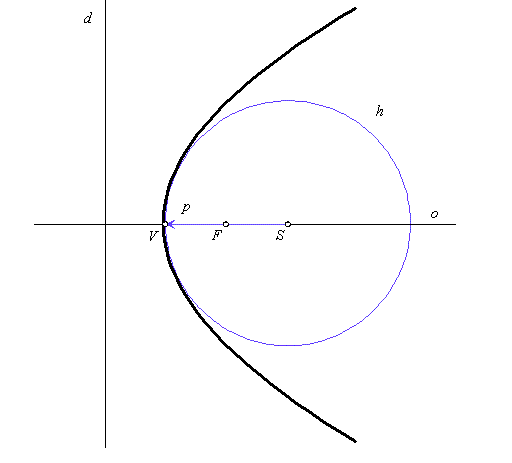
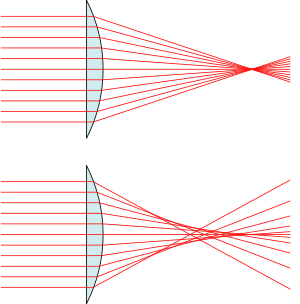
Telescopes focus light down to a point to increase the light gathering capacity of the astronomer’s eye. The optimal shape for such focus is a parabola, either a parabolic mirror, or a refracting lens of parabolic shape. Unfortunately, parabolic lenses do not have the same curvature everywhere the way spherical lenses do, making their construction without computer controlled equipment very difficult. Seventeenth century astronomers avoided this issue by constructing very shallow spherical lenses because at small angles, the spherical lens approximates the shape of a parabolic lens.

par
Spherical vs Parabolic Optics

The lack of a single focal point from a spherical lense is called “spherical aberration.”

300px-spherical_aberration_2-svg
Spherical Aberration

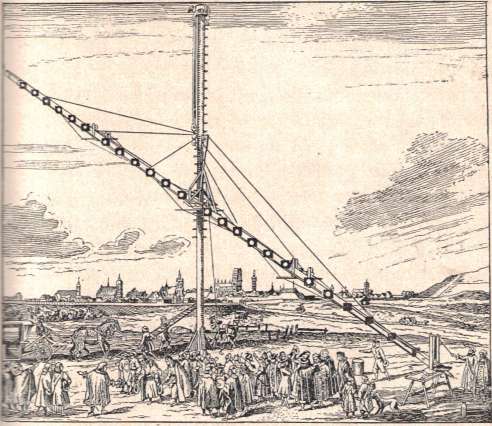
The problem with this arrangement is that the extremely shallow lenses had extremely long focal lengths, and therefore the telescopes during this era were extremely long.

huygens-telescope
Hevelius’ Refractor

While Christiaan Huygens was able to discover Titan with a 12-foot long refractor, astronomers of the time saw no reason to stop there. Such thinking led to the 150-foot long telescope constructed by Johannes Hevelius pictured in the drawing. Unfortunately, at these extreme lengths, the telescope was very difficult to move and susceptible minor changes in weather, but it was these limitations that led to the improvement of reflector telescopes that are primarily in use today.


Posted in Class, Historical | Tagged , , | Comments Off on The Era of Long Refractors