Mars One Timeline

MArs-one
Mars One

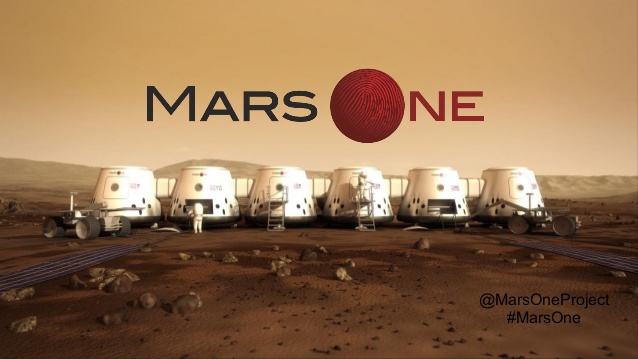
Next year, the astronauts of Mars One are expected to begin their decade-long training before the first set of four astronauts departs for Mars in 2026. I decided to investigate a bit further into the details of the plan outlined for Mars One as a whole between now and then….

2017: Training begins! Hopefully the crew likes each other, because they’re now stuck together literally until they die – on Earth or Mars.

2020: Communication satellite #1 is launched into orbit around Mars, which will be vital for maintaining communication between Earth and the Mars settlement. A demo mission lands on Mars to run some tests on the technology developed for the settlement.

2022: Communication satellite #2 is launched into orbit around the Sun, enabling communication between Earth and Mars at all times. A rover is sent to Mars to choose a settlement location.

2024: So much stuff is sent to Mars! Including: rover #2, life support units, living quarters, and supply units.

2025: So much stuff (above) lands on Mars, and the rover sets it all up using solar energy. Water and oxygen begins being produced by the system.

2026: First crew departs! Along with them, cargo for the second crew is launched towards Mars.

2027: First crew lands and begins a new life on Mars. They set up the second set of supplies when it lands.

2028: Second crew departs, as well as the cargo for the third crew.

2029: Second crew arrives.

….And then the cycle continues every two years, sending four more humans to expand the settlement on Mars. Pretty insane, right?! There’s a good chance people will be living on another planet a little over a decade from now. I, for one, cannot wait to see how this goes.


Posted in Space Travel | Tagged , , , , | Comments Off on Mars One Timeline

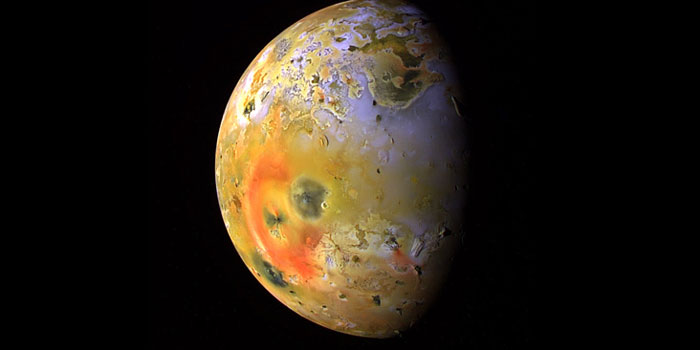
Volcanic Io

Io_Feat
NASA

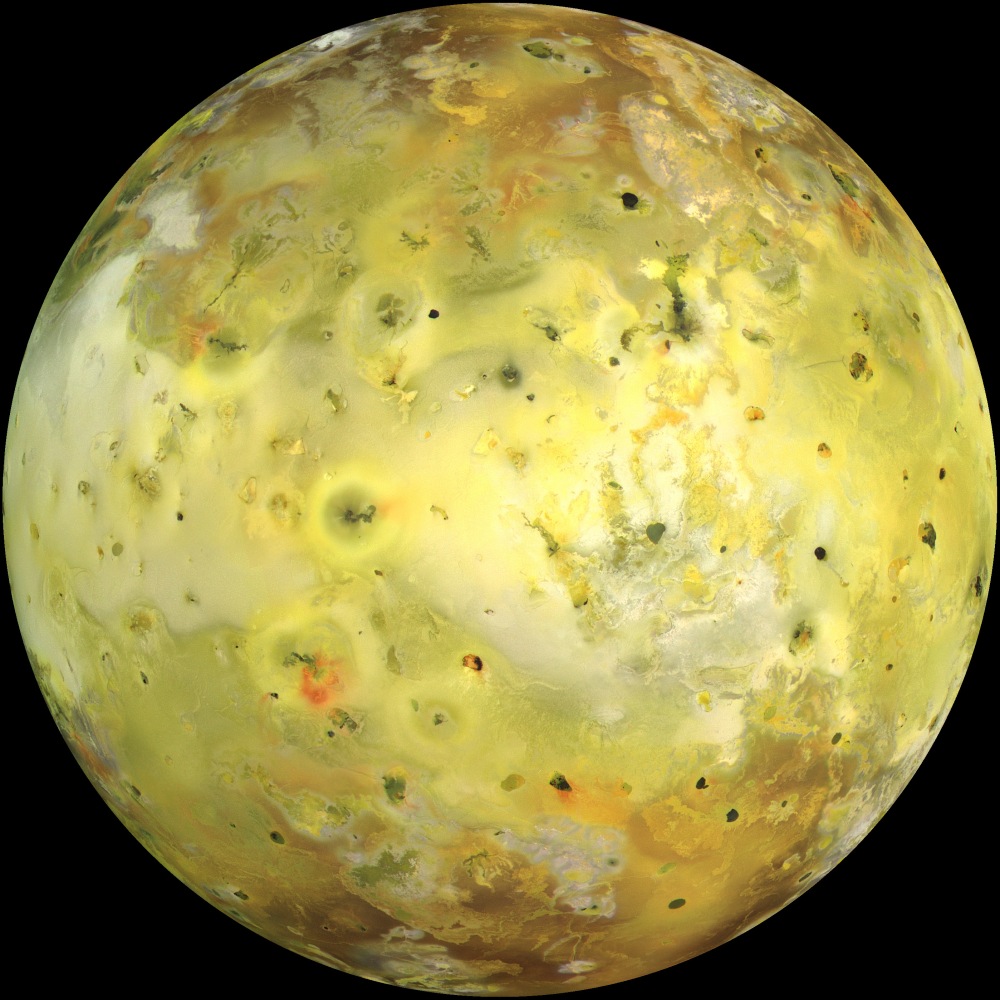
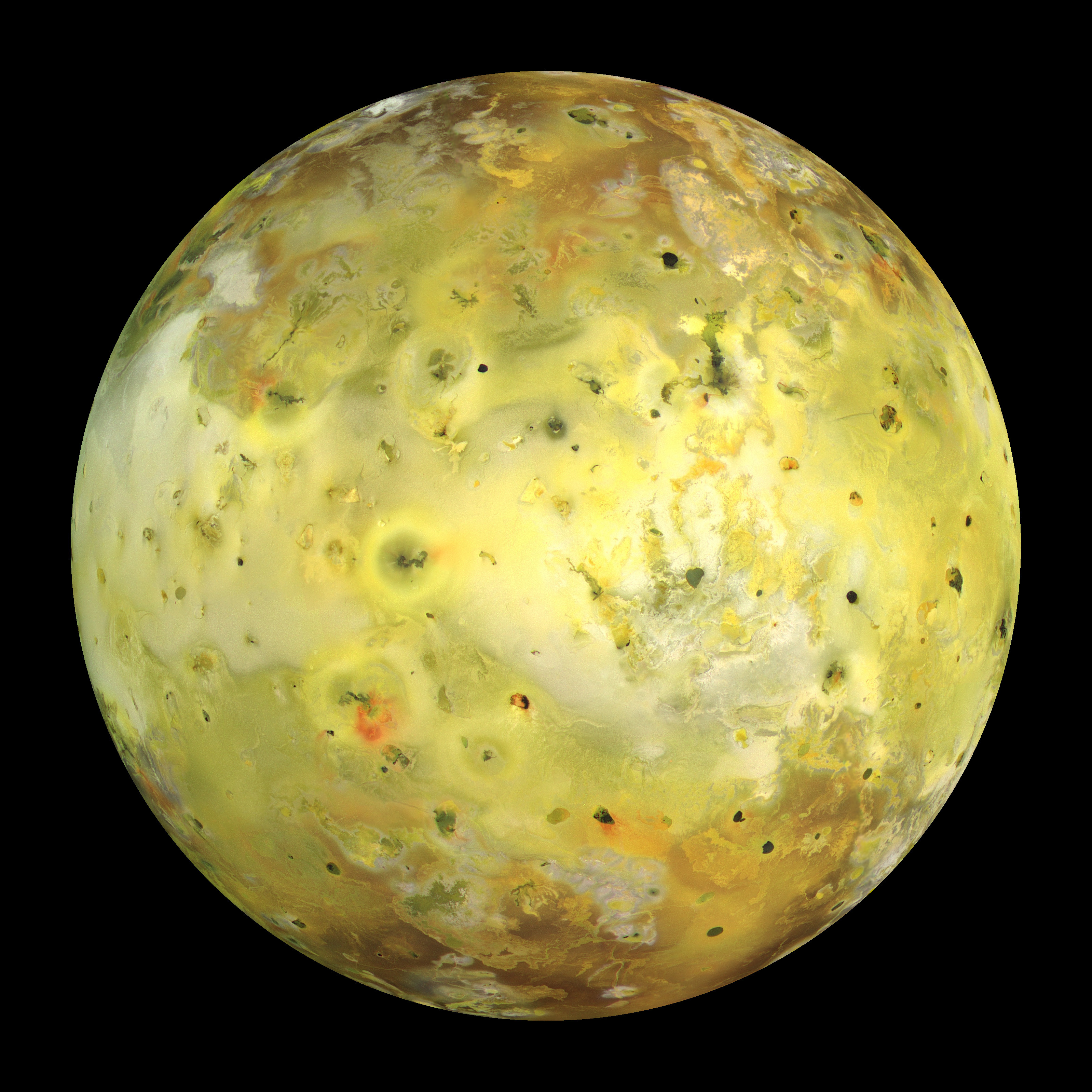
Volcanoes are one of the coolest geographical features of Earth (in my opinion), but volcanoes outside of our world are even cooler. Jupiter’s moon Io is the most volcanically active world in our solar system – in other words, it is FULL of volcanic awesome-ness.

Io’s volcanic activity produces HUGE volcanic plumes. To give some perspective on how massive Io’s eruptions are, consider this: the International Space Station orbits between 330 and 410 km above the surface of the Earth. Io’s Tvashtar Patera volcano was observed by New Horizons in 2007 and estimated the plume to be about 165 km tall. Adjusted to compare the same relative size eruption on Earth, this plume would reach heights of 560 km – far beyond the orbit of the ISS. And those aren’t even the largest Io plumes! NASA estimates that volcanic plumes on Io may rise close to 300 km.

Such large plumes never happen on Earth as a result of its volcanic eruptions for a variety of reasons. Plume height is a function of the difference between the temperature of the lava and other out-gassed products and the surface temperature of the world. Io’s lava is believed to be much hotter than Earth’s, and its surface temperature is also much lower, which is one cause of this large disparity. Another is the atmospheric thickness of the two worlds – Io’s thinner atmosphere allows the volcanic material to rise higher. The rate at which volcanic material escapes the surface also factors in – this rate is much faster on Io.

Io’s massive volcanoes are pretty cool to observe from afar, but perhaps it’s a good thing they don’t exist quite so prominently on Earth.


Posted in Moons, Science | Tagged , , , , , , , | Comments Off on Volcanic Io

Rouge Planet- The Lost Ones

Unbound to any parent star, lacking both a  sunrise and sunset, and  wandering the galaxy freely, Rouge planets are believed to outnumber the stars in our galaxy 100,000 to 1.  Yes for every star there is 100,000 rogue planets that were forcefully ejected out of its parents star’s grace by a larger and more needy sibling planet, and yet astronomers have only been able to find a handful of these planets. This is mostly due to the fact that planets do not produce any light of their own, and traditional means of discovering planets are useless in detecting Rouge Planets. Traditional means of discovery  include spotting a slight decrease in a stars luminosity or detecting a slight doppler shift that can occur if a star is being orbited by a massive planet such as Jupiter in close proximity.  As stated above neither method is useful in finding a planet unbound to a star. So how did scientist find even a handful of these rogue planets?  For the more massive rouge planets (300x size of Earth) direct imaging by strong inferred detector can be used since the star is emitting  just enough radiation and is not being “out radiated” by a  nearby star. The more  common method of detecting less massive rouge planets is known as microlesning.  To clarify, Gravitational Microlensing is “When a planetary sized object passes in front of a background star,and  its gravitational field causes a momentary increase in the visible brightness of the background star.”  This method of course tells us nothing about the rouge planet other than the fact that it exists. Perhaps the most exciting thing about all this is that for all the advances humanity has made we still remain in the dark about the true makeup of our universe. There is a certain mysticism to the idea that we can continue to discover and I hope the launch of the James Webb Telescope will present us with even more puzzling information for us to decipher.

Artist Rendition of Rouge Planet ( Video Provided by ESO)


Posted in Class | Tagged , | Comments Off on Rouge Planet- The Lost Ones

A Dance to Remember

Twice now our class has been introduced to the Kepler Orrery IV model, and both times the question of why our solar system seems to be such an oddball has crossed my mind. Based on the Kepler Orrery IV model, planets much larger than Earth should  be orbiting closer than the orbit of Mercury. So why is this not the case? The answer may be found in the Grand Tack theory. It is hypothesized that the massive gas giant, Jupiter, was gravitating towards the Sun in the early formation of the universe. The only force that stopped Jupiter gravitating into the Sun was Saturn. In what is described as a celestial dance, Saturn and Jupiter harmoniously exerted enough gravitational force on each other that both were spared from the fiery collision with the Sun. This dance eventually sent both planets back   out into depths of the solar system. This dance however left a permanent mark on the terrestrial planets.  Before Jupiter made its way back into deeper parts of the solar system its massive gravitational pull slung  massive planets known as Mega Earths into the Sun.  The Sun consumed these Mega Earths and the remnants of these Mega Earths eventually formed into these  small and oddly placed terrestrial planets. The theory is supported because it accounts for the age difference between our celestial planets and terrestrial planets as well as explains the oddities of the size and locations of the planets in out solar system.  Below is a 6 min video that expands throughly on Grand Tack Theory.

Grand Tack Theory ( Youtube)


Posted in Class | Tagged , , | Comments Off on A Dance to Remember

A better understanding of our Universe… and maybe aliens

captain’s blog, Stardate 69734.8

In class, we’ve been talking a lot about extrasolar planets, that is, planets that have too many suns. But actually, extrasolar planets, or exoplanets are planets that exist outside our Solar System. Exoplanets are fascinating to learn about because, as much as I love our Solar System, it’s good to get away from home every now and then. Discovering other planets in other parts of the galaxy help us learn more about the big picture of space, and more planets mean more chances to find aliens which, let’s be honest, is what it’s really all about.

Screen Shot 2016-04-08 at 10.06.51 AM

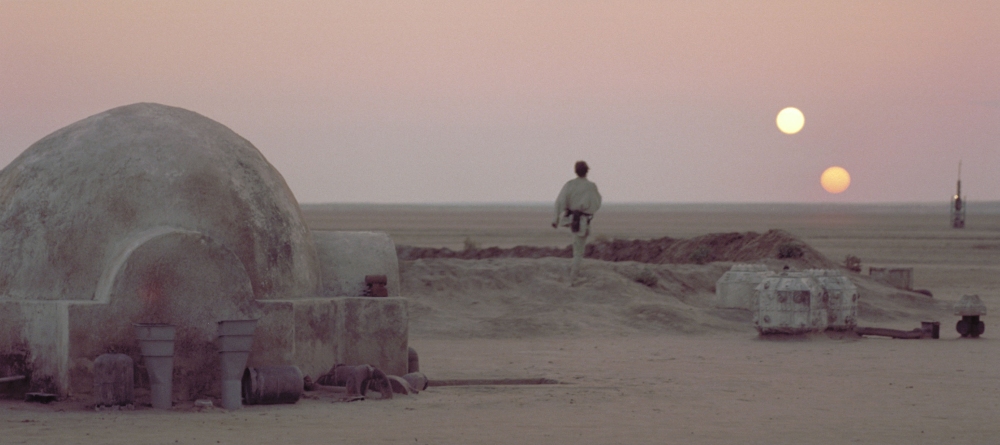
Just now, I watched this video on the ten arbitrarily chosen most interesting exoplanets discovered. The most interesting thing to me about all of these exoplanets is just how different they are from Earth or any other planet in our Solar System. Some examples: one of the exoplanets mentioned is in tidal lock with its sun, another orbits its sun twenty times closer than Mercury. Kepler 16B orbits a binary star system, meaning it has two suns!

STAR WARS
Tatooine Kepler 16B at sunrise – from Daily Dot

To me, the most interesting thing about all of this is just how different other worlds can be. We spent a lot of time in class learning about how events in the planetary formation stage can affect the planetary geology and thus the overall conditions of the planet. And now, by looking at these exoplanets, we have observable examples of these forces at work.

There are several exoplanets mentioned that exist in their respective suns’ “habitable zones”, meaning they have a capability for Earth-like conditions. Exoplanet discovery is both fascinating and important because it means a better understanding of our Universe… and maybe aliens.


Posted in Aliens, Exoplanets | Tagged , | Comments Off on A better understanding of our Universe… and maybe aliens

Where did all the dinosaurs go?

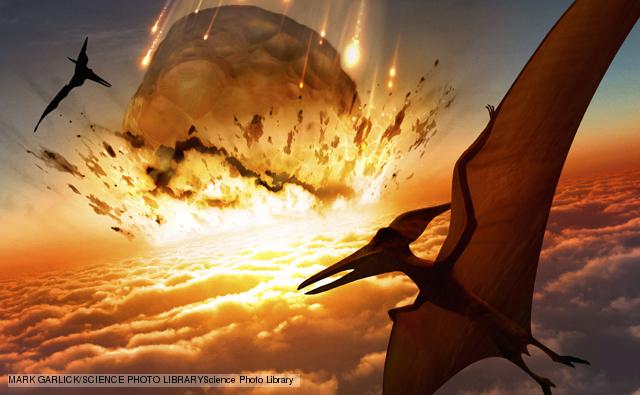
Extinction of the dinosaurs, artwork
Artist’s representation of dinosaur extinction. Source

I think one of the more fascinating topics in Earth’s past is the mystery of the dinosaurs. They were here 65 million years ago (for a shockingly long time—if you remember, they were here for almost a week in the “calendar” of the universe!) and then suddenly disappeared.

So, what happened to them? It is generally accepted that a massive asteroid or comet struck the Earth 66 million years ago and initiated the K-T (cretaceous-tertiary) extinction event. According to the National Museum of Natural History, the asteroid or comet that impacted the Earth was about 10 km in diameter and hit the Yucatan peninsula of Mexico and formed the Chicxulub crater. Scientists believe that this massive impact may have caused global firestorms, excessive amounts of atmospheric carbon dioxide and dust, which may have resulted in a sunlight-blockage. This in turn destroyed much of the Earth’s vegetation along with 50% of the species at the time. One benefit (in terms of the human race) is that the destruction of these huge predatory creatures opened the door for other species to evolve, including mammals. As thankful as I am that we don’t have to compete with dinosaurs as the main Earth predator, it’s humbling to know that one single event can have such a massive impact on the ecosystem of Earth.


Posted in Historical, Terrestrials | Tagged , , , , , , , | Comments Off on Where did all the dinosaurs go?

“Hot” Jupiters

hot_jupiter
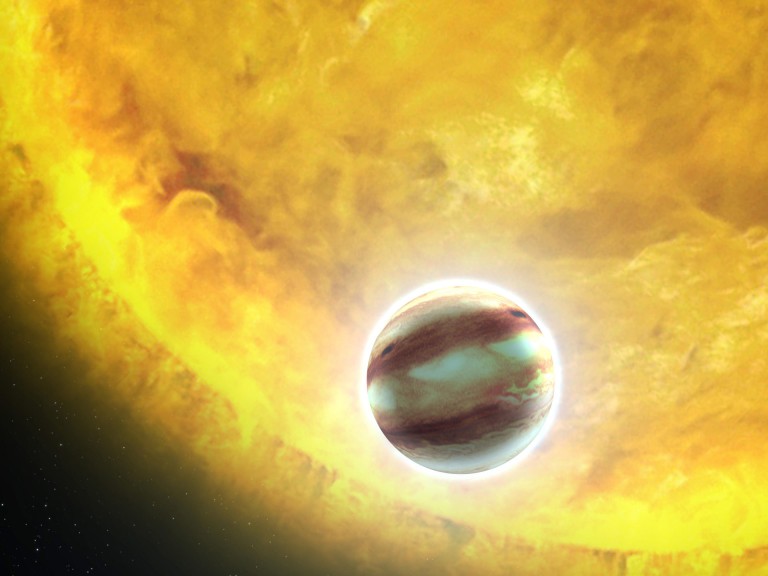
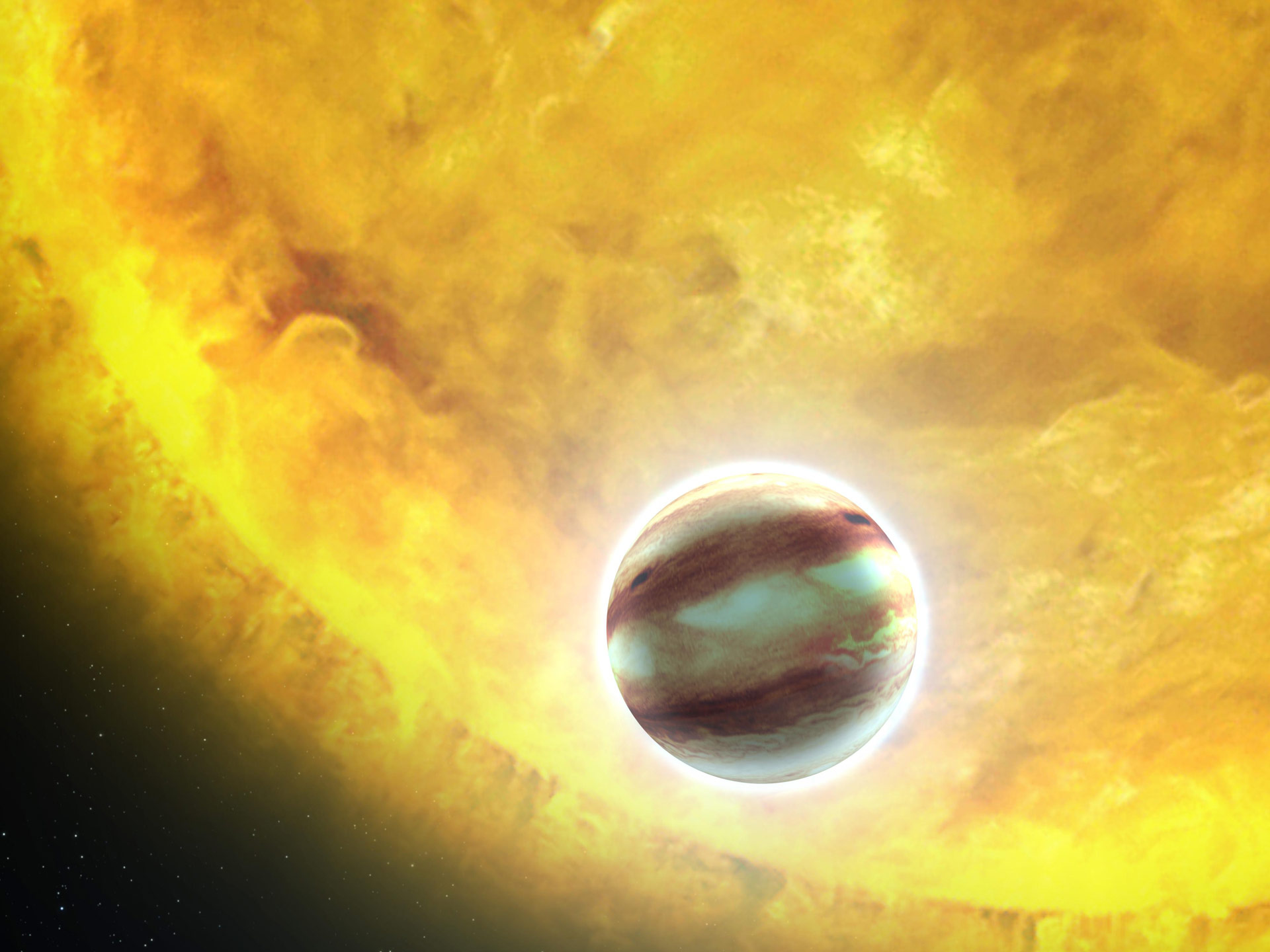
Gas giants near their star. Source

Last unit, we learned about the formation of our own solar system, in which small, rocky planets formed close to the Sun, and large, gas giants formed far from the Sun (past the frost line). This is due to the fact that during planetary formation, the area closest to the Sun was extremely hot, and therefore only materials with extremely high melting points (metals) were able to accrete to form planets. Beyond the frost line, other materials were able to condense to form the gas atmospheres of larger planets.

However, as we’ve learned in class, there exist certain solar systems that have Jupiter-sized gas giants that are actually within the star’s frost line (i.e., where there should only be terrestrial planets). Whether it’s a selection filter in that these types of planets are easier to detect or if it’s actually a common phenomenon is unknown. According to NASA, scientists believe that these so-called “hot” Jupiters are actually a result of planetary migration. This means that the gravitational influence of the star causes the planet to gradually migrate to a closer orbit. This causes the temperature of these planets to be shockingly hot—as much as 2000 degrees Fahrenheit when in direct sunlight! One criticism of this migration theory is the timescale; it may take longer than the solar system had been around for this migration to occur. Other theories under investigation include the spiraling in of gas giants as well as the actual formation of gas giants near the Sun to begin with.


Posted in Exoplanets | Tagged , , | Comments Off on “Hot” Jupiters

So Extra…

extrasolar_planet.jpg
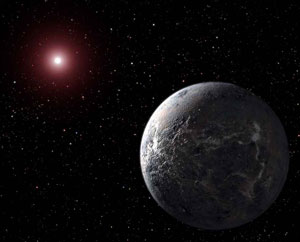
Extrasolar Planet

Extrasolar planets are very important to our study of the universe. The idea that there are planets that orbit other stars the way we orbit the Sun changes our entire perspective of how the universe operates. There are many challenges with detecting extrasolar planets, but once they are found they can provide us with a wealth of information. First, all of the methods used to detect the extrasolar planets allow us to determine they’re orbital periods. Once these have been established, it is very simple to determine the average orbital distance of the planets via Newton’s version of Kepler’s third law. By studying the Doppler data of the planets, we can determine the eccentricity of their orbits around their stars. If the astronomers use the astrometric or Doppler methods to measure the motion of the planets, the data collected can allow us to estimate the planetary mass. It is important to remember however, that the masses determined by the Doppler method are only precise if the planet is observed edge on. All of these measurements can be combined in different ways to produce even more knowledge about the extrasolar planets in our solar system, and I think it will be very interesting to see what the increased knowledge will tell us about the universe we live in.


Posted in Universe | Tagged , , | Comments Off on So Extra…

Charon: The Major Key to Pluto

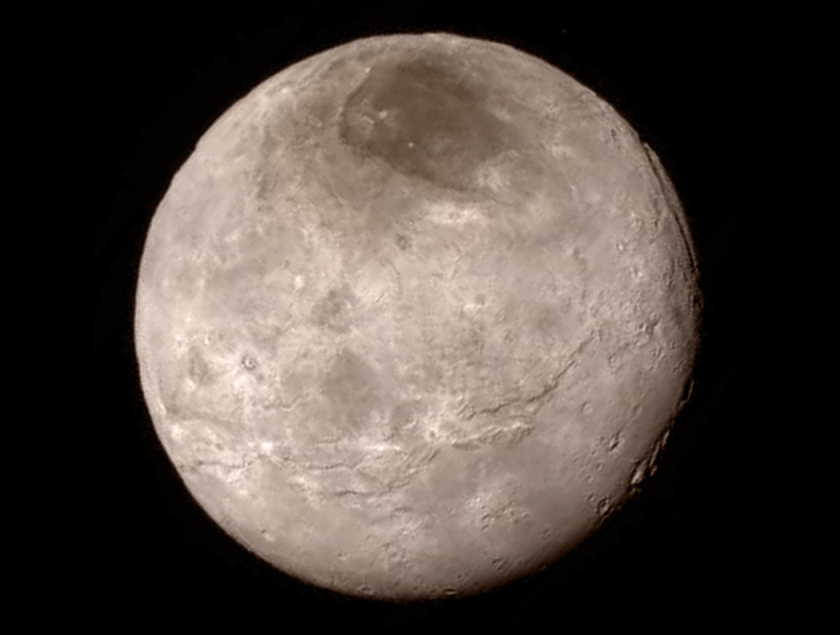
Up until very recently, Pluto was considered the ninth planet of our solar system. That all changed when the definition of a planet was revised, and Pluto just became another Kuiper belt object albeit the most famous one. We know significantly more about Pluto than any other Kuiper belt object simply because it was discovered before the rest. We also have learned a lot form its moons especially Charon.

Charon
Charon

The discovery of the moon Charon was vital to producing the first accurate determination of Pluto’s mass. This further helped differentiate Pluto from the other Jovian planets by virtue of is distinct mass. Shortly after its discovery, Charon and Pluto eclipsed each other every few days (a very rare occurrence), and the changes in luminosity allowed astronomers to obtain valid density, mass, and size measurements for both objects. This analysis was key in proving that both Charon and Pluto are made of ice mixed with rock much like the comets in our sky. The analysis also allowed for rough maps of the surface of Pluto to be constructed. All of this information is vital to our understanding of the universe and the objects in our solar system. I wonder what information we would have right now if we hadn’t discovered Charon or if Pluto hadn’t been discovered back in 1930. I wonder how that would have affected our overall understanding of the universe we live in. Regardless, I think it is very interesting to think about how such a seemingly small collection of data can lead to a wealth of information, and I am very excited to see what happens with Pluto in the future.


Posted in Dwarf Planets, Universe | Tagged , , | Comments Off on Charon: The Major Key to Pluto

Io

Io is Jupiter’s third largest moon. What is notable about Io is that it is the most geologically active body in the entire Solar System. It is extremely volcanic, and is the only body other than Earth that we  have observed with active volcanism. The volcanic activity occurs because Io is greatly affected by tides from Jupiter, and its rock surface bulges up and down by as many as 100 meters. Its tides are so strong because it gets them from Jupiter’s pull, and Jupiter is incredibly large. Much larger than the moon, so Io has much greater tides than Earth. Its volcanism means it has a thick atmosphere of sulfur dioxide.

Source

converted PNM file
Io’s surface

Posted in Moons | Tagged , , , , | Comments Off on Io