Historical Astronomers in Context

Considered one of the most influential scientists in history, Sir Isaac Newton was an English Physicist and mathematician whose three laws of motions revolutionized physics. Newton went on to develop his law of universal gravitation which states “that any particle of matter in the universe attracts any other with a force varying directly as the product of the masses and inversely as the square of the distance between them”(Sir Isaac Newton Biography, 2016) Newton combined the laws of motion and law of universal gravitation to explain and expand on Kepler’s 3rd law of planetary motion. Newton concluded that centripetal force holding planets in their given orbits decrease with the square of a given planets distance. His laws, which create the foundation of basic mechanical physics, helped explain how all matter with mass moves in relation to each other. Newton is the father of Modern Physics and calculus. (Thanks Newton)

During Newton’s life a European coalition recaptured South-Eastern Europe from the Ottoman Empire at The Battle of Vienna. This is considered a major blow to the Ottomans Power. In 1665 the Great Plague of London forces Newton out from his school and back to his mothers home. During the peak years of the plague, Newton develops calculus as well as explores optics.

Newton lived during the same age as Charles II. Charles who was born on May 29 1630 and lived till February 6th 1685. Charles was the first monarch to rule after the commonwealth of England fell. His period of rule, which lasted 25 years, was known as the restoration period because Monarchs across Europe were being placed back on their thrones.

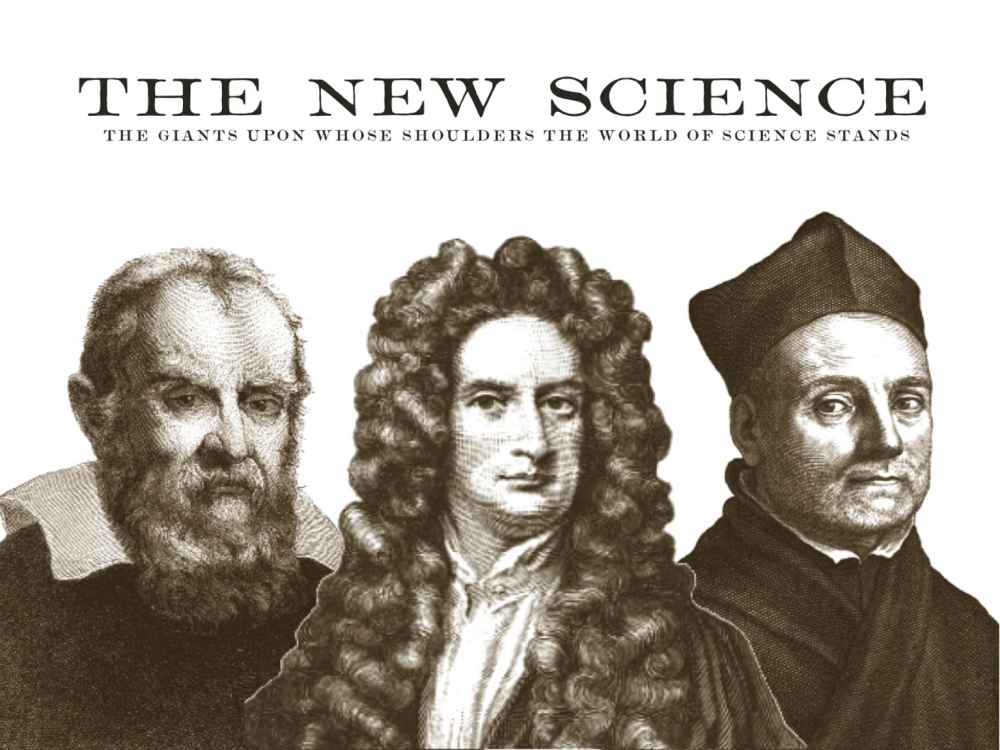
Perhaps the most amazing part of learning this information is the incredible amount of luck there was to have so many great minds born in about the same era. This allowed for each scientist to build on his predecessor and come together to revolutionize science. It is absolutely crazy to think that in a span of 150 years science took leaps because of these 5 scientists. The way humans viewed nature and the skies above changed entirely in fraction of time of human’s entire existence. Such Serendipityphoto-original
Google Images


Posted in Historical | Tagged , , | Comments Off on Historical Astronomers in Context

Historical Astronomers in Context

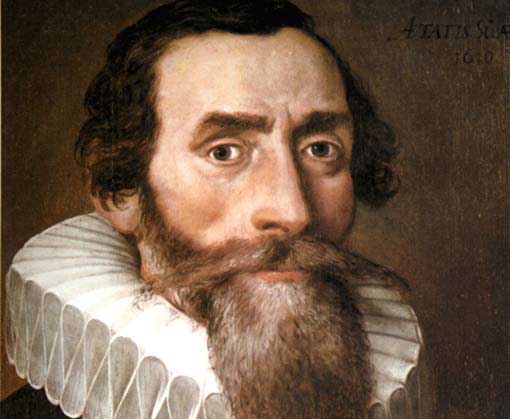
Kepler was the first astronomer to accurately describe and define the orbits of the planets around the sun. Kepler was alive from 12/27/1571 – 11/15/1630.  He was able to develop 3 laws of planetary motion.  These laws of planetary motion laid the ground work for other astronomers and scientists to make some of the greatest discoveries in our history.  For example, Newton was able to use these laws to discover gravity and define motion and forces that act between all objects.

There were other major events that occurred during the time period when Kepler was alive.  On August 24th, 1572, St. Bartholomew’s Day Massacre occurred.  During this massacre, Catholics killed thousands of Protestants.  In July 1578 the first Thanksgiving was celebrated in Newfoundland in North America by Martin Frobisher and his fleet.

William Shakespeare was also alive during the same time period as Kepler.  He is known to be one of the greatest writers in history.  He was a playwright, actor and a poet.

It is interesting how each of these people built upon the work of others before him. If Copernicus had never theorized about a heliocentric universe, we might not be anywhere nearly as advanced as we are now.  While theorizing about the motion of the planets may not seem too related to technology, it ultimately helped Newton discover his laws of motion which were vital to modern technology.


Posted in Historical | Tagged , , | Comments Off on Historical Astronomers in Context

Historical Astronomers in Context

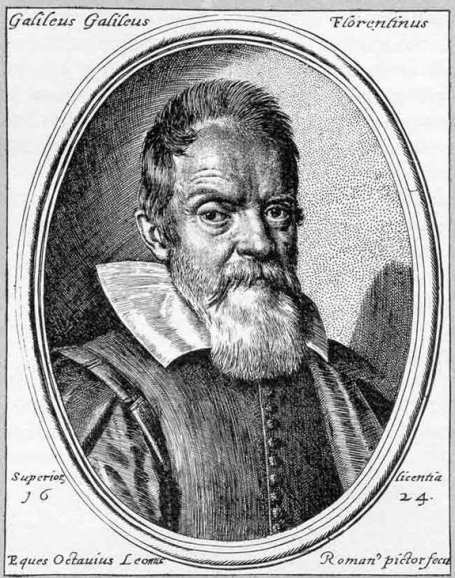
Galileo Galilei was born in 1564 and died in 1642. His lifetime spanned an important period in human history as it covered both the end of the Renaissance and the beginning of the Scientific Revolution.

During his lifetime the British East India Company was chartered and rose to prominence, and the Indian massacre of 1622 took place in the “New World.” The British East India Company was chartered on December 31, 1600. It was the oldest and most powerful of the European trade organizations. At its peak it was aiding in British colonial rule in India and accounted for half of the world’s trade. In 1622 the native Powhatan indians killed 347 English settlers in what became known as the Jamestown massacre. The settlement in Jamestown, Virginia was one of the first colonial settlements and the massacre irreparably changed the relationship between the settlers and natives.

William Shakespeare (1564-1616) was born in the same year as Galileo was, though he died much sooner. Shakespeare was a prominent poet, author, and playwright that made significant contributions to literature such as “Romeo and Juliet.” He is arguably the most famous playwright of all time, and he is still considered the English national poet. His works contributed to some of the great literary advancements taking place during the Renaissance.

I enjoyed learning about when Galileo was alive and some of his contemporaries. While the individuals were important, the great number of prominent figures made me realize that Galileo was alive during the scientific revolution and that he played a major role in advancing society asa whole forward with his assessments. He made a prominent public stand in defense of the heliocentric model that helped emphasize a greater shift away from religious approaches to science towards a more evidence based scientific approach. The world made big strides forward in science, and especially astronomy during this time, and it was great to read about how quickly everything was changing during the scientific revolution. Galileo was also alive at the end of the renaissance so there were great works of literature and philosophy being written and created during Galileo’s lifetime in addition to the great scientific strides being made.


Posted in Historical | Tagged , , , | Comments Off on Historical Astronomers in Context

Historical Astronomers in Context – Homework #6

2. Nicholas Copernicus (1473-1543) was important to astronomy because he served as a pioneer in drifting away from the geocentric model of the universe. He dove tediously into the tables and mathematics of the previous, geocentric model of the universe and found enlightenment in geometry. He thereby successfully determined the distances between planets and the Sun, as well as their relative orbits around our home star. Though he was not able to perfectly model our universe, he was courageous enough to eventually publish a book on his findings—one that helped future scientists slough their way through tedious trial and error necessary to the knowledge we have today.

3. A. 1st Event: The Spanish Conquest (1519-1521):

The Spanish Conquest began shortly after Christopher Columbus’s discovery of America(s) when he sailed the ocean blue in 1492. Hernan Cortes and Francisco Pizarro were two famous conquistadors from the era, both vital to the destruction of the Aztec and Inca civilizations.

2nd Event: Ferdinand and Isabella unite to become the ‘Catholic Monarchs of Spain’ (1479):

Ferdinand of Aragon and Isabella of Castile, “royal cousins,” were married in 1469 in an effort to unite Spain during a time of war and turmoil. It wasn’t until 1479 that the two were officially announced King and Queen of Aragon and Castile, thanks to the Treaty of Alcáçovas, and began restoring the country’s political destruction and royal authority.

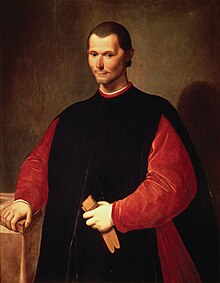
B. Niccolò Machiavelli was a pioneer in modern day political science and humanitarian thinking. Born in May of 1469 (and died June 1527), the Italian published an agelessly famous work, “The Prince,” assessing that “the ends justify the means.” His progressive thought challenged the Roman Catholic Church’s most fundamental doctrines and authority. Though he was not an astronomer, his audacity in “The Prince” shook the Church’s near perfect foundation and foreshadowed further changes (i.e. transition from the accepted geocentric model to heliocentric).

Portrait of Niccolò Machiavelli by Santi di Tito.jpg
Niccoló Machaivelli

4. First, I always think it’s interesting to look at other events happening around the world when learning about history—which is why I enjoyed question #3B in particular. On first glance, Machiavelli’s book seems totally irrelevant to astronomy (after all, he was a thinker, a philosopher, NOT an astronomer). However, looking at the succession of events, starting with the Catholic Church’s banning of “The Prince” on the basis of challenged authority, we can see the beginning of the crumbling that eventually lead to confrontations with the Church in the early 1600’s and its slow transition to the heliocentric model of the universe. Second, it’s fascinating to see the differences that cultures make in science. While Copernicus was tucked away in Europe busily tacking away at geometric models of orbital paths and distances from various planets to the Sun, things were heating up in the Americas as entire civilizations crumbled. The context leavens our understanding of just how significant and advanced thoughts like Copernicus’s truly were.


Works Consulted:

“A Timeline of Contemporary European Events, 1400 to 1550.” Illuminating the Renaissance. British Library Board, n.d. Web. 09 Feb. 2016.
Bennett, Jeffrey O. “The Copernican Revolution.” The Cosmic Perspective: Solar System. 7th ed. Boston: Pearson, 2014. 64. Print.
“Historical/Cultural Timeline – 1500.” Historical/Cultural Timeline – 1500. College of Education, University of Houston, n.d. Web. 09 Feb. 2016.
“Niccoló Machiavelli.” Wikipedia. Wikimedia Foundation, n.d. Web. 09 Feb. 2016.
“Nicolaus Copernicus.” Wikipedia. Wikimedia Foundation, n.d. Web. 09 Feb. 2016.
Spain – THE GOLDEN AGE – Ferdinand and Isabella.” Spain – THE GOLDEN AGE – Ferdinand and Isabella. U.S. Library of Congress, n.d. Web. 09 Feb. 2016.
“Timeline of the Conquest.” University of Michigan. University of Michigan, n.d. Web. 09 Feb. 2016.


Posted in Class, Historical | Tagged , , , | Comments Off on Historical Astronomers in Context – Homework #6

Dark Matter

darkmatter

In honor of the pre-release of a song I wrote called “Dark Matter,” I wanted to do a post on the subject that inspired my song.

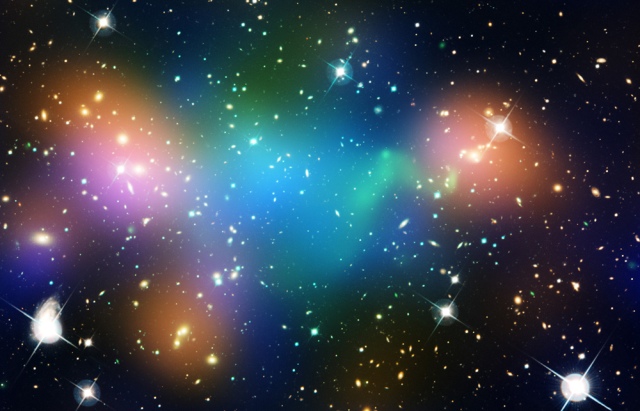
The above picture is of the merging galaxy cluster Abell 520. This galaxy cluster formed from the collision of many massive galaxy clusters. The image shows dark matter, hot gas, and galaxies. This image has proved puzzling for astronomers who were mystified by the differences they found between studying this image and one of the similar Bullet Cluster. When galaxies collide, astronomers expect dark matter and galaxies to stick together, as in the Bullet Cluster. However, in the Abell galaxy cluster, dark matter seems to have remained in a dark core with no galaxies around it. Astronomers are unsure of what this means for the study of dark matter, which was only discovered 80 years ago. Read more about Abell 520 here.

Dark matter is matter that contains most of the mass of the universe, but it is a substance that cannot be seen. Astronomers know dark matter exists, however, because of its gravitational influence on objects around it, and its ability to bend light around itself. Dark matter is not made of the same type of matter that makes up stars, planets, or people. It is an ongoing mystery within the universe that astronomers continue to study.

It may seem like a strange subject to write a song about, but studying this subject inspired me to make a connection between this invisible substance that exists but cannot be seen, and the feelings of existential despair that people often deal with. One verse of the song reads, “Baby, it gets cold. Even in your arms I know it’s not your fault, it’s just dark matter.” To me, this means that sometimes nothing on this planet, not even the person you love, can alleviate the anxiety of not knowing why we are alive or why the universe exists at all. Like dark matter, it is a mystery. We are all held together by an invisible force that we may never understand. As far as dark matter goes, we thankfully have scientists who devote their lives to studying this mysterious substance. One day we may all know exactly what this substance is that contains most of the mass in the universe. We may never know why we are here, but at least we can try to find some peace and acceptance in that place of not knowing.

Check out “Dark Matter,” streaming now on No Country for New Nashville.

cs


Posted in Universe | Tagged , , , , , , , , | Comments Off on Dark Matter

Dark Matter

darkmatter

In honor of the pre-release of a song I wrote called “Dark Matter,” I wanted to do a post on the subject that inspired my song.

The above picture is of the merging galaxy cluster Abell 520. This galaxy cluster formed from the collision of many massive galaxy clusters. The image shows dark matter, hot gas, and galaxies. This image has proved puzzling for astronomers who were mystified by the differences they found between studying this image and one of the similar Bullet Cluster. When galaxies collide, astronomers expect dark matter and galaxies to stick together, as in the Bullet Cluster. However, in the Abell galaxy cluster, dark matter seems to have remained in a dark core with no galaxies around it. Astronomers are unsure of what this means for the study of dark matter, which was only discovered 80 years ago. Read more about Abell 520 here.

Dark matter is matter that contains most of the mass of the universe, but it is a substance that cannot be seen. Astronomers know dark matter exists, however, because of its gravitational influence on objects around it, and its ability to bend light around itself. Dark matter is not made of the same type of matter that makes up stars, planets, or people. It is an ongoing mystery within the universe that astronomers continue to study.

It may seem like a strange subject to write a song about, but studying this subject inspired me to make a connection between this invisible substance that exists but cannot be seen, and the feelings of existential despair that people often deal with. One verse of the song reads, “Baby, it gets cold. Even in your arms I know it’s not your fault, it’s just dark matter.” To me, this means that sometimes nothing on this planet, not even the person you love, can alleviate the anxiety of not knowing why we are alive or why the universe exists at all. Like dark matter, it is a mystery. We are all held together by an invisible force that we may never understand. As far as dark matter goes, we thankfully have scientists who devote their lives to studying this mysterious substance. One day we may all know exactly what this substance is that contains most of the mass in the universe. We may never know why we are here, but at least we can try to find some peace and acceptance in that place of not knowing.

Check out “Dark Matter,” streaming now on No Country for New Nashville.

cs


Posted in Universe | Tagged , , , , , , , , | Comments Off on Dark Matter

Historical Astronomers in Context: Copernicus


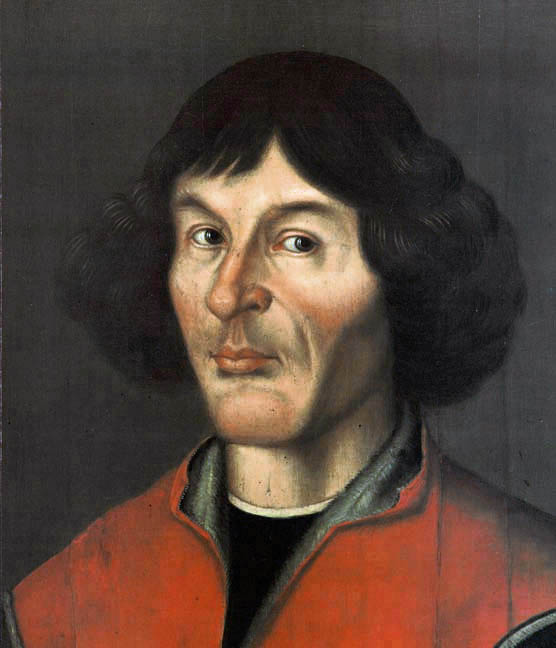
Nikolaus_Kopernikus
Wikipedia

Nicolaus Copernicus (February 19, 1473 – May 24, 1543)

Historical events in the time of Copernicus:

  1. In 1492, when Copernicus was 19 years old, Columbus “sailed the ocean blue” from Spain and discovered America – specifically, the Caribbean islands.
  2. In 1506, when Copernicus was 33, construction began on St. Peter’s Church in Rome (and would not be completed for another 120 years, in 1626). The Basilica, which contains art by some of the world’s greatest artists such as Michelangelo, da Vinci, Raphael, and Bernini, remains the largest Christian church in the world today.

Historical figure in the time of Copernicus:

  1. Pope Clement VII (May 26, 1478 – September 25, 1534) served as the leader of the Catholic Church from November 19, 1523 until his death. Popes had great power over world politics and the advancement of science and art at this time in history, and Clement VII was very excited about and accepting of Copernicus’ heliocentric model of the universe when it was presented to him in 1533 (however, these ideas were later rejected by the Church before being fully adopted). Clement VII is also known for having been the pope to commission the painting of Michelangelo’s The Last Judgment in the Sistine Chapel.


As a Catholic, I love learning about Church history and the way it has affected society in such tangible ways throughout history. I found learning about Copernicus particularly interesting, because I knew that the Church persecuted people defending Copernican views during Galileo’s time (including Galileo himself, who was forced abstain from teaching it). I did not know until now that Pope Clement VII was actually intrigued and excited by the idea of a heliocentric universe – evidently not excited enough to get involved in the controversy, however, as the Catholic Church held no official stance on the matter until the wave of Protestant rejection that took place later. It is interesting to imagine what may have happened if Clement VII had addressed Copernican theory publicly before his death – perhaps that jump-start would have allowed us to know more today than we do about the universe around us.


Posted in Historical | Tagged , , , , | Comments Off on Historical Astronomers in Context: Copernicus

Historical Astronomers in Context

The astronomer I’ve picked is Sir Isaac Newton (Born January 4, 1643 – Died March 31, 1727).  Newton made discoveries that both directly indirectly impacted astronomy.  First, directly, Newton published the universal law of gravitation in The Mathematical Principles of Natural Philosophy, in 1687.  This law stated that the force of attraction between two objects was dependent on the objects’ masses. It also held an inverse squared relationship between the force and the distance separating the objects.  This, in cooperation with Kepler’s laws and Newton’s own three laws, helped explain the motions of planetary objects.  Indirectly, Newton’s discovery of calculus greatly impacted future endeavors that would aid in astronomy.

In Newton’s lifetime, there were major advancements in Biology and music.  In 1683, Antonie van Leeuwenhoek published Philosophical Transaction.  This work displayed the first drawing of a bacteria.  In 1705, Almira, George Frederic Handel’s first opera, was shown for the first time.  He would go on to become one of the greatest composer’s to ever live.

It may surprise people to learn that Johann Sebastian Bach and Newton were contemporaries.  Bach was born on March 21st, 1685 and died on July 28th 1750.  In some ways, you could argue that Bach is as important to music as Newton is to science.  Bach’s music is fervently studied and listened to today.  He is well known for his Brandenburg Concertos.

I think this information helped me realize a few things about the past.  For instance, history is dense, even in the 1600’s; there was quite a lot going on in terms of science and music back then.  I also didn’t realize Bach and Newton were contemporaries.  It makes me wonder who might be the most important scientists and musicians of my time.

GodfreyKneller-IsaacNewton-1689
Portrait of Sir Isaac Newton

Posted in Historical | Tagged , , | Comments Off on Historical Astronomers in Context

Historical Astronomers in Context

My chosen astronomer is Galileo Galilei, who lived from February 15, 1564 – January 8, 1642

Events of the 1600’s during Galileo’s life

Event 1: In 1632, the construction of the Taj Majal began, one of the most famous architectural feats in history.

Event 2: In 1608, the famous Quebec city was established by Samuel de Champlain in Canada.

Historical figure: Also living at this time was Louis XIV of France. He lived from September 5, 1638 – September 1, 1715. He was important because he has had the longest reign of any European monarch in its history. France fought three major wars under his rule.

I think for me what was interesting about this assignment was just putting the timeline into perspective. We like to think that these discoveries about science were made so long ago, but really it was just the past few centuries that we have really made leaps and bounds. I liked how this assignment allowed me to look beyond just the scientific aspects of history and put it in relevance to some other historical events as well. I realized that sometimes it takes a different perspective to grasp a true appreciation for the timeline of events that led to the present day knowledge we possess.


Posted in Class, Historical | Tagged , , | Comments Off on Historical Astronomers in Context

Historical Astronomers in Context: Johannes Kepler

johannes_kepler.jpg
Johannes Kepler Dec. 7, 1571 – Nov. 15, 1630

Who is Kepler

Johannes Kepler’s most renowned contribution to astronomy was his development of the three laws of planetary motion. These three laws correctly defined the elliptic shape of all planetary orbits, established the equal area-equal time interval concept of solar radii, and equated the period of orbit with the size of the orbital elliptic semi-major axis. These laws laid the foundation for future astronomers and physicists studying the movement of planetary objects. Furthermore, Kepler is also credited with associating Earth’s tides with the Moon, theorizing solar rotation, and creating the word “satellite.”

Events of the Era

In 1582, Pope Gregory XIII established a reformed version of the Julian calendar titled the Gregorian calendar. This calendar fixed corrected a slight error in the length of year and brought Easter closer to the spring equinox. In the modern era, the Gregorian calendar is the most widely accepted calendar of the global community. In 1609 Galileo Galilei introduces his pioneering invention, the astronomical telescope. Galileo’s telescope vastly influenced astronomy and he himself would use it one year later to discover the moons of Jupiter, geological features on the Moon, and Venus’ phases.

Spotlight: Sir Francis Bacon

Sir Francis Bacon (January 22, 1561 – April 9, 1626) was a British scientist and philosopher who established the scientific method of investigation. His method, based on experimentation and observation, supplanted the Aristotle method of logic, and to this day serves as the foundation of all scientific exploits and research.

Reflection

One of the most fascinating aspects of this segment of history is the fact that so many impactful scientists and astronomers were alive at the same time. Kepler, Brahe, and Galileo made enormous contributions to astronomy and Sir Francis Bacon established the groundwork for all modern scientific research as well. Scientific progress can be slow and tedious; however, this timeframe was an explosion of rapid scientific discovery and epiphany. Whether by coincidence or not, these individuals were born at just the right time to reap the benefits of their positions in life and capitalize on the technology of their time to give mankind some of its most impactful breakthroughs to date. As scientific investigation and technological development marches onward in the modern era, I believe we are in the midst of our own scientific golden age similar to that of the late 1500s and early 1600s. One can only dream of the breakthroughs still to come.


Sources

Wilson, Martin. Johannes Kepler Info. Web. 8 Feb. 2016. <http://www.johanneskepler.info/home&gt;.

“Johannes Kepler.” Wikipedia. Web. 8 Feb. 2016.

“Francis Bacon.” Famous Scientists. Web. 8 Feb. 2016.

“Gregorian Calendar.” Wikipedia. Web. 8 Feb. 2016.

“History of the Telescope.” Wikipedia. Web. 8 Feb. 2016.


Posted in Historical | Tagged , , , | Comments Off on Historical Astronomers in Context: Johannes Kepler