How Do They Do It?

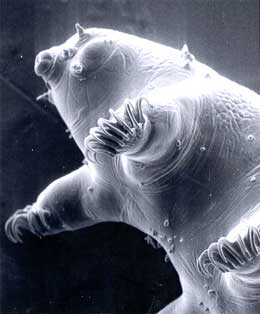
In nearly every environment on Earth, there is some form of life. Many of these environments are quite hostile to most forms of life, but some are able to make them into a perfectly suitable home. Such locations could be deep underground in mine shafts, or near vents on the ocean floor, or even inside volcanoes. These creatures are called extremophiles.
300px-Grand_prismatic_spring

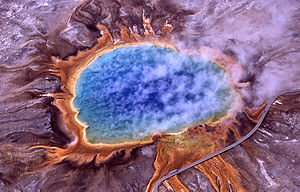
Extremophiles are responsible for the coloration in this hot spring.  Image from Wikipedia


Extremophiles are of particular interest to astrobiologists because they make the possibility of life on other worlds much greater. Many that exist on Earth don’t require the same things that more typical life does, such as oxygen or substantial water. They can exist in environments of extreme pressure, or those with no pressure at all. Thus, they could possibly inhabit other worlds and places in our solar system and beyond where these typical conditions don’t exist. Possible candidates for homes of extremophiles include Mars and many moons of the jovian planets. If you want more information on the subject, you can find it here.


Posted in Class | Tagged , , | Comments Off on How Do They Do It?

The Drake Equation

Image

The Drake Equation by XKCD

The Drake Equation allows us to predict the amount of communicative extraterrestrial civilizations.  In 1961, Frank Drake proposed this equation to “guestimate” the possibility of life.  The equation includes factors such as the number of planets that could support life, the fraction of those with the ability to create intelligent life, and then develop the technology for us to detect them.  However, it is very similar to the comic above – just how much should we trust that this estimation is true? And how we will prove it? Maybe, eventually, we will be able to contact alien races, but until then, we can just keep searching for answers.


Posted in Aliens | Tagged , | Comments Off on The Drake Equation

Observing and Reddit

Interested in learning more about Astronomy or finding a community of people who love astronomy? Try the Astronomy subreddit on the website Reddit.com. They have monthly observing challenges and ask/answer all kinds of questions about astronomy. Some examples – “I want to spend my dying years observing the unknown universe from my roof. What’s the best location for that?” “I want to buy my first telescope, I have no idea what I should get. Help?” and my favorite, “How do we know that the universe is expanding and it’s not us that are changing our frame of reference?” Try it out. The people are nice and helpful.

The Reddit Mascot.
The Reddit Mascot. Picture from here

Posted in General, Observables | Tagged , , , | Comments Off on Observing and Reddit

Culmination

       Having never taken an astronomy class before, I learned a lot about our place in the universe and the how our solar system functions and interacts within the universe. The biggest thing I learned is the magnitude and scale of even just our galaxy. Comparisons like if the Sun was about the size of a grapefruit, then the next nearest star is about the distance across the United States helps demonstrate how far apart stars are and how large the universe is. The size and scale of the universe was the first thing that struck me in this class and even after learning about it I still have trouble grasping the size of the universe. Lastly, I also liked learning about the other planets in our solar system and how they each represent a way for us to understand the necessities for life and intelligent species. I wrote my 9th blog post about extremophiles who have the potential to live on some of the planets we have discovered and I’m interested to see how in my lifetime, we might discover extraterrestrial life.


Posted in Class | Tagged , , | Comments Off on Culmination

Halley’s Comet

Edmond Halley was the first to predict this comet’s 76 year orbit. It was named in his honor and is known today as Halley’s Comet. Would you like to see it? Stick around until 2061 and you can! Fun fact – Mark Twain was born and died in the same years that Halley’s Comet made an appearance. He even noted in his autobiography that he expected to die in the same year as the comet’s reappearance.

Halley's Comet in 1910
Halley’s Comet in 1910. Picture from here.

If you always take the stairs, you might be able to see her again in 2134 when she’ll be within .09 Atomic Units from earth (relatively close).

Source


Posted in Observables | Tagged , , , | Comments Off on Halley’s Comet

The Future of Space Exploration

Image

One of the most interesting perspectives that Astronomy 201 has given me on space exploration is the role that funding plays. While in the past much of the money needed to fuel new discoveries came from government grants, budget cuts and restructurings have left astronomers with less and less funding from this outlet. The future of space exploration is changing, it is becoming private. What does this mean for future research and discoveries? Efforts will likely shift from long term observations to short term projects with rapid payoffs, as companies look to profit from worlds beyond our own. The good news is that this means we can look forward to a renewed interest in worlds beyond our own. The fact that companies are searching for profit in the universe means that they believe there is something to be found, which can only lead to further discoveries. I look forward to the interesting and innovative ways that the private sector will begin to explore space in the near future.


Posted in Class, Space Travel | Tagged , , , , , | Comments Off on The Future of Space Exploration

Extremophiles

As their name suggests, extremophiles are organisms that mostly dwell at the microscopic level and thrive in harsh conditions. Extremophiles can survive where other life cannot, and because they are so robust can endure even under the most stressful conditions. After learning about extremophiles in class, I wanted to research specific extremophiles found here on Earth and in what conditions.

One place extremophiles flourish is sea vents. Previously, these sea vents were considered uninhabitable because of their extreme temperatures and consistency but after further examination, extremophiles were found living both around and in the vents. These extremophiles exist without sunlight because sunlight cannot reach those depths but they use the chemicals spewed from the vents to create food and energy. These types of extremophiles are interesting because such vents might be present on Jupiter’s moon Europa and if discovered, would be the first sighting of extraterrestrial life. Additionally extremophiles were found a foot below Chile’s Atacama Desert, which is one of the driest places in the world. Deserts were thought to be mostly void of life but the extremophiles living under the sand thrive in dry places. This presents the possibility of life on Mars because it is also extremely dry on Mars and this type of xerophiles could be present on that planet. Extremophiles living here on Earth give astronomers and insight look on how life can thrive in the most brutal of conditions and how if it can survive in those conditions, could possibly thrive on other planets in our Solar System.


Posted in Class | Tagged , , | Comments Off on Extremophiles

Hugh van Heesewijk 2014-04-29 14:12:20


Throughout the semester we have learned the ins and outs of many topics. We have learned topics ranging from the formation of atmospheres to the formation of solar systems. However, I feel that the topics that I have most benefitted from have been the ones that I can see every day. I love being able to understand the movement of the stars and sun throughout the day and night. Whenever I walk outside at night I try to determine the phase of the moon. I now can ever point out which points of light in the sky are planets and which are stars. In the future I will be able to better understand and appreciate both the everyday astronomical events as well as the more rare astronomical events. For instance, I can completely understand the awe-inspiring total lunar eclipse that was seen earlier this month.  This is the kind of knowledge that I will be applying for the rest of my life.


Posted in Class, Moons | Tagged , , | Comments Off on Hugh van Heesewijk 2014-04-29 14:12:20

Space X and the Capitalism of Space

spacex-17

Spurred on by the Cold War, and aided by military research on ballistics and rocket fuel, NASA and the Soviet Space Program competed to complete more and more exceptional missions. In today’s less hostile international climate, the governments of the world are much less interested in space exploration than they once were. To continue the exploration of the solar system and beyond, we will need to rely on another force, capitalism. With the potential for huge profits from asteroid mining and space tourism, private industry is beginning to take a serious interest in the space industry. One leading company is Space X, which was founded by Elon Musk, the same man who founded PayPal and Tesla Motors. So far they have accomplished much more than any other privately owned space exploration company. If we will continue to expand the influence of humanity in space, we will need to rely on companies like this one.


Posted in Class | Tagged , , | Comments Off on Space X and the Capitalism of Space

Arctic Lake Extremophiles

We have been learning a lot about extremophiles and whether they would be able to survive on other worlds, specifically within out solar system. I found an article on Wired that pointed to a discovery of microbes in a brine lake located beneath 65 feet of ice in Antarctica. This extremophile had to survive in cold, slightly acid brine lake without any oxygen or sunlight. This means that this specific bacteria was psychrophilic, acidophilic, anaerobic, and possibly even barophilic. I immediately thought of the subterranean oceans that are supposedly located on Jupiter’s moon Europa. The possibility of finding extremophiles on other planets seems even more and more likely as more and more extremophiles are discovered on Earth. This specific extremophile seemed almost perfect for an environment that Europa would provide.


Posted in Aliens, Class, Science | Tagged , , | Comments Off on Arctic Lake Extremophiles