The powers of ten Blog 01

The powers of ten Blog 01

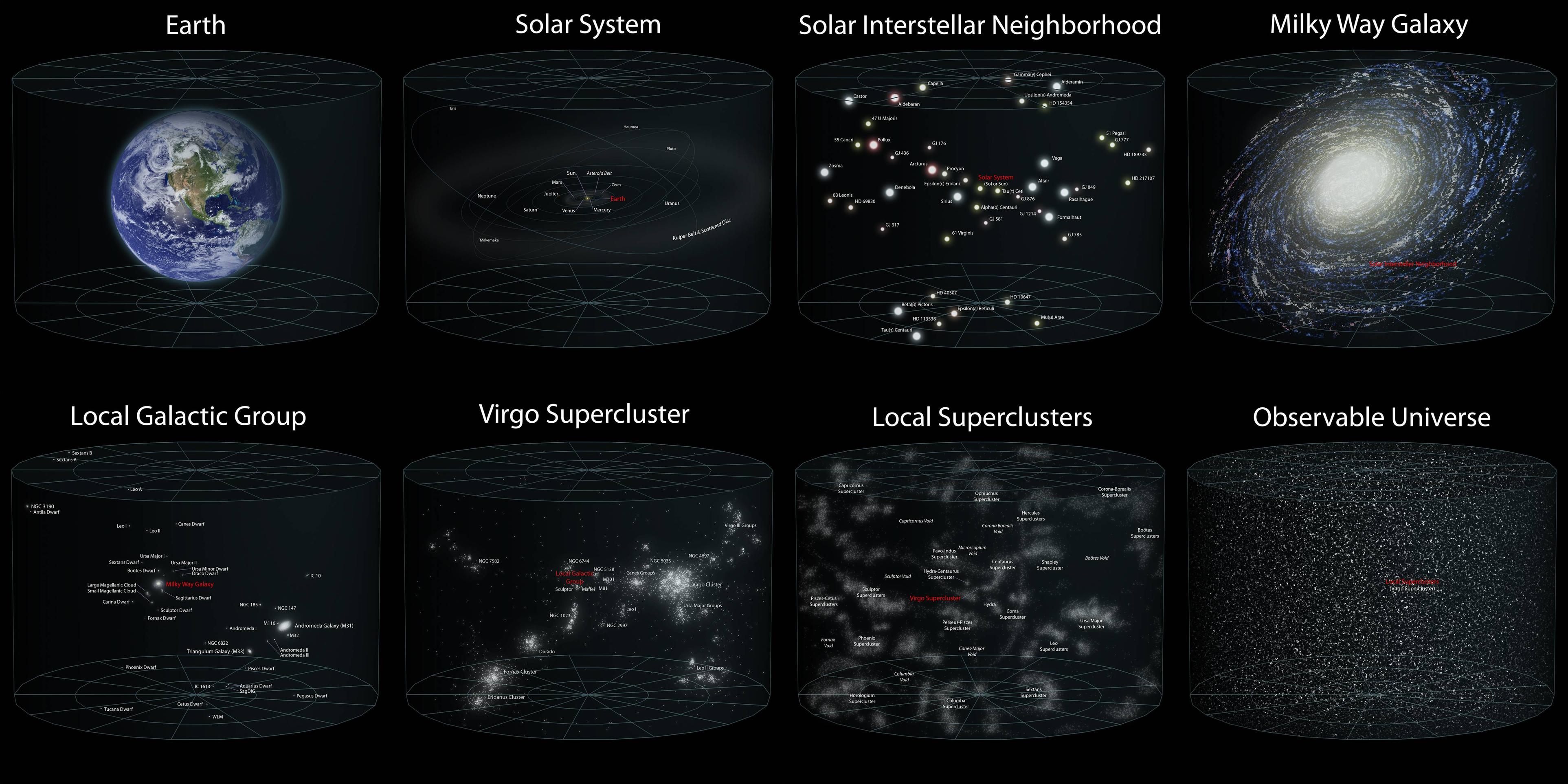
The powers of ten video is an astounding acheivment in film and a huge eye opener in scale comparison. The video takes the viewer from the interior of the atom all the way to the edge of the known universe in a matter of minutes. The powers of ten does such a good job of condensing and expanding the scope of the universe that it almost seems comprehensable until one steps back to reflect on what they just saw. Every 20 seconds the video manages to expand 100 fold. This means whatever you were looking at 20 seconds before comprises a mere 1 percent of the total scope you’re seeing now. And it keeps this up for four and a half minutes! If this sort of thing doesn’t inspire you to want to look out and try to grasp at what goes on in the real meat of the universe, then you might be studying the wrong thing.


Posted in Class | Tagged | Comments Off on The powers of ten Blog 01

Sky and Telescope

Sky and Telescope

This website is very cool!  It shows an easy to understand layout of what planets, stars, etc. you will be viewing in the night sky and where they will be moving throughout the night and week.  It also gives you categories of different celestial objects you can try to search for in the night sky.  Beyond that there is an interactive tool to viewing the night sky, which makes it easy for any level of sky observers.  Additionally, there are pictures, videos, and news updates relating to what is going on in space.


Posted in General, Observables | Tagged , , | Comments Off on Sky and Telescope

Star Chart: An iPhone App Review

Recently, I downloaded the Star Chart App for iPhone and iPad (free in the app store). This app allows you to see the stars that are visible in your area through your phone.  The app uses GPS technology to create a 3D image on the phone of the stars, planets, and other objects in the sky. It is incredibly user-friendly even for those of us that are less astronomically-inclined. The screen moves as the phone is moved (i.e. if you want to see the stars overhead, point the device upward). As the screen moves, the constellations pop up on the screen as well as the names of all the stars. It is a very unique app that allows for easy star exploration.

Image

This app shows the stars even behind the cloud cover.


Posted in Class, Stars | Tagged , | Comments Off on Star Chart: An iPhone App Review

Spiral Galaxy

Spiral Galaxy

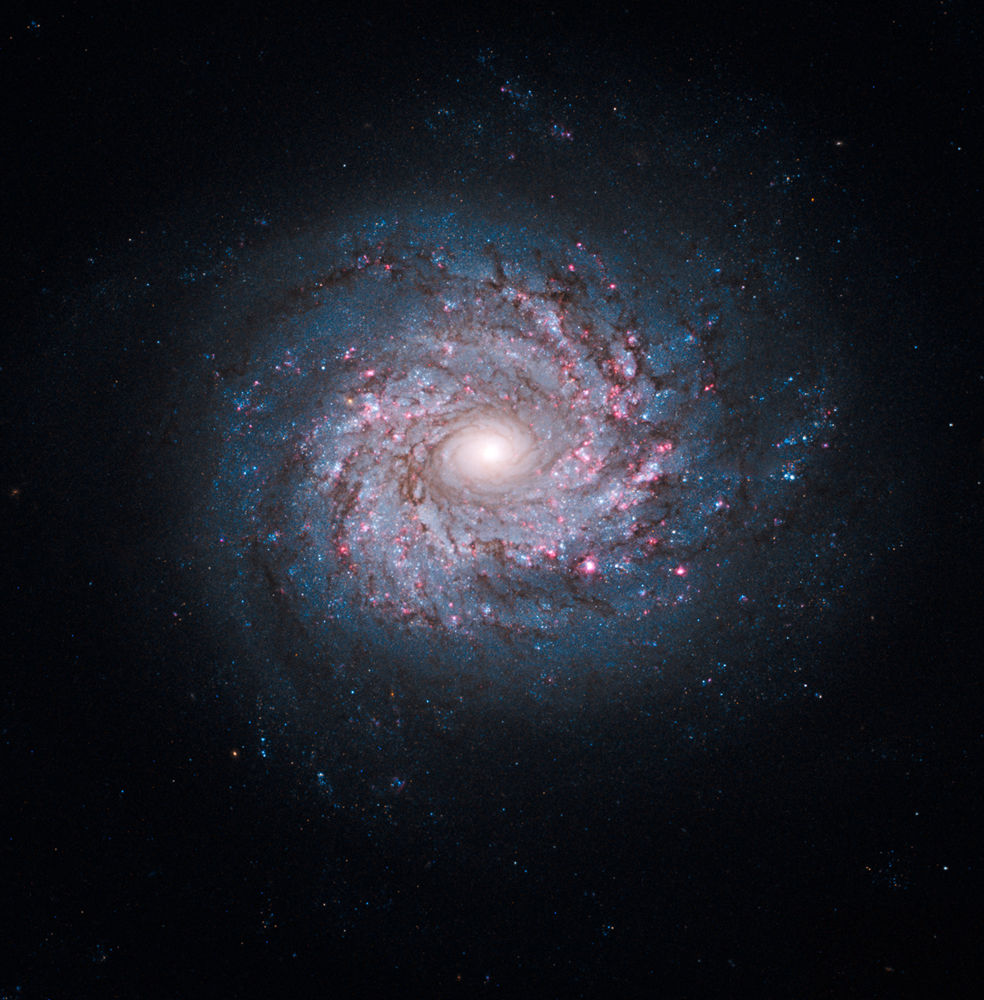
We’re used to being the big guys. When we think of something larger than us, we might think of whales or elephants, but we don’t deal with those regularly. We usually think of things like buildings, but we were the ones who built those too. Few people take the time to think about the scale of the universe we inhabit, let alone the size of our galaxy, or even our Solar System. Many people view this grand scale as a matter of belittlement however, and I think that it is because our society has influenced everyone to view everything in terms of individual successes and failures rather than as a collective one. We as a society define success in terms of monetary gain and influence over others of our own species, but by looking at the timespan of the universe in comparison to mankind’s existence we should be humbled and see that we should define success not in terms of individual success but as a success of our species, of humanity, and its continued existence and coexistence.

I don’t wish to say that we should abandon individualism though. I believe capitalism is a great system, and rugged individualism is something I admire very much. Practically, it would be very hard to convince any government currently to divert more resources to the furthering of astronomy because of society’s definition of success. The only way to break this definition and redefine the priorities of people everywhere, especially those in power, would be to educate people about the cosmic perspective. For the betterment of society and for humanity for generations to come, we must take some initiative to educate the public about the cosmic perspective. When we view our accomplishments in this perspective with realigned priorities we see that working for the betterment of humanity and protecting the limited resources that we have ensures the continuation of our species, which is the biggest goal we can work towards, and the biggest success we can hope for.


Posted in Galaxies, Stars | Tagged , | Comments Off on Spiral Galaxy

Neil Armstrong

Neil Armstrong

Admittedly, I had pinned this image on my Pinterest a while back. I think it is so fascinating and really puts the whole scale of our world and the universe into perspective.

Neil Armstrong had the insane privilege to view the Earth in a way the no other human, animal, insect has been able to. For most people, the only way we see the Earth in its entirety is through photographs taken by satellites, which makes it very difficult to truly comprehend the vast size of the Earth from our perspective. However, when we venture outside our home planet and view it from a whole new perspective, you realize that there is so much more to the universe beyond our “tiny pea.” All we have ever known, all the history that has occurred, people and other life forms that have lived, knowledge we have obtained happened on our tiny planet. All that we know appears only as a small marble in the sky from our closest neighbor…. I’d imagine that from Armstrong’s experience, everything he had previously experienced in his life so far got put into a whole new perspective. Everything that we know, all of our problems and successes, and our life in general seem so impossibly small and irrelevant when compared to size of the universe. In a way it’s a little sad, but it is also completely mind-blowing to think about how even though we have uncovered so much about the history of the universe, there is so much more out there left to be discovered.


Posted in Space Travel | Tagged , , | Comments Off on Neil Armstrong

A great App!

After I started taking Astronomy 201 I started to get curious about what stars I was seeing at night and if they were actually planets or not.  Since I live on campus I don’t have a telescope to look closely at the sky so I wasn’t sure how I could observe and learn more.  Then I thought about checking my phone to see if there was an app to help show you what you are looking at and tell you about what is in the night sky.  Of course there was an app, and a great one if I do say so my self, that did exactly what I was hoping it would do.  The app is called Sky Guide: View Stars Night or Day and can be purchased on the App store for $1.99.  This app is totally worth it as it not only lets you hold you phone up to the sky and tells you about the constellation you are looking at, but it also will help you find certain stars planets, or anything else you are having trouble finding in the night, or day, sky.  This app has been reviewed by 2,316 people and has five stars on the app store.  I know it is a little pricy at 2 dollars, but if anyone is interested in stars or what they seeing in the sky at night this app is, in my opinion, absolutely worth the money.

blog 2 pic


Posted in Class | Tagged , , | Comments Off on A great App!

Blog Post #1: I’m just a small girl in a HUGE world

It is difficult to even fathom how great the universe is in comparison to our small beings here on earth.  The fact that we are only limited to the observable universe, which means that there is a possibility for mankind to have not even witnessed the extent of the universe is mind blowing.  The fact that we are observing light of how it was 14 billion years ago and how it is changing at this very moment but we won’t be able to witness these differences until another 14 billion years in the future!  The fact that the stars are so far away that it takes years for that particular light to reach our observable viewpoint is such an overwhelming concept to grasp.  I am one organism, on one planet, in one solar system, in one neighborhood of stars, in one galaxy, inside a supercluster that’s within a whole neighborhood of superclusters, making up the observable universe.  The vastness of the universe in comparison to one’s self is so disproportional and almost awe-striking in how there is so many things unknown outside of oneself.  There is so much outside of our own being, bigger things, that man is still discovering and charting.  But this mysterious unknown is also what gives life it’s excitement, that there is forever new knowledge to learn and planes to explore.

Lawrence R Spencer

Lawrence R Spencer


Posted in Class, Observables, Universe | Tagged , , , , , | Comments Off on Blog Post #1: I’m just a small girl in a HUGE world

2500 light years away

One day this week I was checking a weather website to see what the temperature was for the day and I came across an interesting article.  The article talked about how scientists had found a planet in the star cluster messier 67 that was orbiting a star which they called a “twin Star” to our very own sun (http://www.sci-news.com).  This star cluster is 2,500 light years away from earth.  This means that it would take any light or images of the orbiting planet 2500 years to even reach earth.  So we know that this planet and twin sun existed at one point, but have no idea if it’s even still there or not.  It’s quite fascinating to think that if there had been some sort of catastrophic event, in recent years, on the planet or involving the twin star we would have no idea that it happened until the light reached earth almost 2,500 years from now.  For now all we know is that there was a planet orbiting a twin star to our very own sun, but in the future we might find that the planet and star we saw are no longer there.

Source Image


Posted in Class | Tagged , , , , | Comments Off on 2500 light years away

Lunar Eclipses Explained

After reading chapter 2 of our textbook, one of things that surprised me was the distinction between solar and lunar eclipses, and how – on an everyday basis – we seem to use the term “eclipse” only when it refers to the magnificent sight of a total lunar eclipse. In actuality, however, an eclipse simply refers to a moment when the Sun, Earth and Moon are in line with one another, and thus, there is more to an eclipse than a firey, orange moon glowing in the sky.

In defining lunar eclipses, for example, there are such phenomena as partial lunar eclipses and penumbral lunar eclipses that are far less dramatic than the total lunar eclipse seen above. These two “lesser” eclipses are moments when the moon passes through the Earth’s umbra and penumbra shadows at a period of time when the Sun, Earth and Moon are not in totality with one another. This means, as rare as we may think we see an eclipse, they are actually far more common than previously believed. The only reason for the confusion is because of the drastic differences in appearance between the different forms an eclipse can take.

*Image via Space.com


Posted in Moons, Observables | Tagged , , , , , | Comments Off on Lunar Eclipses Explained

The “World” in Which We Live

Throughout the first few weeks of class, what I’ve found to be extraordinarily interesting in the field of astronomy is not so much the scientific discoveries we have come to understand, but rather what these findings can teach us in the philosophical challenges of life. For instance, one of the many perplexing conversations we’ve had – I believe it occurred on the very first day – was the concept of  the scale of our universe and attempting to comprehend how massive a world in which we live. [Note: I use world in italics here, because after this discussion, it becomes evident that our language takes for granted the size of our surrounding universe and all the mysteries that lie within the Milky Way Galaxy and beyond.] It’s a bit freaky to think about at times, but in understanding human existence on the grand scale of things, our lives become less and less relevant the more you think about the fact that our universe was created 13.8 billion years ago, or that we may never explore beyond the edges of the galactic disk.

In discussing these sorts of things, many questions of life begin to spin around my head: Does a God really exist? What happens when life comes to an end? With such a short period of time, why do we constantly surround ourselves with war and conflict? But, at the very same time, aside from all the questions that arise, there are just as many moments that I sit back and simply exclaim, “Wow!” There’s so much for us to appreciate – we truly are in such a unique situation – and the near impossibility of existence is a reason to celebrate each and every day that we are given.

*Image above found via Wikimedia Commons


Posted in General, Historical | Tagged , , , , | Comments Off on The “World” in Which We Live