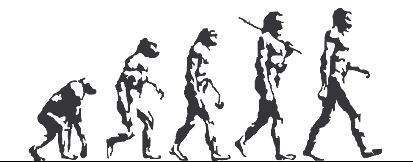
Before Telescopes and Stuff

Today, we know a lot about the stuff out there: stars, galaxies, supernovae, black holes, and such. We probably know more about outer space than our own ocean depths. We owe most of the knowledge to the technologies developed through centuries after centuries of hard work and perseverance. Various observatories on mountains, the Hubble Space Telescope in space, and various probes sent out to planets, all contribute to making outer space amazingly familiar to us.

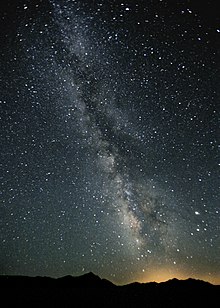
However, even before we learned to point telescopes into the skies, we have been observing the Sun, the Moon, and the other smaller lights in the sky. We have been observing the stars before we even knew they are suns themselves (or our Sun is actually a star among billion others).

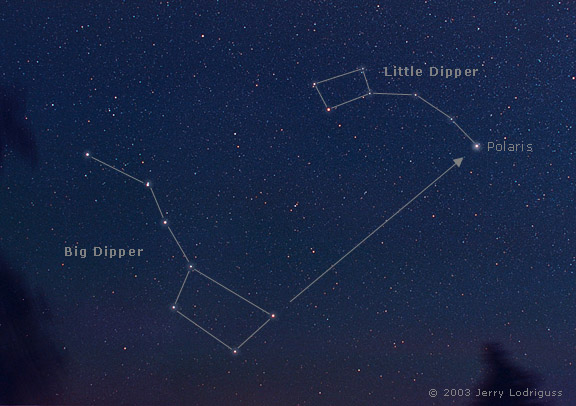
Since ancient times, we have used the Big Dipper as a compass for long journeys, because two of its stars align with the North Star, therefore seemingly pointing to the North. Even today, the Big Dipper can still be used as a reliable compass, if somehow your GPS ran out of juice and you’re traveling in the middle of nowhere, hey, you never know…

We also noticed that some of the constellations disappear for a time and reappear some time later. This is how we kept track of time and seasons. During those times, the stars will tell when we plant and when we harvest.

We knew a lot about the heavens and its perfect order of cycles. Now we know more of it, we know how they work, when they were born. However, we could never know enough, even now, mysteries of dark matter and dark energy continue to enshroud us. We don’t possess the technology to study these yet, but I’m sure we will someday, just like we always have.


Posted in Class, Observables | Tagged , , | Comments Off on Before Telescopes and Stuff

Faster than you can say, “3.0 times ten to the eighth meters per second”

Einstein


photo from here

When I was young, I read a biography of Einstein’s life. (If he wasn’t so brilliant, we might know him as Honest Al). In this book, a story was told about young Albert at the ship docks. A worker had Al stand 50 yards away from him and swung a hammer at an anvil. Einstein learned from this experience an awesome wonder for the speed of sound and light. The rest is history.

What really interests me about the speed of light is how it allows us to peek into the past. When we look out into space, we are not seeing what is, but what was. Here is an experiment I would like to see done – Blake and Chris are standing 3.1 miles away, the point where the earth’s surface curves out of sight, and Blake lights a fire. Let’s say Chris is standing on a cell tower. As soon as Blake lights the fire, he says into his cell phone, “Chris, it’s lit.” Does Chris hear the cell phone first or see the fire first? If he does see the light first, how far away would he have to get in order to hear Blake first?


Posted in Class, Light | Tagged , , , | Comments Off on Faster than you can say, “3.0 times ten to the eighth meters per second”

Technology that Helps

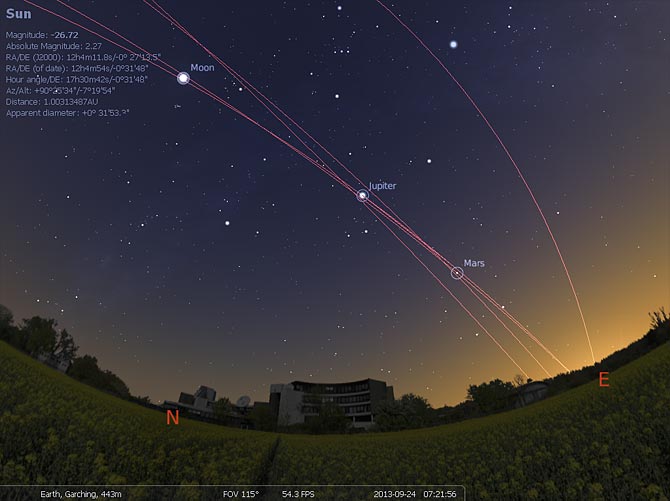
While simply looking up at the night sky is an enjoyable experience on its own, sometimes it can tremendously add to the experience to know what you’re looking up at. I’ve come across a few programs that I think are awesome for doing just this. The first is Stellarium. This program is incredible. It allows you to view the sky from anywhere on Earth, at any time of the day, for any day in any year you could care about. This could be 1000 years in the past or 1000 years in the future.  You can also use it to watch how the things you see in the night sky in a particular area change over the course of a year, or any period you would like. Not to mention all the data the program includes for objects that you can see. If there was something you wanted to know about an object in the night sky, you could probably find your answer within Stellarium.

Stellarium screenshot

Another program that I find quite useful is an app called StarChart. While I haven’t been able to test its accuracy myself, I take a bit of a leap and trust the developers that their location detection works properly. Given that it does, StarChart creates a map on your phone screen of the constellations that you would be able to see above you. It allows you to use your phone as a map for constellations and other objects in the sky. While it doesn’t necessarily have the sophistication of Stellarium, it makes up for some of the difference in portability and functionality for quickly identifying what you are currently looking at, instead of simulating the sky for you like Stellarium does.

Star Chart image

I think both programs have certainly made my experiences of looking up more enjoyable, hopefully they will for you too!


Posted in Class | Tagged , , | Comments Off on Technology that Helps

So Big…

Possibly my favorite thing to think about when I look up at the stars is simply how far away they are. Even though I know the measurements we have come up for for several of these stars, the actual distances that these measurements represent are still almost unfathomable to me, no matter how much I think about it. Even the closest star to us (other than the sun) is so far away that even considering the possibility of humans ever traveling to it seems foolish, at least with the current or any near future state of technology. Another fact that I hadn’t really thought about until recently hearing it in class: all the stars we can see from Earth are only those within the Milky Way. Sure, we can see other things in the night sky, some of which are other galaxies. But I think its awesome to think about how something that appears to the naked eye to be nothing more than another star is actually the entirety of what I can see in this galaxy, and then more.Image


Posted in Galaxies | Tagged , , | Comments Off on So Big…

Observing the Sky: Star Parties

“The tires crunched on the gravelly road.

‘How do I know where it is?’ said Mrs. Kelly. ‘It’s so dark.’

‘Look for the red lights,’ said Mi-Su.

. . .

Up ahead–spots of red.

‘Lights out,’ said Mi-Su.

The headlights went out.

Only the red spots were visible now. Some moving, some still.

‘Back at eleven,’ said Mrs. Kelly. ‘Watch Tabby.’ The car pulled away.

Tabby blurted, ‘Where’s the party?’

I pointed to the sky. ‘Up there.’ ”

Smiles to Go by Jerry Spinelli

This book was one of the first books to catch my wonderment for the stars and the night sky. Just going outside and looking up is the first step to observing the sky. But then part of me gets excited about the idea of more formal sky observation–telescopes and refracted light and a group of people together to look at the sky together. Star parties are gatherings where all sorts of astronomers, amateur and not as amateur, bring telescopes and let other people look through them. It is like a food court or a library, only this time offering  a selection of nebulas and planets. Some individuals bring fancy binoculars and others bring their size-of-a-van telescopes. The owners will find points of interest in the sky–the moons of Jupiter, Orion’s Nebula, the Horsehead Nebula (a dream). I haven’t been to a star party yet, but it is part of the future for which I am excited.

You can use the internet (search engines!) to find where the next star party will be in your area. Or check out StarDate.

Source: Real World Racing Photo G on Flickr

Source: Real World Racing Photo G on Flickr


Posted in Class | Tagged , | Comments Off on Observing the Sky: Star Parties

The Vast Universe

The Universe is immense. When we look up into the sky at night we can see about 2000 stars. These stars are all native to the Milky Way Galaxy. Our galaxy in and of itself contains 300 billion stars. If we use a telescope we  see more stars in our own galaxy and  beyond the galaxy’s edge. Looking  into the sky is also like looking  into the past. Since  light takes time to travel, what we see now may be minutes or billions of years old depending on how far away it is. The Hubble Telescope once looked into a completely dark portion of the sky, a portion 1/80th the size of the moon. And after a long exposure, this image is what we saw:

Hubble Ultra-Deep Space Field

Source: Wikipedia

There are 10000 galaxies, GALAXIES, in this image. In the Universe there are an estimated 1000000000000000000000000 stars. Mindblown. Mindblown. Mindblown. (Think of all the grains of sand on earth–that is like the number of stars). Mindblown. Mindblown. Mindblown.

Now about this no-edge of the universe business. Most people who would know believe the universe does not have an edge, though it could be finite in size. What always confuses me about this that it would appear our universe is of some shape, and shapes  have centers. But not the Universe? One way to explain this is to think about the surface of a sphere. If you were to walk along a sphere there would be no center to the sphere as you are walking, just like there is no center to the surface of the earth. You would have to take a step out to see there might be a center within the sphere (the core of the earth). Apparently this is comparable to the Universe. There may be a center, but if so one would only find it in a higher dimension. This still doesn’t make sense to me, but there you have it. Science Blog has an explanation that might make sense to you.

One thought that does make sense to me is thinking about the Universe in terms of the Big Bang. I think about the universe right before the Big Bang. All it is is a pinpoint, a little tiny pinpoint of all matter. Then, amazingly, this pinpoint begins to expand. Time is created! And that is all the universe is, this expanding pinpoint. Everything we see is from this expanding pinpoint. A pinpoint does not have a center, and the universe we have is just this pinpoint expanded. So there is no center; everywhere is the center. If time reversed direction everything would compact not into each other especially, but into this pinpoint. That helps me imagine how the universe not having a center is true.


Posted in Class | Tagged , | Comments Off on The Vast Universe

Stellarium

Learning about and using Stellarium has been great fun! I have always enjoyed looking at the stars.  As a child, I used to go to the planetarium numerous times a year.  Additionally, one year for my birthday, my brother got me a star through the International Star Registry.  Now that I have learned how to use Stellarium, I plan on figuring out when I can see the star which I believe is near Pegasus.

Stellarium has numerous features.  The ability to move locations and change the time so easily allows for one to see how the stars move.  One thing I really like about this picture is that the atmosphere is turned on and since the sun is setting the stars are still observable.  I would be curious about if it was a cloud free night, would I be able to see the stars at this time?


Posted in Class | Tagged , , | Comments Off on Stellarium

The Cosmic Calendar

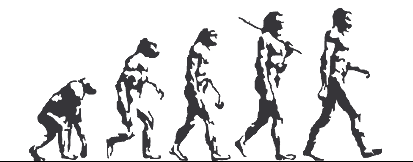
Something that caught my attention while reading was the Cosmic Calendar.  It is truly amazing how looking at how the world evolved, from a perspective of a year, can help one’s understanding.  One of the most fascinating things was the evolution of humans.  Early life forms didn’t even come into existence until September 22nd, and early hominids did not appear until 9pm on December 22nd! The full evolution of humans then only took 2 hours and 58 minutes.  Most of the time, when we think about evolution, we view the time that humans didn’t exist as forever ago.  But in reality, humans have been on the Earth for such a short period of time.  So far we haven’t even lived a day of the existence of the dinosaurs, who were only around for 5 days.  It is amazing to be able to compare our lives to the rest of the history of the Earth. Yet, we seem to have had a great impact on the Earth.  We create garbage and pollute the environment.  We have cut down trees, and made dams to alter the rivers.  In a two minute time span, we have spent our time damaging the Earth.


Posted in Class | Tagged , , | Comments Off on The Cosmic Calendar

Big big numbers make no sense don’t they?

We all know the universe is 13.8 billion years old.

But…

How long ago was 13.8 billion years ago?

How about 65.5 million years ago, when the dinosaurs die out? How long ago was that?

Ourselves, being such small creatures with so short a lifespan, how could we comprehend the largeness of such numbers? Well, to start with, we have a recorded human history dating back to 5000 years ago. How does that compare to 65.5 million? 13.8 billion?

Let’s try writing down all the zeros!

5000

65,500,000?

13,800,000,000?

Hahaha, not too far apart, yes? Or not?

How about…

How about we scale it down to something we can comprehend, maybe condense all those time into something like a year? Surely someone has done this before, right?

Oh, someone did (thanks, Carl Sagan) and this scaled down version of the universe’s lifetime has come to be known as the Cosmic Calendar:

Alright! Now, we can get some idea of how long some years ago were!

Big Bang was during the earliest seconds of January 1st.

Earth formed 4.6 billion years ago, that’s in… September!

The dinosaurs finally died out on December 30th.

How about the 5000 years of glorious human history?

A mere 16 seconds out of the universe’s year.

Looking at things from this perspective, we seem like we don’t amount to much. Sure, we have only been here for a while, mere milliseconds as far as the universe is concerned, but we have achieved great things in that short time. We reached the moon, we catalogued hundreds of stars way beyond our reach, heck, we even found out the age of the universe! The universe is big and awesome, that’s for sure, but never forget, we’re awesome too, little as we are!


Posted in Class, Universe | Tagged , , | Comments Off on Big big numbers make no sense don’t they?

The Night Sky:Sentinel Paranal:VLT Timelapse

If only we could choose to speed up time, lay on our backs and watch the universe revolve around us…. okay, we’re rotating within a nearly static (relative to us) universe, but the effect remains the same. We can only really appreciate our night sky when we point our cameras and telescopes up to the heavens, and come back tomorrow to watch it at 100x speed. And if only we had such little light pollution and clear skies like they do in Chile where this video was shot. Never have I seen the Milky Way so beautiful here in the USA, and never have I been able to watch with my own eyes as the stars and galaxies flow across the night sky. Chile seems to be at a great latitude for viewing some of the more beautiful objects in the night sky. I guess I’ll have to visit there some day.

(https://www.youtube.com/watch?v=VhVEmVJdyx0)


Posted in Class | Tagged , , | Comments Off on The Night Sky:Sentinel Paranal:VLT Timelapse