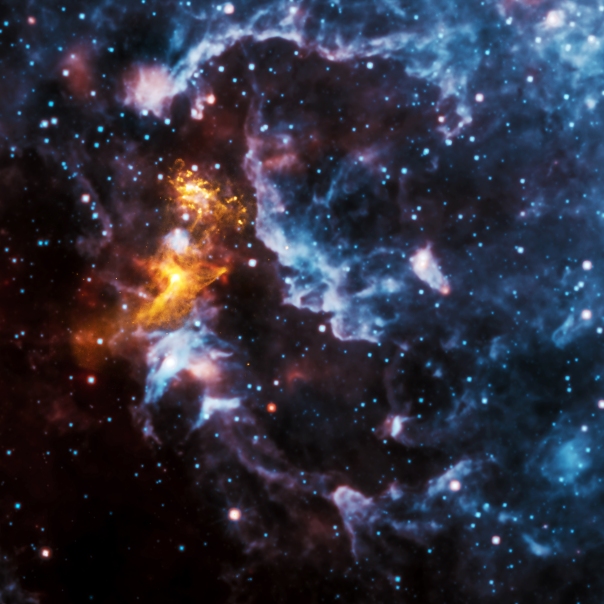
neutron stars are extremely dense stars – perhaps the densest stars in the known universe! – so dense in fact, that a marble-sized serving of neutron star would weigh about the same as 5 trillion tons of earth rock! they can form as a result of the collapse of a giant star in a supernova event. because they are so compact, thanks to the conservation of angular momentum, they spin really quickly – more than 700 revolutions a second! – which we can detect from earth. based on our estimate of how many supernovae events there have been in the universe, we estimate that there are as many as 100 million neutron stars out there. that’s a lot! as one of my favorite bands muse sing, love is forever, and hearts will combine like a neutron star collision!
Artist’s rendition of a supermassive black hole. Source: Engadget
Astronomers have recently discovered a supermassive black hole in a region of space that is sparsely populated. The black hole is 17 billion times bigger than the Sun (by mass), making it one of the larger black holes ever discovered. The strange part is that scientists had only ever found supermassive black holes at the center of very large galaxies like Andromeda. They are not completely sure how this new black hole became so large in the first place. But this most recent discovery does show that supermassive black holes might be much more common in the universe than previously thought.
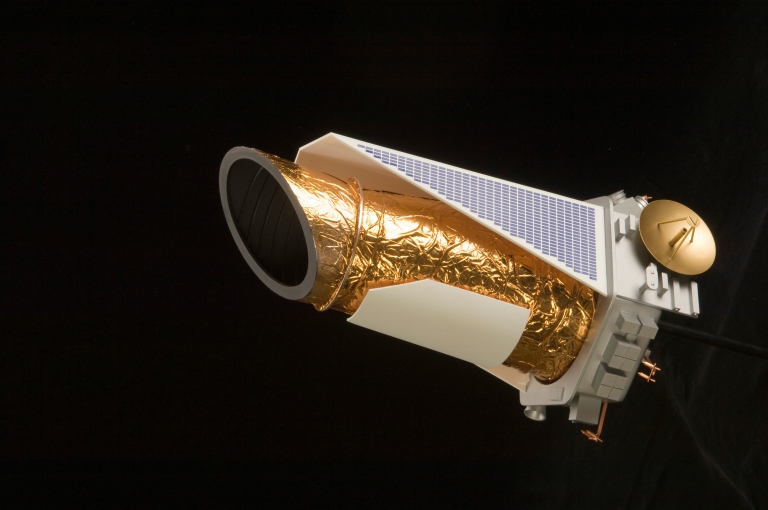
One of NASA’s most prized space probes may be in need of some roadside assistance after a scheduled Thursday communication session revealed the craft has entered emergency mode. The Kepler spacecraft was launched in 2009 and is equipped with telescopes and instruments critical to the discovery and analysis of extrasolar planets. Little is known so far as to the exact cause of the switch to emergency mode, but the clock is ticking as the probe consumes more and more of its power as part of a programmed response to restore full functionality. The current distance of the probe, 75 million miles from Earth, also complicates repair efforts since communication, even at light speed, takes 13 minutes to reach Kepler. Loss of the probe would deal quite a blow to the efforts of astronomers attempting to catalogue planets outside of our solar system. To date, Kepler has confirmed the existence of 1,013 exoplanets and provided data on 3,199 additional planet candidates. Only time will tell if the probe will survive emergency mode and continue its mission amongst the stars.
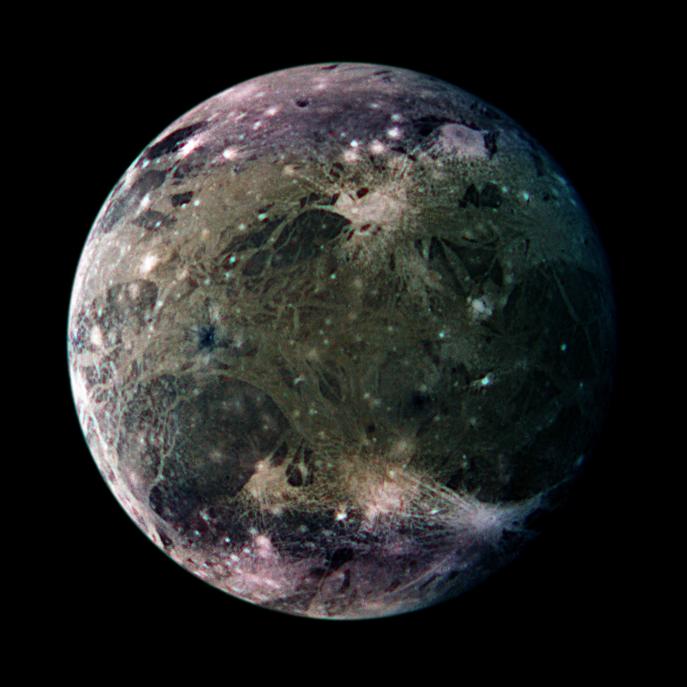
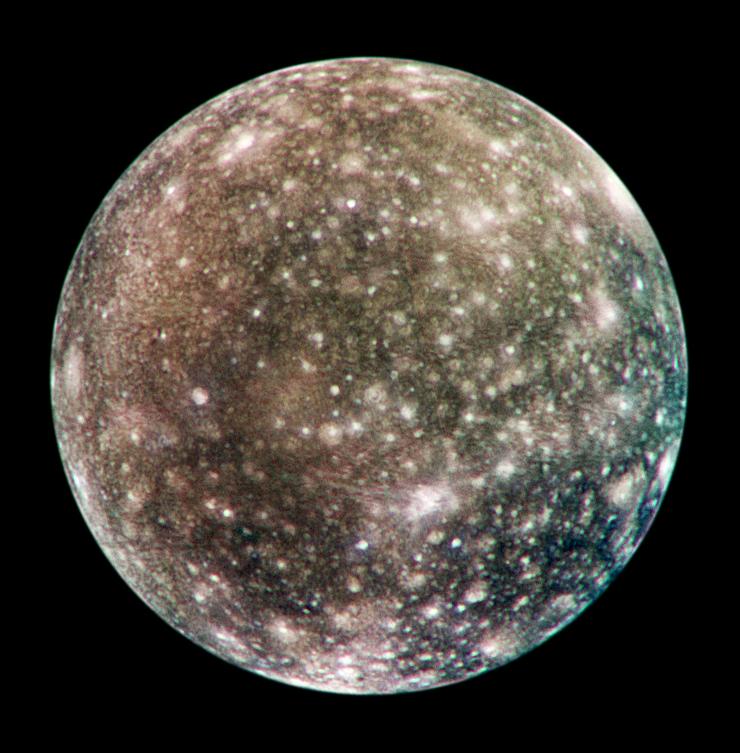
Discovered by Galileo in 1610, Jupiter’s four largest moons are some of the most interesting worlds in our Solar System.
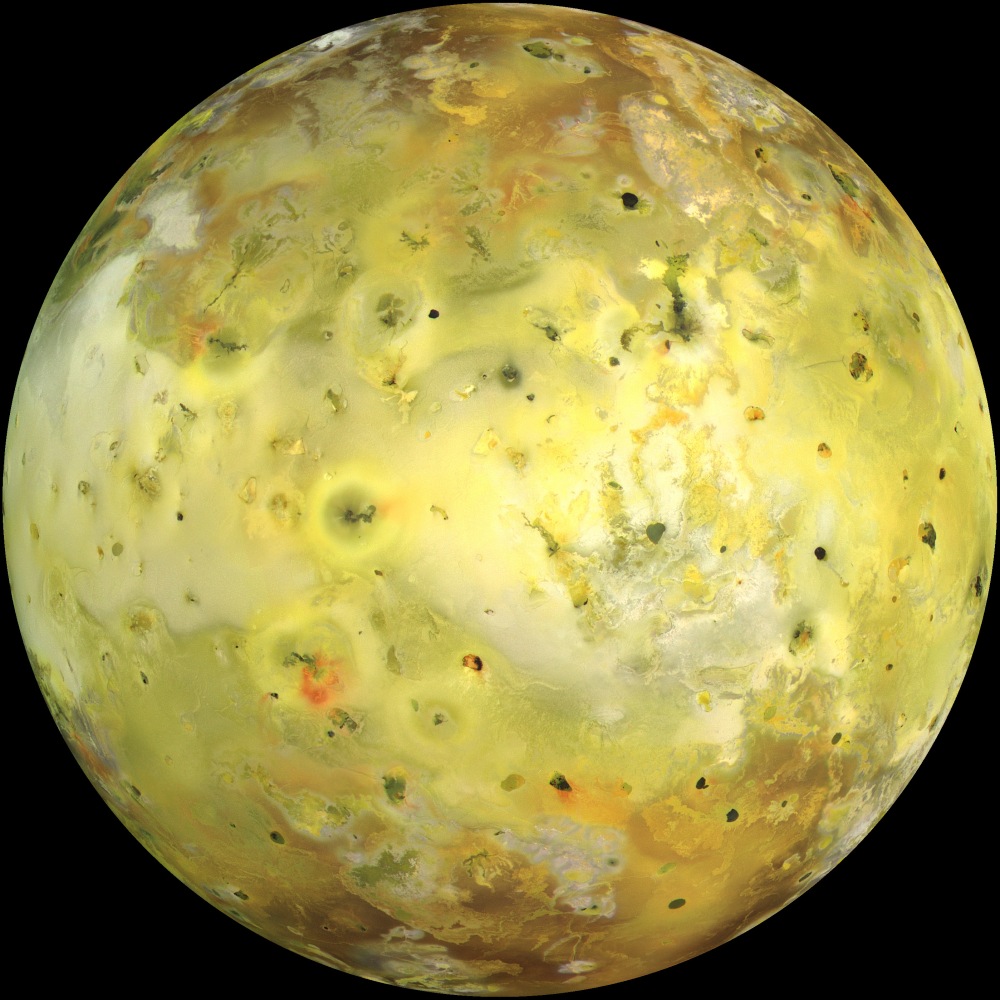
“Volcanic Io”:
Jupiter’s inner-most moon, Io, is the fourth largest moon in the solar system. It is also the most volcanically-active object in the Solar System, with over 400 active volcanoes. Large mountains cover its surface, and unlike most moons in the outer Solar-System, Io is not covered in ice. Instead, Io is composed mostly of silicate rock surrounding a molten core. Io’s geo-activity give it an impressively thick atmosphere composed of mostly of sulfur dioxide (SO2). Io’s volcanically active surface and thick-atmosphere make it an interesting world to study.
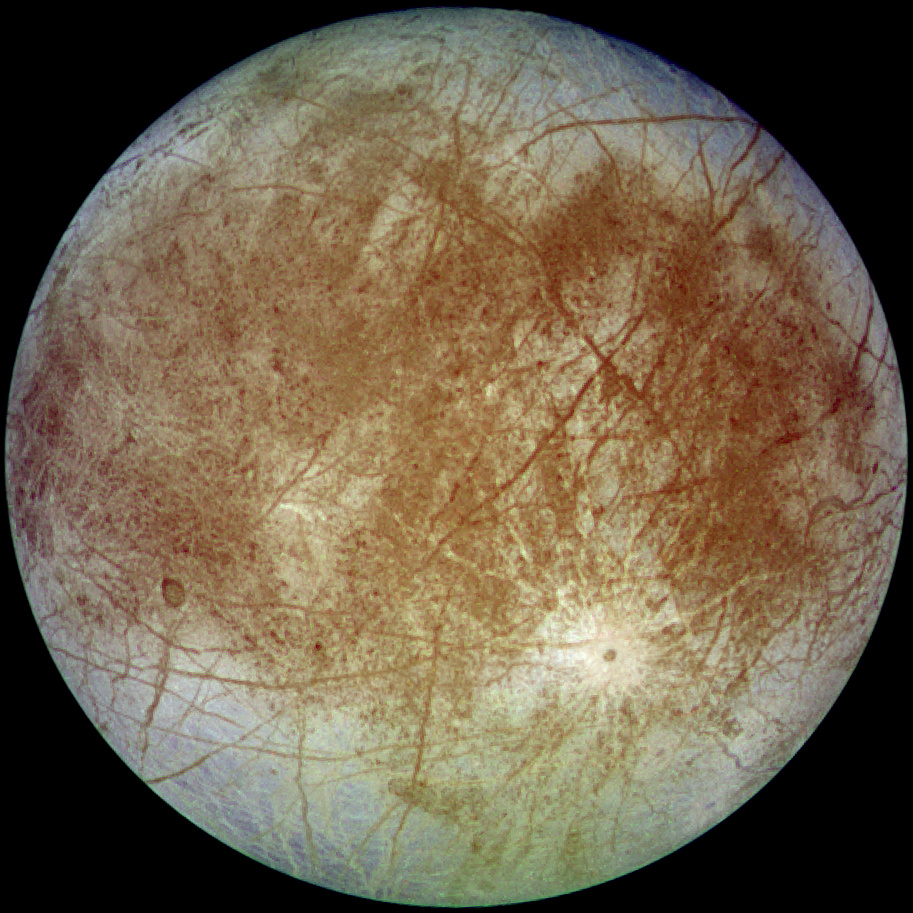
Europa, Jupiter’s second most-inner moon, is slightly smaller than Earth’s moon and is the smallest of the Galilean moons. Europa is known for its thick, icy surface. The lower sections of Io’s crust are thought to be made up of liquid water, kept warm by the core and tidal flexing. If this is true, then Europa remains one of the most interesting worlds in the Solar System because it could contain extraterrestrial lifeforms in its liquid oceans. Europa has an iron core and a thin atmosphere composed mostly of oxygen. The moon’s surface has many cracks, giving credence to the theory of a liquid ocean. The cracks could be the planet’s icy surface shifting over its liquid ocean.
Europa’s surface, showing extensive cracks, evidence of an icy surface over liquid water
“Grooved Ganymede”:
Next up on our Galilean-moon-adventure is Ganymede, the largest moon in the Solar System. It is larger than the Mercury, but only half of its mass because of its icy composition. Ganymede is known for its impressive surface, with multiple geological scars, now mostly covered in ice. Ganymede is geologically active, with a large molten core. Ganymede is also the only known moon to have a magnetosphere, caused by its molten core. It has a thin atmosphere made of O, O2, O3, and some atomic hydrogen.
Our journey ends on the farthest Galilean moon, Callisto. Known for its heavily cratered surface, Callisto is the second largest and least dense of the Galilean moons. Callisto is known as one of the most heavily-cratered moons in the Solar System, and it has a 3000km crater named Valhalla. Callisto has a very thin atmosphere made of carbon dioxide (Co2) and oxygen (O). Callisto lacks much of the geo-activity of the other Galilean moons, but it remains an interesting world to study.
The Galilean moons were a revolutionary discovery for Galileo in 1610, and they helped him argue the Copernican model of planetary orbit. The moons still remain an interesting point of study for astronomers. As more and more expeditions are made to the outer-parts of the Solar System, hopefully we can discover and learn even more from these fascinating worlds. You can follow this link to learn more about the Galilean moons and their discovery. What do you think of the Galilean moons? Do you think there could be life on Europa? Do you think we’ll ever find it? Leave a comment letting me know.
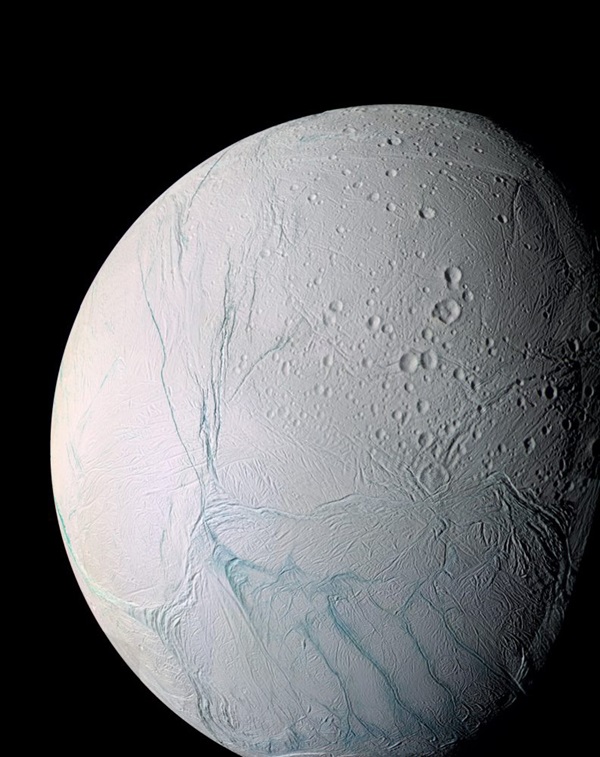
One of Saturn’s many moons, Enceladus, has been peppered with eruptions. Underneath the icy surface, there is a probability of a global ocean, which makes it even more suspicious that it has developed these fissures on its surface, mainly on the south pole. The erupted particles take about forty minutes or so to reach the level that the Cassini satellite can detect them, but the interesting thing is that these eruptions take about five ours to reach their peak. The scientists in the article Kite and Rubin, after extensive research, have noted that there is a point in time in which the water heats up enough to produce eruptions that match this lag.
Scientists have noted that this activity is similar to that on Europa, one of Jupiter’s moons, which leads scientists to believe that the study of Enceladus can help us find out more about Europa as well.
Saturn’s rings are one of the most fascinating subjects in astronomy for many people because they are one of the most visible examples of beauty in our Solar System. Interestingly enough, the other Jovian planets also have rings, but they are not nearly as conspicuous as the rings on Saturn are. What fascinated me when learning about Saturn’s rings is that they are made up of tiny objects that all orbit Saturn and that they are only 10 meters thick, which is microscopic in comparison with the massive size of Saturn overall. Interesting facts like these are what make the study of astronomy feel worthwhile to students who aren’t pursuing astronomy as a career. It’s good to know that we will be taking away fun facts about the universe that we can share with others, and that we can be satisfied that our understanding of the universe has increased even a little bit. And, as I have discussed in other blog posts, the beauty of Saturn’s rings can be appreciated even without understanding their parallels in other planets or their composition. When I get older and take a trip to an observatory, or even look at astronomical pictures online, I can really appreciate the beauty of the universe around us. Even when I’ve forgotten some of my knowledge about the more scientific aspects of the universe, I can rest assured knowing that I can always turn to the beauty of the universe as an inspiring reminder that we live in an astounding universe. When we realize how astounding our universe is, by looking at pictures of Saturn for example, it also makes us want to learn more about the universe again. Therefore, the beauty of the universe and its scientific nature both complement each other and make us want to learn more about both aspects. This is shown most perfectly in Saturn’s rings. Picture: (Saturn’s rings)
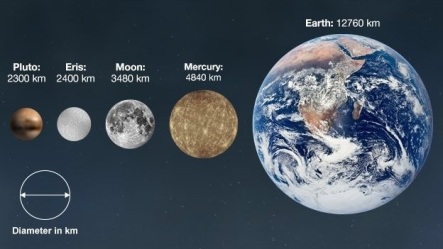
The discovery of Pluto had scientists ecstatic. Far out in the distance was this tiny, freezing, icy planet with moons! Then it was official: Pluto must be added to the list of planets. It’s round, orbits the Sun and has a posse of moons, what more could we need?
Apparently, for Pluto, that just wasn’t enough. Decades after its discovery in 1930, scientists made the decision to demote Pluto from its planetary status. This came as a shock to us then-elementary school students. “How could Pluto get kicked out?” “What did it do to deserve this?” “Does this mean we get new science textbooks?!” We were told that Pluto was too small to be considered a planet.
But there was more to the story. It wasn’t simply that Pluto was too small. Rather, it was that we had found many other round orbiting objects in the Kuiper belt of similar or slightly larger size to Pluto. Moreover, the other planets in our Solar System have managed to sweep out and capture any other particles or objects in their paths; Pluto was just too small to do that. Even knowing this, the Pluto debate continued from 1999 to 2006. Social and historical strain prevented scientists from immediately stripping Pluto of its title. However, in the end, reason won out and Pluto was demoted to a mere dwarf planet.
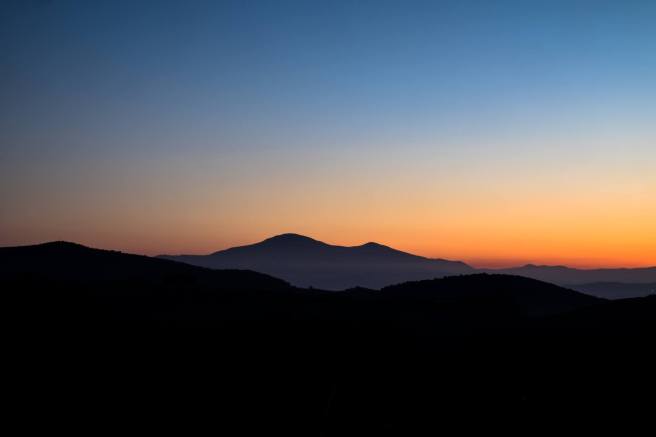
Mountains have always been a source of fascination for me. I climbed my first 14er, Mt. Yale (Elevation 14,199 ft.), when I was in middle school. Hopefully one day I can return to Colorado to climb more as well as many other mountains in this world. One of my favorite mountains is Mount Amiata in Tuscany and our property there overlooks the mountain as you can see in this picture I took below.
Mount Amiata, 12.28.2015, 5:19 pm Copyright Ned Bowen, 2015
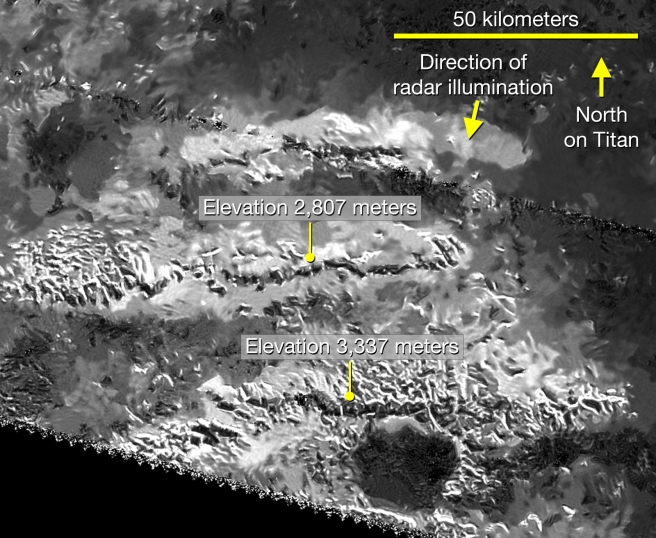
Anyways, when I found out there are mountains on Titan, Saturn’s largest moon, I was intrigued. When I found out they are ice mountains, I wanted to know all about them. The highest peak is found within the mountain ridges known as the Mithrim Montes, named after the mountain range in Middle Earth in The Lord of the Rings. The peak is 10,948 feet, which rivals some of the mountains on Earth. You can see them below:
It’s interesting because I often never think about other planets having geological features like we do here on Earth. The only pictures we really see are from space and just show a circular planet with some markings of geological activity but you get no understanding of the scale of these mountain ranges. It just goes to show how most planets and moons have major elevation changes like Earth that allow us to study their surfaces by comparing them to ours as well as discovering the underlying geological activity of the planet/moon. The universe is awesome.
Jupiter, the largest planet in our solar system, is located exactly where astrophysicists and planetary-formation theorists believe that it should be. Its size indicates that it should be located around the middle of the Solar System, where it was able to pick up rock, ice, and a lot of gases (such as hydrogen and helium) in order to grow into the behemoth it is today.
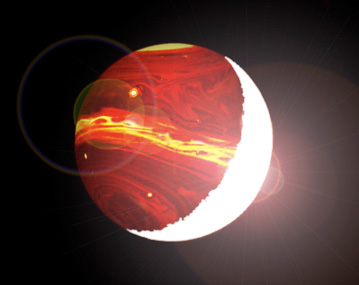
Jupiter’s location in our Solar System makes sense, but when scientists look at other planetary systems, huge planets (far larger than Jupiter) are located super close to their respective stars. These “hot Jupiters” and their locations don’t appear to match up with our current model of planetary formation, which states that a giant planet shouldn’t be able to accumulate enough material that close to its star because it would be way too hot for many materials to condense.
If hot Jupiters aren’t supposed to be where they are, then why are they there? Planetary experts have a couple of theories. The first theory, known as the early migration theory, states that after the planets formed in the location that we would expect them to, they were so embedded in the gas disk that they interacted with it in such a way that it torqued and pulled them into the inner Solar System. The second theory holds that the movement occurred after the gas-disk had been blown away, and that the planets interacted with another body in the system. This theory is (surprisingly!) known as the late migration theory.
Either way, hot Jupiters remain a strange anomaly to early astronomy-enthusiasts, so it is essential to understand that they do not negate the current theory on planetary formation. You can read here for more information on hot Jupiters, why they occur, and why we find so many. What do you think of hot Jupiter’s? Do you have a theory about why we find more of these anomalies than planets that are farther from their stars?
Researchers in Hawaii have discovered a planet not orbiting a star. Source: Business Insider
Astronomers have recently announced the discovery of a planet without a sun. Known as PSO J318.5-22, the planet is a gas giant six times the mass of Jupiter, nowhere near large enough to be a Brown Dwarf. In the past rouge planets or “planetary-mass objects” have been discovered but their size was large enough that it was unclear whether or not the object was originally a planet (as opposed to a Brown Dwarf). This poor planet must have been flung out of its orbit and is now traveling through space on its own.
What’s more is that since the planet is not near a bright star astronomers are optimistic that it will be much easier to observe the planet directly and learn about its characteristics. It is also the closest exoplanet to the solar system yet discovered. The planet is only 12 million years old so it is a very young planet and may provide more insight into how gas giants form and some of their properties in their early stages.