Why We Think Dark Matter Exists

Solely based on our experiences, we might be inclined to say that most of the universe is composed of “normal matter,” electrons, quarks and other subatomic particles.   However,  we have reason to believe that there are other kinds of matter in the universe, dark matter and dark energy.  In fact, according to this pie chart, most of our universe isn’t “normal matter”:


121236_NewPieCharts720.png
The Composition of our Universe


To briefly describe these two mysterious forms of matter and energy, dark matter is thought to be composed of some sort of strange particles, similar to “normal matter,” while dark energy is proposed to be a property of space.

The theory behind the existence of dark matter begins with astronomical observations.  Given our understanding of gravity, we know that stars and planets should rotate around the center of galaxies at a particular speed, dependent on how much mass is contained in the galaxy.  According to our research, the galaxies are not composed of enough “normal matter” to explain the speed at which the galaxies rotate.  This means that there must be another kind of matter out there, one that we cannot detect.  Dark matter is what we think explains these rational velocities. As or right now, we have yet to discover these particles, but there is the chance that we will see them after collisions at the LHC.


Sources:

NASA Article on Dark Energy and Dark Matter

Universe Composition

Rotational Speed of Galaxies and Dark Matter


Posted in Universe | Tagged , , , | Comments Off on Why We Think Dark Matter Exists

Solar Sails

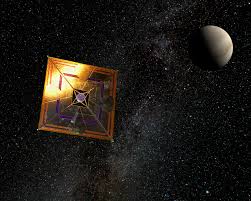
Currently, we do not have the technology to travel to even the closest stars. The fastest spacecraft humans have ever built is the Voyager 1, which is currently traveling at roughly 17 km/s. However, even at these speeds it would take the Voyager I nearly 70,000 years to get to the nearest star system, Alpha Centauri. Clearly, this is not even close to the speed we need to obtain to make interstellar space travel feasible. One potential way to reach speeds that would make interstellar travel feasible in an efficient matter would be with a solar sail.

imgres-1.jpg

(Artist rendition of a solar sail)

Solar Sails work by using the solar wind to propel an aircraft forward. Every time light hits an object, it changes the object’s momentum ever so slightly. Thus, since a stream of photons is constantly being released by the Sun in all directions, we could use giant sails attached to spacecraft in order to reflect this light and propel the spacecraft. In fact, this technique has already been used for a few satellites. By using this method, we could theoretically accelerate a spacecraft to nearly the speed of light. The only problem with this is that we would need to build a solar sail that is thousands of miles across and is thinner than a human hair. However, as technology progresses, it is certainly feasible to think that we might someday be able to achieve interstellar travel through using a solar sail.


Posted in Light, Space Travel | Tagged , , , , | Comments Off on Solar Sails

Blog #7 (Pluto)

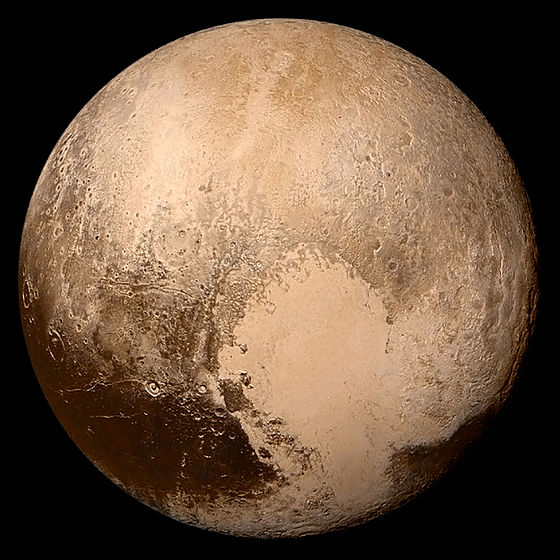
It’s a well-publicized fact by now that Pluto has been downgraded from planet to dwarf planet. Many people felt betrayed that one of the 9 planets they learned from childhood was no longer considered a planet. In reality, it was a logical decision because Pluto’s orbit is more elliptical, icier, and smaller than the rest of the planets. As we learned in lecture from Dr. G, there was a big debate at the international astronomy committee responsible for naming over the fate of Pluto’s classification. My question is why astronomy is so focused on the classification of planets and other objects. Certainly, it can be useful to categorize knowledge to have a more focused idea of what needs to be studied, but all classifications are essentially artificial. Nature doesn’t actually classify or delineate objects into as strict categories as we do. In fact, whether Pluto is a planet or a dwarf planet is almost entirely irrelevant to our understanding of it. If the essential goal of astronomy and science is to understand the universe better, it seems that focusing so much on the classification of objects is missing the point. Even if dwarf planet is a better classification for Pluto than planet, which I’m sure it is, that doesn’t actually increase our knowledge of Pluto or anything else in the universe. Considering that, I’m confused why scientists sometimes choose to spend so much time on classification and naming, some of them getting very heated in the process, when the point of science isn’t really to organize what we already know as it is to actually discover new things about the world around us and the universe we live in. So, I think that determining whether new objects meet “planet” status is a lot less important than just discovering what their dimensions are, getting some pictures of them, and crucially discovering whether we find any signs of life anywhere else. That, to me, is the central question of astronomy and probably one of the most intriguing possibilities of scientific investigation. Not what Pluto is called. Image (Pluto).Nh-pluto-in-true-color_2x_JPEG-edit-frame


Posted in Class | Tagged , , , | Comments Off on Blog #7 (Pluto)

Voyager Golden Record – Reading the Instructions

On my last unrestricted blog post, I began a series of posts on my favorite topic in astronomy: The Voyager Golden Record. If you missed that blog post you can check it out here. Basically, the golden record is a message in a bottle being cast into the cosmic ocean. It will go very far away and will last for a very long time. In the unlikely circumstance that other intelligent life finds the record, they should be able to discover the message within: a series of images and sounds that are a representation of humanity and life on Earth.

The next unrestricted blog post will cover the actual content of the record, which is fascinating. For this blog I will be explaining the instructions on how to read the record. Most people think that reading the instructions is boring, but in this case it is actually amazing.

To start off, you have to wrap your head around this concept: if another intelligent life were to ever find the voyager golden record, we would be the aliens to them and our technology would be alien. With that in mind, how do we explain how to listen to a record machine? How can we transfer all this audio and picture data to a completely unknown form of life that almost certainly doesn’t have eyes or ears like we do?

Well here is how they did it: check out the cover of the record. The cover has the instructions on how to play the record in eight symbols which I will now explain.

Starting in the bottom right, there are two circles. These represent the two fundamental states of the hydrogen atom. The energy transition of electrons between these two states takes a certain amount of time which will be consistent all over the universe. This is what they are defining as 1 t, the standard unit of time.

Next move to the top left, where you can see a top down view of the record and its stylus. There is also binary code around the edge of the record. The binary code is defining the proper rotational frequency of the record in the hydrogen unit of time that was previously defined. In seconds, this frequency is 3.6 seconds per rotation.

Below this image is a side view of the record and stylus with more binary code beneath it. This binary code is telling the user the total amount of time that the record should take, again defined in the fundamental transition of hydrogen time. In our time, the record will finish in about an hour. The position of the stylus indicates that the record should be played from the outside in.

Ignore the star looking thing in the bottom left for now and move to the top right. Things get a bit more complicated here. The basic way that a record works is that there is a spiral groove going from the outside to the inside. Inside this spiral groove is a waveform that the stylus will trace and read as it moves up and down very slightly. This waveform is what’s being shown in the top right. The first, second, and third waveforms are indicated above by binary code. Below is binary code with the approximate time to scan one of these waveforms, which is about 8 milliseconds.

Next, the image is made up of these waveforms. The waveforms are actually vertical lines that make up image. The binary code above the rectangle with all the jagged vertical lines says that a complete image is made with 512 vertical lines. Below this is a rectangle with a circle in it. The first image on the golden record is a simple, perfect circle. The circle was used so that the horizontal and vertical aspect ratios are correct. If the receiver of the disk sees a circle as the first decoded image, they will know that they are seeing it right.

Now this may seem like a really difficult set of instructions to follow, but you have to remember that any intelligent life that theoretically found the Voyager would be capable of interstellar travel. This means that they would almost certainly be able to reverse-engineer a record player with the instructions that were provided.

Finally, the image in the bottom left is actually a map. This image shows our sun’s location in relation to 14 pulsars. Pulsars are stars that pulse at a steady and consistent frequency. The lines extending from the center to the pulsars have binary code along them that list the frequency of the pulses. Pulsars are good cosmic landmarks because they’re very obvious and easy to find.

Pretty cool, right? Who knew reading the instructions could be so interesting? Next time I’ll get to the actual content on the Golden Record. It’s awesome, get excited. Again, if you read this and don’t want to wait, check it out here.

Explanation Source


Posted in Class | Tagged , , , , | Comments Off on Voyager Golden Record – Reading the Instructions

The Darkest Planet in the Universe

tresb
TrES-2b

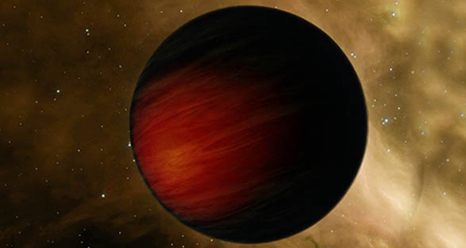
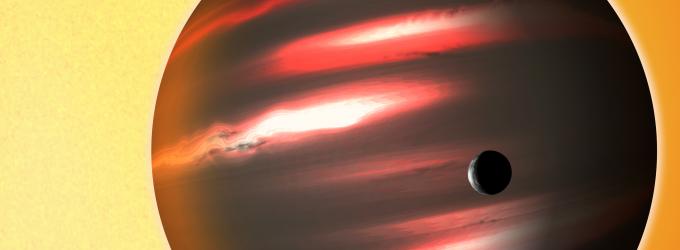
The planet sullenly staring back at you is TrES-2b and no it is not just going through a phase, this exoplanet is indeed the universe’s ultimate goth. TrES-2b is a gas giant which was first detected in 2006 by the Trans-Atlantic Exoplanet Survey (TrES) employing the transit method of exoplanet discovery. In the transit method the light of distant stars is recorded and analyzed for repeating dips in brightness indicating the regular passing of an object in front of the star.

tresb2
TrES-2b

Seated over 750 light years away from our solar system, TrES-2b was further analyzed by NASA’s Kepler space probe in 2009. Data from the mission provided direct confimation of the planet’s existence, the planet’s mass, and, most importantly, the planet’s geometric albedo. Geometric albedo is a measure of an object’s brightness when viewed directly. TrES-2b was found to have an extremely low albedo of approximately 1%. For comparison, Jupiter, a similarly sized planet, has a geometric albedo of 33%. This minute value means the planet reflects very little light; in fact, the planet reflects less light than both coal and black acrylic paint. It is not known exactly why the planet is so dark; the close orbiting distance of the planet places it into the category of “Hot Jupiters” which are historically known to poor reflectors, but the darkness of TrES-2b is unprecedented even for a hot jupiter. Prevailing theories have offered explanations ranging from TrES-2b’s lack of reflective clouds to the presence of an unknown, ultra-light absorbent chemical compound in the planet’s atmosphere. Future research using space-based spectrometers may shed light (pun intended) on the composition of the planet’s atmosphere and any unusual substances present there. Until that time, TrES-2b will continue to sit both literally and metaphorically in the dark.


Posted in Class, Light, Universe | Tagged , , , , | Comments Off on The Darkest Planet in the Universe

Europa, a Galilean Moon of Jupiter

As the title suggests, Europa was discovered by Galileo in 1610.  Although Galileo’s instruments for investigating the cosmos weren’t as sophisticated as ours are today, the relatively large size of Europa, a size comparable to the moon’s size, made it possible for it to be discovered in 1610.  And since then, Europa has been investigated further and some people believe that there’s a chance to find alien life on it.

image_mini
Europa’s surface

In 1998, the Galileo Mission flew by Europa and we were able to take a closer look at Europa’s surface.  It seems as if the ridged, icy surface experiences convection.  The cooler ice sinks to the bottom of the surface, while the warmer ice raises to the upper layers of the surface.  Additionally, there seems to be an ocean beneath Europa’s icy surface.  This water ocean makes us believe that there is a chance for life on the planet.  Hopefully, with future missions to Europa, we will be able to the most rudimentary forms of life outside of planet Earth.

Sources:

NASA Space Mission: Galileo

Alien Life on Europa

Galileo’s Discovery

Europa Facts


Posted in Jovians, Moons | Tagged , , | Comments Off on Europa, a Galilean Moon of Jupiter

Behemoth black hole found in an unlikely place

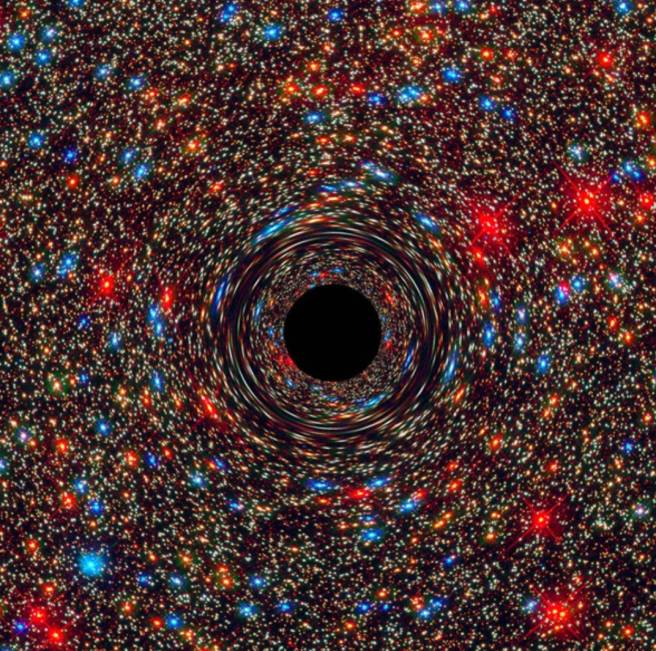
Watch out, Earth! Scientists have discovered a massive black hole in our universe, one that weighs the equivalent of 17 billions suns! While the size of this black hole is very significant, something that makes it even more unique is it’s location in our universe. According to astronomers, black holes this size are almost always found in the center of galaxies that are located in an area of the universe that is “packed” with other galaxies. One example of this is a massive 21 billion sun size black hole that was found in the crowded Coma Galaxy Cluster which has consists of well over 1 thousand galaxies! The black hole recently found is located in a cluster with just 20 other galaxies.

This is significant as it tells us that there may be more black holes out there than we thought! As one scientist put it, “maybe there are more monster black holes out there that don’t live in a skyscraper in Manhattan, but in a tall building somewhere in the Midwestern plains.” The black hole is located about 200 million light years from Earth, and don’t worry, we are not likely to run into it any time soon:)

Screen Shot 2016-04-10 at 6.47.03 PM.pngHere’s the article!


Posted in Observables, Space Travel | Tagged , , | Comments Off on Behemoth black hole found in an unlikely place

A Giant spider on Pluto?

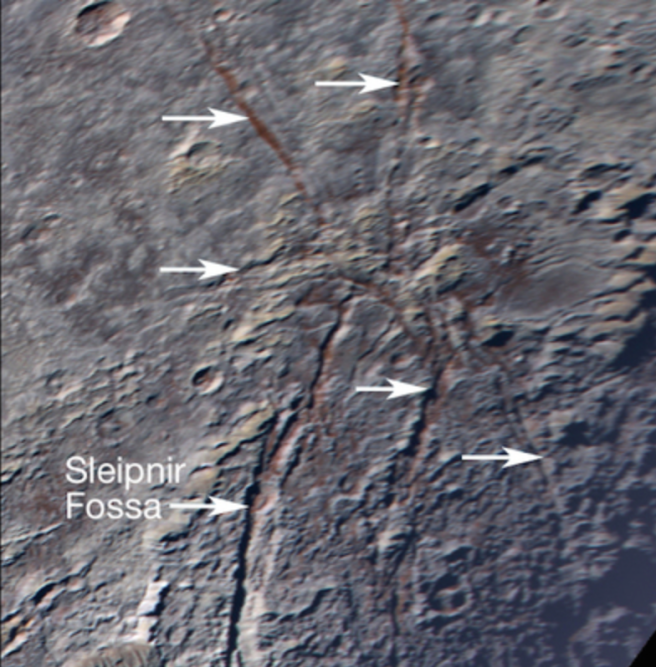
Launched in 2006, the New Horizons Space Probe set out with the mission to get the best view of Pluto that we humans have ever seen. And it just so happens that we succeeded! We are now seeing the absolute best images that we have ever seen of the famed dwarf planet. Recently, Pluto has been getting the spotlight for an interesting feature found by New Horizons.

A recent image of the planet shows a spider shaped feature on the surface of the planet. What do I mean by spider shaped? Take a look at this image yourself:

Screen Shot 2016-04-10 at 6.30.36 PM.png
Check out the Article here

Interestingly, astronomers do not know exactly what they are looking at. “The pattern these fractures form is like nothing else we’ve seen in the outer solar system, and shows once again that anywhere we look on Pluto, we see something different” said Oliver White, part of the New Horizons geology team. So for now, all we know is that they are fractures in the surface of the “dwarf planet” that happen to be in a very interesting shape. It will be interesting to see what we learn about this oddity in the future!


Posted in Observables | Tagged , , , | Comments Off on A Giant spider on Pluto?

Doppler vs. Astrometric: Find the Planet

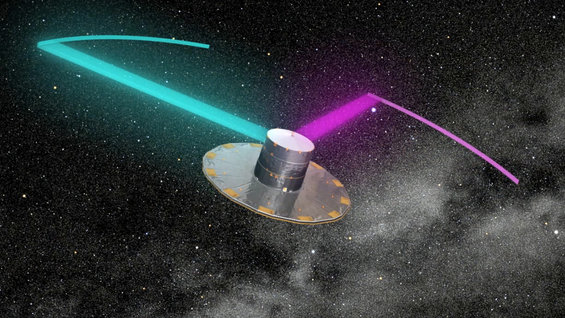
inside_gaia_s_camera_highlight_std
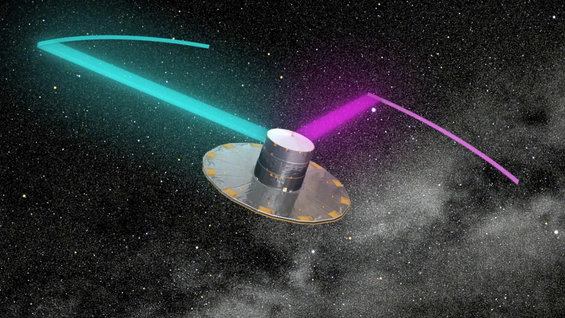
GAIA’s camera (dramatization)

Currently, it’s quite difficult to discover new planets simply by direct observation. This is because the high interference of light caused by the planets’ respective stars makes it almost impossible to detect the light reflected off of planets. However, there are two indirect planet detection methods: Doppler and astrometric.

The astrometric method relies on measuring the side-to-side movement of a star as it orbits about its center of gravity with another large planet. Though this movement may be too small for most telescopes to detect, the GAIA mission would be able to detect changes of up to 10 microarcseconds.

Another method, the Doppler method, detects planets based on the front-to-back motion of the star. It does so with—you guessed it—the Doppler effect. With current technology, we can detect star motion as slow as 1 m/s, which is a Doppler shift of just 0.0000003%.

Both of these methods have upsides and downsides. Because both methods are indirect observations, it’s necessary to observe the full orbit of each star. This means that planets with shorter orbital periods, and thus that are closer to the star, are easier to detect. With the astrometric method, it is easier to detect larger planets, because those have larger effects on the star’s orbital diameter. This is less of an issue for the Doppler method because it only relies on the star’s speed to detect any nearby planets. Because of this, the Doppler method is currently the more useful method for planet detection. However, when GAIA launches, that will certainly change.


Posted in Exoplanets, Observables, Physics, Stars | Tagged , | Comments Off on Doppler vs. Astrometric: Find the Planet

The Lonely Giant – NGC 1600

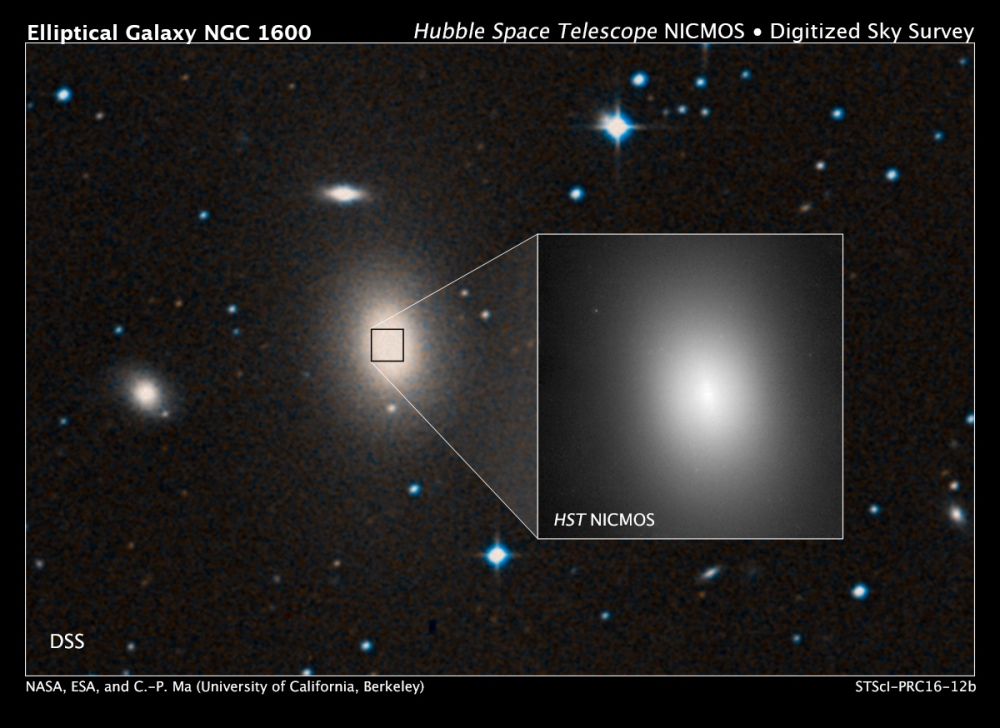
Astronomers have discovered an enormously massive galaxy, NGC 1600, 209 light years away. NGC 1600 is an elliptical galaxy that is 17,000,000,000 billion solar masses. There are many massive black holes in the Universe (Source). In fact, there is a black hole at the center of every galaxy. It is thought that perhaps black holes helped facilitate galaxy formation by condensing matter into a disk due to its gravitational force. So what makes NGC 1600 so interesting?

hs-2016-12-b-web_print


NGC 1600 is interesting because it is located at a place in the universe where massive black holes are not expected. Galaxies are not distributed in the universe evenly, but rather in stringy filaments. Usually massive galaxies have proportionately large black holes and they are found in dense filaments.

However, NGC 1600 was found in a rather sparsely populated area of the universe. This is strange since it is a massive galaxy. Furthermore, even though NGC 1600 is massive, the black at its center is even more massive than to be expected. The astronomers who made the discovery believe that the NGC 1600 is a result of two galaxies that merged. In the process of merging, many stars were sling shot out of both galaxies. They also believe that the galaxy could be an extinct quasar. Quasars are super large black holes at the beginning of the universe that emitted extremely bright light due to their large accretion disks.

Obviously, more exciting research needs to be done on NGC 1600 to prove these theories.


Posted in Class | Tagged , , , , , | Comments Off on The Lonely Giant – NGC 1600