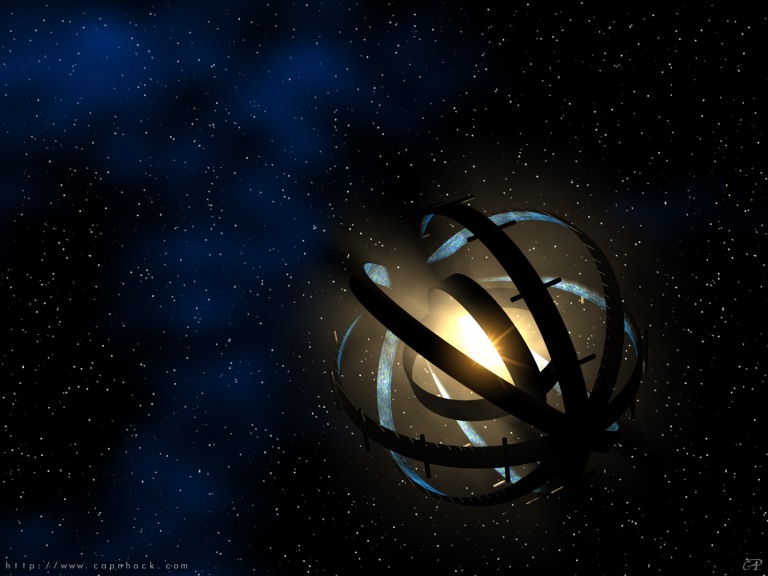
We may be getting one step closer to the fabled hallmark of an advanced civilization, the Dyson Sphere. Pioneered by Freeman Dyson in the 1960s, a Dyson Sphere takes the process of energy generation to a level literally out of this world.
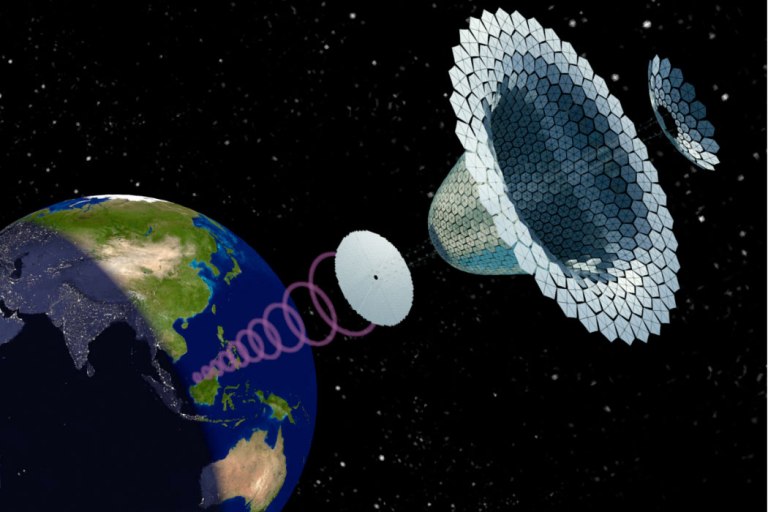
A Dyson Sphere is a massive assemblage of solar energy collectors placed in the vacuum of space surrounding a star with the purpose of harnessing huge amounts of solar energy to be beamed down for use by a planet.
While still far off, a team from the U.S. Naval Research Laboratory led by Dr. Paul Jaffe has set out to design and perhaps one day construct a solar collection array stationed high in the Earth’s exosphere.
The project is still in its infant stages, but was recently selected as the winner of the Defense Department’s inaugural Diplomacy, Development, and Defense (D3) Innovation Summit Pitch Challenge beating out 500 other applicants. The team hopes to demonstrate a fully functioning orbital solar station in 10 years. If their effort proves successful, they could usher in an entire new era of energy generation which could bring nations closer together as they pool their resources to take full advantage of our Sun.
for years people have been advocating for countless alternative ways to generate energy to power our ever-industrializing world (hint: fossil fuels are unsustainable!!)
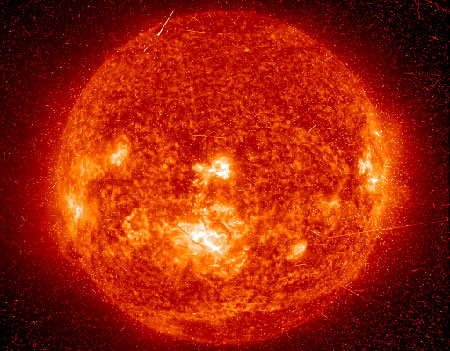
whereas nuclear fission generates massive amounts of electricity by splitting atoms apart but also generating radioactive waste, fusion is incredibly pristine and produces no waste byproducts! it is, after all, the process which powers our Sun, and the ability to harness that kind of power would mean an absolute reshaping and rethinking of how we power our lives on earth – and the potential that offers for humanity. earlier this year, a team in germany successfully produced and sustained hydrogen plasma for the first time on earth. it lasted only a quarter of a second, but it was enough to prove that it could be done on earth!
the possibilities for clean, limitless energy are endless. what would you want your world to be like where everyone had access to clean energy forever?
Posted inClass|Taggedastro2110, blog5, fusion|Comments Off on enough energy to power the world forever
The classic childhood picture book turned game, Where’s Waldo? Surely most of us have seen this book in a waiting room at least once in our lives- and have attempted, successfully or not to find Waldo among the distracting background. Well, today astronomers are in a living version of the game, only they’re looking at many exoplanets in the search for life.
So what is an exoplanet? Well, the International Astronomical Union (IAU) has a definition for a planet, but that only applies to objects within our solar system. And as far as exoplanets go, they only have a “working definition” that was last modified in 2003-not that it really matter because much like “planet” the definition is heavily debated. For the purposes of this blog post, I will be referring to planets that match the IAU definition for our solar system, but are orbiting stars that are not our Sun.
Back in October of 1995, the first exoplanet orbiting a main sequence star was found! That exoplanet being 51 Pegasi b which orbits the main sequence star 51 Pegasi in just 4 days, not only that, but it’s the size of Jupiter!
But really, the reason I chose this topic is because I wanted to share this really cool video I found on tumblr (cause I follow a lot of star stuff). It fits in really well with the topics we’ve been discussing in class! Enjoy!
Do you love astronomy? Do you also love ice skating? (I’m looking at you, Dr. G..) What if I told you that you could have the best of both worlds? You can(!), albeit approximately 4.2 AU away from Earth.
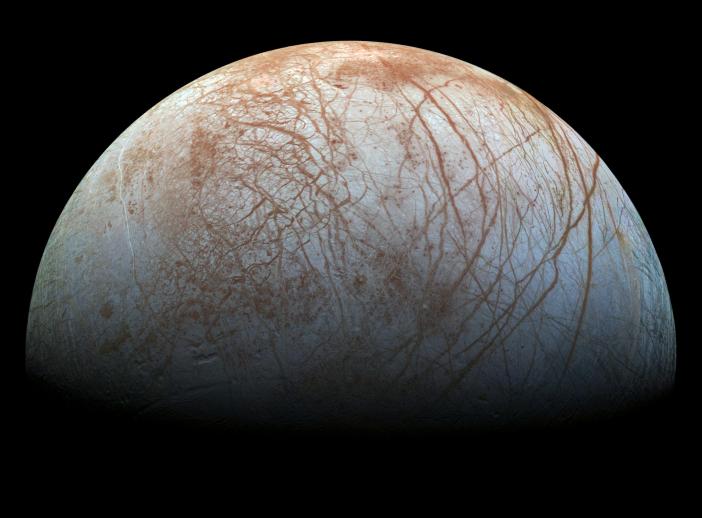
Enter Europa, Jupiter’s icy sixth (both largest and closest) moon.
Pictured: tracks from Jupiter’s ice skates
Europa is an extremely young moon despite being the second extraterrestrial moon ever discovered, and as such features a liquid water ocean beneath the icy crust, and a layer of volcanic activity beneath the ocean. In addition to its composition, Europa also has several quirky features such as its lineae on its surface, the massive water plumes it fires into space, and an (extremely thin) oxygenated atmosphere. It is this unique composition and its other quirks which give scientists hope that there may be extraterrestrial life here in our solar system beneath the icy surface of Europa.
Currently NASA is investigating the feasibility of landing a probe on Europa, and there are multiple scheduled missions that will collect data on the moon without actually landing on it.
Meanwhile, I’m going to start learning how to ice skate.
on my flight back from amsterdam at the end of spring break, i finally had the opportunity and wherewithal to watch the theory of everything, the stephen hawking biopic from a couple of years ago. it got me thinking about a lot of things from my physics education in high school and more recently my pursuit of an undergraduate physics degree. i remembered in 10th grade my physics teacher talking about uniting all the forces in the universe in one “beautiful, elegant” equation which would provide a grand unifying framework for all of physics in the universe. pretty lofty stuff.
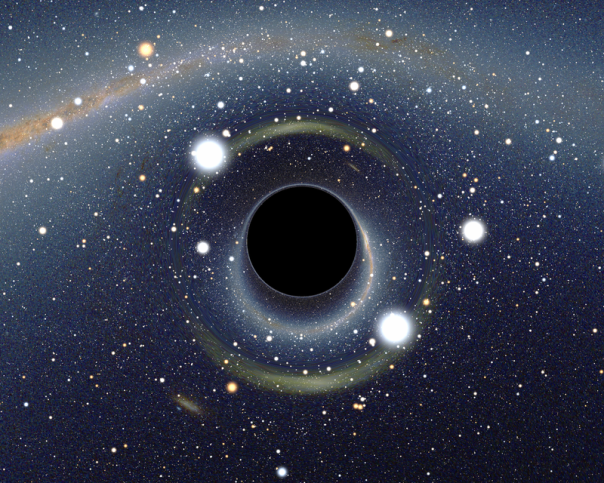
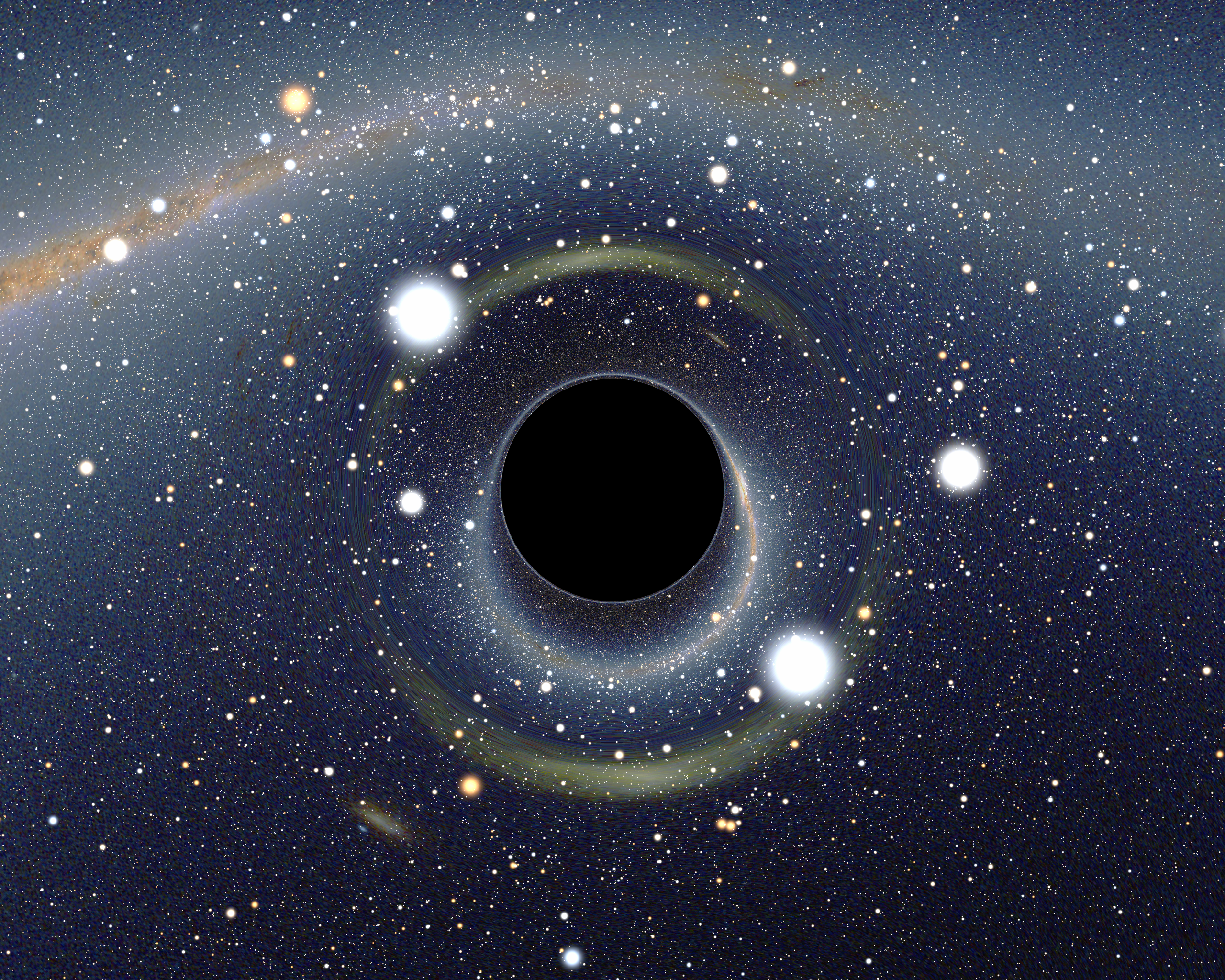
in the movie we learn (albeit very minimally) about hawking radiation, the theoretical model of which hawking developed in 1976. so what is it? essentially it is when the fluctuation in energy in the black hole engenders a particle-antiparticle pair of imaginary particles near the event horizon. one slips into the black hole before they have a chance to completely annihilate each other, so it appears to an observer that a particle was emitted from the black hole! the particle that gets absorbed then has a negative energy!
this is fascinating stuff – enough to warrant eddie redmayne’s best actor oscar!
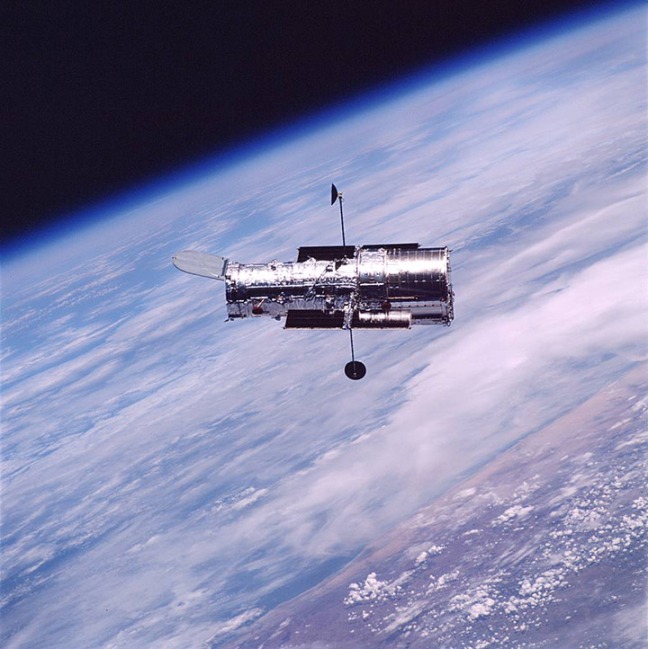
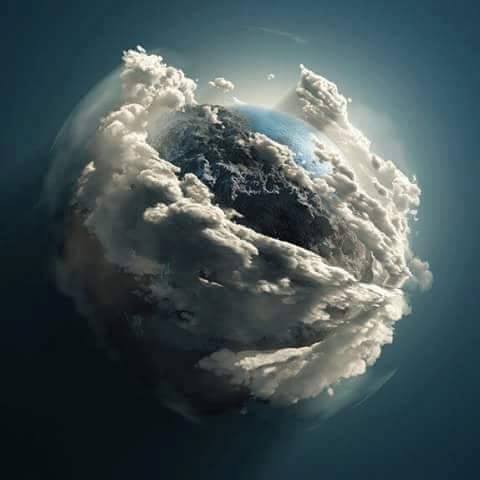
The Hubble telescope, which has been orbiting Earth for over 25 years, views the universe with a completely different perspective than what we can see on Earth. While the telescope is not necessarily responsible for amazing images like this one, it can be given credit for other just as powerful views of the universe. Its prime position just above Earth’s atmosphere gives it the perfect view, unblocked by Earth’s gaseous perimeters.
After exploring terraforming on Mars and finding a good amount of information on Venus in the process, I thought it would be interesting to explore the prospects of terraforming Venus in the hopes of one day making it habitable.
As I mentioned in my previous blog, Carl Sagan published an article in 1961 advocating for seeding Venus’s atmosphere with algae to begin converting the CO2 in the atmosphere into oxygen. Unfortunately, Sagan’s idea is close to impossible because Venus’s atmosphere could not support the life of algae. If algae is out (at least as a first step), then how would you go about making Venus a habitable planet?
Want To Live On Venus? Here’s What You Are Up Against.
The major challenge with Venus is its atmosphere. When considering how to terraform Mars, the conversation centers around how to create a habitable atmosphere. However, Venus has plenty of atmosphere – the problem is Venus’s atmosphere wants to kill us. Venus has a surface temperature of about 880 degrees Fahrenheit), largely thanks to an atmosphere that is about 90 times thicker than ours. In fact, the air on Venus is one-tenth as thick as water, and the atmospheric pressure on Venus is equivalent to the pressure felt about 1 km beneath the ocean’s surface.
How Do We Fix…All Of That?
One theory is to build an enormous solar shade to cool the planet down. The effect of such a shade would cool the planet significantly, and by some estimations, the cooling would be so significant that a large portion of the CO2 in the atmosphere would condense on the surface. While a solar shade is not a single solution, if we were able to gather the resources to effectively block sunlight from reaching the planet, the resulting cooling could make the planet workable.
The next step is to introduce compounds that would make create a breathable atmosphere. If the solar shade wasn’t complicated enough, then here is a bigger challenge. Venus has virtually no oxygen in its atmosphere, so we would need to introduce a massive amount of compounds to create a chemical reaction that yields water and oxygen across the entire planet.
Thankfully, British scientist Paul Birch published an article in 1991 titled “Terraforming Venus Quickly.” The title makes it sound easy, right? Ok, so all we have to do is blast the planet with hydrogen, which would react with the CO2 in the atmosphere to form graphite and water, which would then create the planet’s oceans. Easy, right?
Well…with the amount of Hydrogen needed, we would have to import it from one of the gas giants. However, if we can figure out how to efficiently transport Hydrogen from Jupiter to Venus, then Birch’s theory could prove successful in creating ocean water and further cooling the planet.
After cooling the planet and forming oceans, Carl Sagan’s theory becomes more plausible. The introduction of algae could see the planet with the oxygen needed to create a breathable atmosphere, and the algae themselves would supply a large amount of organic material to the planet.
Conclusion
There you have it. Venus is now habitable, and we are accepting tickets for flights bound to Venus City. Ok, that may not be for a while. In fact, it may never happen. However, scientists have put a significant amount of thought into how a magnificent feat like transforming Venus into a livable planet could be accomplished. Interested in learning more? This article has many more details on the theory of behind terraforming Venus.
After exploring terraforming on Mars and finding a good amount of information on Venus in the process, I thought it would be interesting to explore the prospects of terraforming Venus in the hopes of one day making it habitable.
As I mentioned in my previous blog, Carl Sagan published an article in 1961 advocating for seeding Venus’s atmosphere with algae to begin converting the CO2 in the atmosphere into oxygen. Unfortunately, Sagan’s idea is close to impossible because Venus’s atmosphere could not support the life of algae. If algae is out (at least as a first step), then how would you go about making Venus a habitable planet?
Want To Live On Venus? Here’s What You Are Up Against.
The major challenge with Venus is its atmosphere. When considering how to terraform Mars, the conversation centers around how to create a habitable atmosphere. However, Venus has plenty of atmosphere – the problem is Venus’s atmosphere wants to kill us. Venus has a surface temperature of about 880 degrees Fahrenheit), largely thanks to an atmosphere that is about 90 times thicker than ours. In fact, the air on Venus is one-tenth as thick as water, and the atmospheric pressure on Venus is equivalent to the pressure felt about 1 km beneath the ocean’s surface.
How Do We Fix…All Of That?
One theory is to build an enormous solar shade to cool the planet down. The effect of such a shade would cool the planet significantly, and by some estimations, the cooling would be so significant that a large portion of the CO2 in the atmosphere would condense on the surface. While a solar shade is not a single solution, if we were able to gather the resources to effectively block sunlight from reaching the planet, the resulting cooling could make the planet workable.
The next step is to introduce compounds that would make create a breathable atmosphere. If the solar shade wasn’t complicated enough, then here is a bigger challenge. Venus has virtually no oxygen in its atmosphere, so we would need to introduce a massive amount of compounds to create a chemical reaction that yields water and oxygen across the entire planet.
Thankfully, British scientist Paul Birch published an article in 1991 titled “Terraforming Venus Quickly.” The title makes it sound easy, right? Ok, so all we have to do is blast the planet with hydrogen, which would react with the CO2 in the atmosphere to form graphite and water, which would then create the planet’s oceans. Easy, right?
Well…with the amount of Hydrogen needed, we would have to import it from one of the gas giants. However, if we can figure out how to efficiently transport Hydrogen from Jupiter to Venus, then Birch’s theory could prove successful in creating ocean water and further cooling the planet.
After cooling the planet and forming oceans, Carl Sagan’s theory becomes more plausible. The introduction of algae could see the planet with the oxygen needed to create a breathable atmosphere, and the algae themselves would supply a large amount of organic material to the planet.
Conclusion
There you have it. Venus is now habitable, and we are accepting tickets for flights bound to Venus City. Ok, that may not be for a while. In fact, it may never happen. However, scientists have put a significant amount of thought into how a magnificent feat like transforming Venus into a livable planet could be accomplished. Interested in learning more? This article has many more details on the theory of behind terraforming Venus.
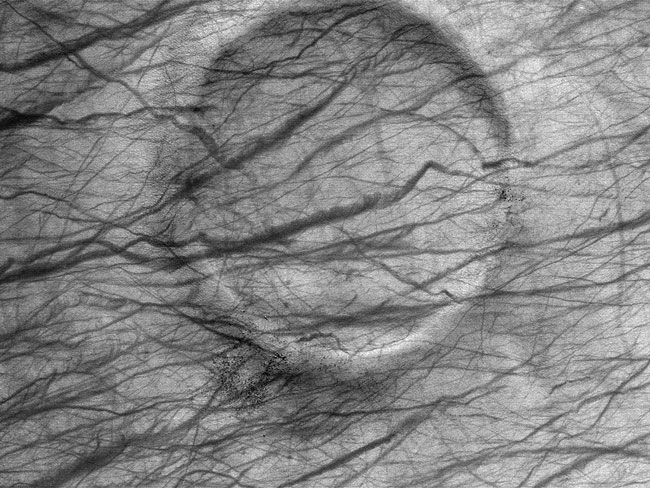
The ~spooky~ imagine below is not, as one may initially believe a charcoal sketch drawing of branches against the night sky (Just me? Okay). Instead, the image below shows tracks on the Martian surface from dust devils. Dust devils, strong whirlwinds comparable to tornadoes, leave beautiful dark lines and swirls on the Martian surface. Although these dust devils are up to fifty times as wide and ten times as high as their Earthly counterparts, the are relatively week and reach maximum speeds of about 55mph. While dust devils on Earth tend to be associated with destruction, those on Mars have been pretty useful to humans in the past. Dust devils have helped clear dust off of both the Spirit and Opportunity rovers, saving them from depleted power levels from dirty solar panels. These whirlwinds might not be so devilish after all. Check out a video of one here!