The Great American (solar) Eclipse

There are two different types of eclipses; lunar eclipses and solar eclipses. I want to talk today about a particular solar eclipse coming our way. The Great American Eclipse. But I regress. Solar eclipses and lunar eclipses differ in a very important way; a lunar eclipse is when Earth lies directly between the sun and moon while a solar eclipse is when the moon lies between the sun and Earth. As a result, when a lunar eclipse takes place, anyone on the night side of the Earth can see it. A solar eclipse, on the other hand, can only be seen by people living in a very specific stretch of land. This is because of how small the moon is when compared to the Earth and Sun. With this in mind, let’s get back to The Great American Eclipse.

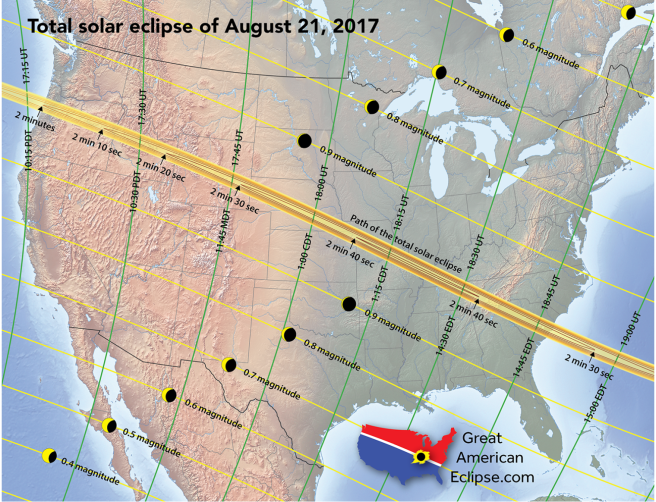
On August 21st 2017, right around move in day, there will be a solar eclipse in the United States. So, for just a few minutes, in a few places across the country, it will become dark as the moon blocks sunlight from reaching Earth. Most excitingly, this eclipse will pass DIRECTLY THROUGH NASHVILLE! As a result, everyone will need to be ready for these magical few minutes. The last time a total solar eclipse took place in the United States was in 1991! Needless to say, this is a big deal folks.
Screen Shot 2016-01-26 at 8.06.14 PM
Viewing Points of the Great American Eclipse


Posted in Observables | Tagged , , , , | Comments Off on The Great American (solar) Eclipse

Wibboly-Wobboly

Precession. The change in the orientation of the earth’s rotational axis. Technically, it applies to any astronomical body. What we’ve been referring to in class as precession is the axial sort, the Earth’s axis is tilted about 23.5 degrees from the ecliptic plane (where the orbits of the plants are in the same plane as the Sun).

An illustration of the Earth’s precession (hyperphysics)

Precession is caused by the torque from the gravitational pull of the Sun and the Moon on the Earth, which is trying to pull the Earth’s axis perpendicular to the ecliptic plane. If the Earth were a perfect, uniform sphere, there would be no precession!

To learn more:

Axial Precession

Precession of Equinoxes


Posted in Class | Tagged , , , | Comments Off on Wibboly-Wobboly

Eclipses Throughout History

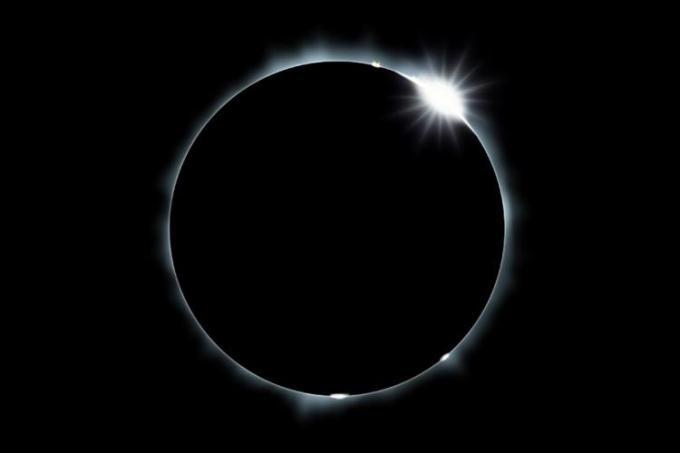
total-solar-elipse-diamondring

Eclipse science!

You’re just mowing grass one day and the sun disappears. You look up and see an eclipse. Today, people would just brush it off for the most part. There would be some oohs and ahhs, but most people would just treat it like any other day and probably forget about the occurrence a year later. But throughout history, an eclipse was special. Sometimes it meant something evil. Sometimes good.

For the Hupa Native American tribe in northern California, an eclipse meant the moon was being mauled by its pets. They believed that the moon had 20 wives and a good number of pets comprised mostly of predatory animals. An eclipse signified that the moon wasn’t feeding his pets enough which caused his pets to become irked and start attacking him. After a while, the moon’s wives would step in and restore him back to health, which caused the end of the eclipse.

Another Native American tribe in northern California, the Pomo people, believed that an eclipse meant that the celestial bear who wandered around the Milky Way had come into contact with the sun. The sun wouldn’t get out of the bear’s way so the bear decided to beat it up. The eclipse would end after the bear decided to move on. But the bear wasn’t done yet! The bear would later find the sun’s sister (the moon) and fight her too causing another eclipse. After taking out his anger, the bear would get up and continue to wander the Milky Way for another six months or so until he decided to go beat up the sun again.

Many different people believed that an eclipse meant that either the sun or moon had been eaten. The Vikings believed that two wolves had either eaten the sun or the moon depending on the type of eclipse. The Chinese believed that a dragon had swallowed the sun. My favorite of these comes from Hindu mythology. They believed that an eclipse was caused when one of their deities, Rahu, was beheaded. The amputated head would fly off towards the sun and eat it, causing an eclipse.

Of course, today we know that eclipses are caused by the orientation of the moon, sun, and Earth, but to be honest, I would really prefer to believe that a bear wandering the galaxy had just decided to go beat up the sun one day.


Posted in Historical, Observables, Sun | Tagged , , , , , | Comments Off on Eclipses Throughout History

Vast Size and Scale of the Universe

994175-2a9920f2-4be4-11e3-95c1-9e9b6c573736

Source:Getty

We talked about the size and scale of our universe in the class last week, and here I’d like to add some interesting facts and discoveries in this field.Though we have already had some approximations about universe’s age,nowadays it is still hard to estimate the exact size of the it. With the development of observing techniques(like Hubble Space Telescope),scientists were able to observe evolving objects that formed around 700 million years after the Big Bang.But when exploring characteristics of universe further than these objects, they depend their researches largely on cosmic microwave background radiation.Since the age of observable universe is about 14 billion years old and consider the relationship between space distance and light speed, the diameter of our universe should be n times of 14 billion light-years. And if we take the accelerating expansion of universe into account, the possible length of diameter of it would be around 92 billion light-years, though such hypothesis still hasn’t been proved. Also, astronomers believe that the size of universe also depends on its shape.Current popular thesis believe our universe to be sphere and we live on the “surface” of it.But there exists theory declaring that the universe is flat and infinite, which also fits data collected up to now.


Posted in Class | Tagged , , | Comments Off on Vast Size and Scale of the Universe

Blog 1: Time travel

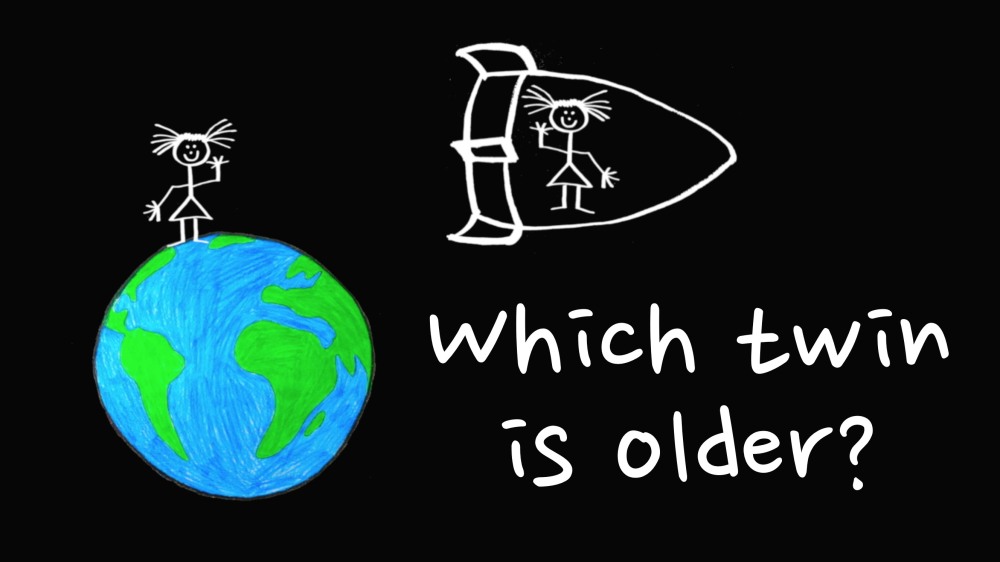
Last winter break, I saw Interstellar. While various aspects of the movie interested me, the thing that especially stood out was the focus on time and the complexities it holds. Although Interstellar clearly wasn’t completely accurate in its science, it still brought up different aspects of space travel that are legitimate. In my opinion, the scariest part of the movie was the concept of aging on the space craft vs. aging on Earth. Einstein formulated a theory known as special relativity that said when people travel at different speeds, time affects them differently. Therefore, if people travel at or close to the speed of light, time goes slower for them, meaning they will not age as quickly as people on Earth. I found this idea fascinating, and I think it will be interesting to see how it plays out in the distant future, when we (presumably) create technology that allows us to travel at such fast speeds.

astr

(From a YouTube video about special relatively)


Posted in Class | Tagged , , , | Comments Off on Blog 1: Time travel

Blog 1: Time travel

Last winter break, I saw Interstellar. While various aspects of the movie interested me, the thing that especially stood out was the focus on time and the complexities it holds. Although Interstellar clearly wasn’t completely accurate in its science, it still brought up different aspects of space travel that are legitimate. In my opinion, the scariest part of the movie was the concept of aging on the space craft vs. aging on Earth. Einstein formulated a theory known as special relativity that said when people travel at different speeds, time affects them differently. Therefore, if people travel at or close to the speed of light, time goes slower for them, meaning they will not age as quickly as people on Earth. I found this idea fascinating, and I think it will be interesting to see how it plays out in the distant future, when we (presumably) create technology that allows us to travel at such fast speeds.

astr

(From a YouTube video about special relatively)


Posted in Class | Tagged , , , | Comments Off on Blog 1: Time travel

Blog #2 | Zodiacs and Precession

I am never one to really pry much life into zodiac signs, or how they should tell about my personality or future. However, the zodiac constellations have some real hard science about them.

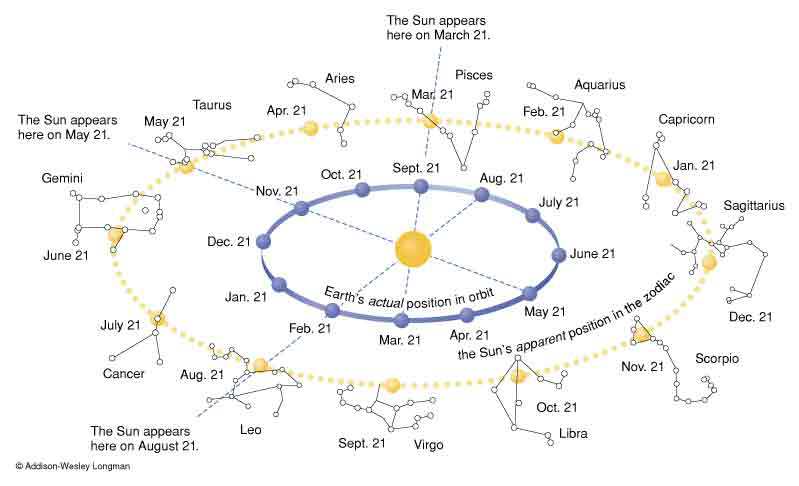
Zodiacs signs corresponding to the constellation that the Sun is located in front of from our perspective on Earth. There is usually a new constellation that corresponds to the zodiac sign for every month. According to astrology calendar we use today I am an Aries, as I was born April 9th.

The initial beginning of the zodiacs came from Babylonian astronomers, and later the Romans and Greeks further conceptualized their ideas. The calendar they used about 2,200 years ago is the same one we use today (Source). As you may have guessed, the calendar has needed some updating.

Since the initial birth of the calendar, the Earth has precessed every so slightly on its axis, causes the timing of the zodiac calendar to be shifted. As a result of being born about 2,200 later than the ancient astronomers, I should be a Pisces instead of a Aries. If you don’t know, these are signs have drastically different personality descriptions.


Posted in Class | Tagged , , , | Comments Off on Blog #2 | Zodiacs and Precession

goddess of love

Venus is many things. I don’t know much about it besides the fact that it is hot, orange, it’s the second planet in the solar system, and is the goddess of love in Roman mythology.

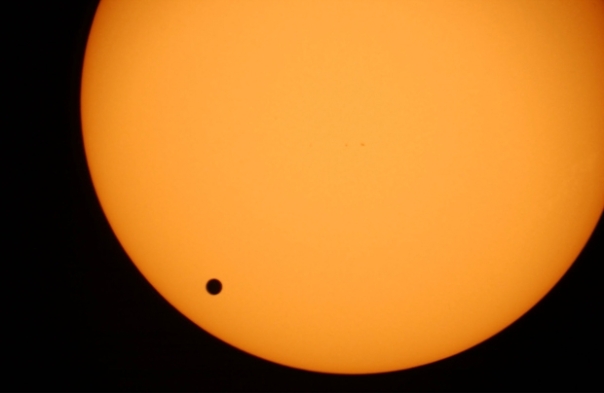
On June 5th, 2012, a couple of days after I graduated from high school, my dad and I woke up at 5 am and drove to a large parking lot in downtown Beirut. There were local news station vans and minor celebrity figures. The transit of Venus across the face of the sun was the biggest headline that day. My physics teacher was there, too, and he introduced me to Majdi Saadi, an astrophysics professor at the American University of Beirut and scientific personality who I have now grown to liken to a sort of Lebanese Neil deGrasse Tyson – charismatic, cynical, and very passionate about science literacy.

I took off my glasses and pressed my eye into the telescope. The goddess of love looked largely unglamorous, a black dot on the face of the massive sun. But really it represented something – this was a couple of months before I was scheduled to fly out to America for the first time. I was in awe of its insignificance, really. This massive, massive celestial body, a speck in an eyepiece. It was quite lovely, rather akin to Tyson’s cosmic perspective. Bigness and smallness conflating.

“You are the future of science for this country,” Saadi told me as he vigorously shook my hand. “Make us proud.”

I have wanted to be a scientist ever since.

transit20of20venus20ap
goddess of love in transit

Posted in Class | Tagged , , , | Comments Off on goddess of love

Sky Map

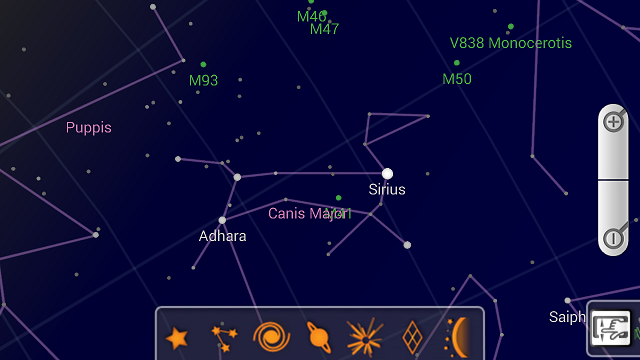
In our Solar System class, we’ve been using Stellarium to investigate the relative motion of constellations and our Sun.  Beyond the ability to lapse time, the features that were most helpful to me were the ones that labelled the constellations and drew lines in between the stars that formed these constellations. As an amateur astronomy student, I’ve never been able to look into the night sky and pick out constellations or planets.  Although Stellarium can tell me the positions of these objects, it would be hard to study my computer screen and then pick them out while looking up at the night sky.  A useful app that can help with this is Google’s Sky Map.  If you are outside at night and wondering what you’re looking at in the sky, then you can pull out your phone and point it at the desired location to map it out.  A video with a demonstration of this and other features can be found here.

The major downside to the app is that it is only for Androids.  However, if you have one, I would definitely recommend checking it out.


Sky-Map-Buttons.png
A screenshot from Sky Map


Posted in Class | Tagged , , , , , | Comments Off on Sky Map

Comprehension

scale
Pics About Space

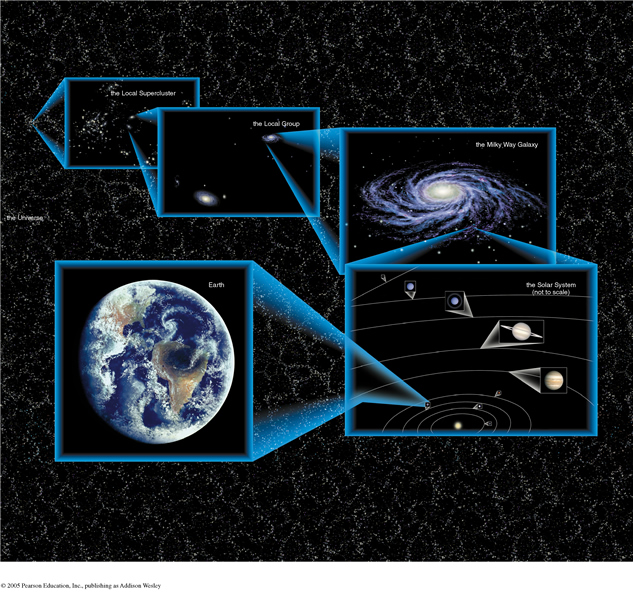
The universe is massive. There are billions of people on this planet. There are billions of planets in our galaxy. There are billions of galaxies in our universe. And this is just in the observable universe, possibly just a small slice of the true universe.

But does this really mean anything to people? Does mankind actually possess the ability to comprehend just how massive the universe is? Sure, most people can be taught the facts, that there are more stars in the universe than there are grains of sand in all of the beaches on the Earth combined, that it would take longer than the period of time that the universe has existed for light to travel across the entirety of the universe, or that the universe is just really, really big. But can people actually comprehend this?

Sometimes I can convince myself that the answer to this is yes. But after a while this yes turns into a maybe. Which turns into a no. If people could actually, truly comprehend that we are insignificant compared to the universe, that nothing we can possibly do in our lives will affect even a billionth of a percentage of the universe, or that outside of the sphere we call Earth, we don’t matter, people would go insane.

I know that the universe is massive. I know that I’m less than an insect in the universe’s eye. But I also believe that I matter. This is how I know I cannot comprehend the scale of the universe. Because I actually believe I, and the things that I do, and the daily decisions I make, matter.


Posted in Universe | Tagged , , | Comments Off on Comprehension