Between a Rock and a Whole Lot of Air

The first documented occurrence of a person being struck by a meteorite was a woman in Alabama being struck while napping by a rock that bounced off her wooden console radio. But could you imagine  being struck straight on by a meteorite while skydiving? That is exactly what happened to Anders Helstrup, after leaping for a small plane, and deploying his parachute a meteorite came within meters of hitting him. He said he sensed something, but only realized exactly what had happened when reviewing footage on his helmet camera.
Afterwards he searched the area below him, but was only able to find the meteorite with the help of experts. It is theorized the rock broke off from a larger meteor several kilometers above. This is the first time a meteorite has been observed after it has entered the dark flight phase, where  the atmosphere around the rock is no longer ionized, and it is falling straight down.

Source:

Norwegian skydiver nearly struck by meteorite


update: Guess it was just a rock from the skydiver’s parachute. :[


Posted in Small SS Objects | Tagged , , | Comments Off on Between a Rock and a Whole Lot of Air

Io is Outrageously Hot

Io is known for being extremely volcanic. By just looking at images of Jupiter’s closest moon you can assume that this is a particularly hot world. Io’s scalding heat is caused by the extreme tidal forces that act upon it. Now when we compare the heat flow on Io to the heat flow on Earth it is possible to somewhat imagine how hot Io is. An article on Wired  shows the different heat flows for various parts of Io using different color circles. The dots were positioned over “likely active volcanic vents or places with magma near the surface.” The article states that the estimated total heat flow on Earth is equivalent to a single black dot on the image of Io’s surface. This fact at least partially aids imaging the absurd amount of heat flow that is present on Io.


Posted in Class, Moons | Tagged , , | Comments Off on Io is Outrageously Hot

Rosetta’s Trajectory

This photo found on NASA’s Solar Exploration page diagrams the trajectory for the European Space Agency’s mission Rosetta’s exploration of the comet 67P/Churyumov-Gerasimenko. Launched in 2004, Rosetta has since flown-by Earth three times, Mars, and two asteroids, and is scheduled to arrive at the comet later this year.  It’s so how cool scientist are ale to calculate precisely where the planets, asteroids, and comet will be at a given point in time in the future and how long it will take Rosetta to reach it on it’s given path.


Posted in Observables, Space Travel | Tagged , , , , | Comments Off on Rosetta’s Trajectory

A Personal Satellite

Ardusat Breakdown

Have you ever wished you could own your very own satellite? The space exploration hobbyist’s dream is coming true in a new arduino project called Ardusat. Developed by a company named Nanosatisfi, this product combines the open source user friendly interface of arduino technology with the space friendly CubeSat design platform.

This project originally began on Kickstarter, where over 676 people backed the idea and raised over $100,000 to help launch the project. For as little as $150, one can now partake in space exploration!


Additional information of this project can be found here.


Posted in Class | Tagged , , , , | Comments Off on A Personal Satellite

The Planet Vulcan

enterprise
After the discovery of Neptune, which was predicted by gravitational aberrations in the orbit of Uranus, an astronomer named Urbain Leverrier noticed aberrations in the orbit of Mercury. He hypothesized that there must be another planet between Mercury and the Sun, for which he proposed the name Vulcan.

No such planet exists, and the aberrations in the orbit were actually explained by Einstein’s expanded theory of gravity. However, the popular TV series Star Trek features a planet and people from a planet called Vulcan.


Posted in Class | Tagged , , | Comments Off on The Planet Vulcan

Extra Solar Planets, Probable Cause for Life Elsewhere


08-StudyingExtrasolarPlanets.003

“Kepler Orrery (large and small systems)”

An extra solar planet is define as an object in space that meets the formal definition detailed by the IAU with the exception that it orbits a star other than the Sun. As of April 4, 2014 there have 1780 planets discovered in 1103 planetary systems (460 of which are multi-planetary). The aforementioned “planets” are only those which we have been able to scientifically confirm exist. Because each planetary system orbits around a star, the aforementioned statistics show that we have looked for the existence of  extra solar planets around less than 2000 stars. When you take into consideration the fact that there are roughly 300 billion stars in the Milky Way alone, and our theories speculating planetary system formation estimate that at least one “planet” orbits every star, it is reasonable to assume that there are millions of extra solar planets with similar conditions to Earth. Even if the occurrence of life is “one in a million,” there probably exist more than a million Earth-like extra solar planets.

Additional information on extra solar planets can be found here


Posted in Class | Tagged , , , , | Comments Off on Extra Solar Planets, Probable Cause for Life Elsewhere

The Origin of Comets

Halley's comet

<Image from this post from here>

Every 76 years, viewers from our little planet of Earth are treated to a spectacular show of Halley’s comet streaking across the sky. The comet was observed for centuries but ancient astronomers failed to identify this comet’s appearance as a recurring event, thinking that each comet was unique and different. Indeed, not all comets seen are the Halley’s comet, but we later learned that this particular comet has a periodicity in its appearance, meaning that it must orbit the Sun.

There are two main types of comets: long-period comets and short-period comets. Long-period comets originate from the Oort cloud, a large circular “cloud” of comets and icy bodies that encircle our solar system, whereas short-period comets originate from the Kuiper belt, which is a belt of comets that orbits around the Sun past the orbit of Neptune. Since Halley’s comet is a short-term comet, it must’ve originated in the Kuiper belt. By studying these icy worlds that come times go astray and find their way to the inner solar system, we can learn a lot more about the composition of the other worlds in the Oort cloud and Kuiper belt without having to send expensive satellites out there ourselves.


Posted in Observables | Tagged , , | Comments Off on The Origin of Comets

Enceladus For Life!

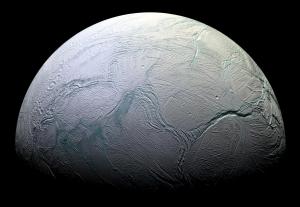
Just last week, researchers released findings that confirm an ocean on Saturn’s moon Enceladus, something that scientists had previously suspected, but could not validate. The moon, which is very small compared to our own (only 300 miles wide), has strange geological features around its South pole that initially led to the hypothesis of a sub-surface ocean.


Given these findings, some now consider Enceladus to be the most likely place in the solar system to find extraterrestrial life. This is based on the presence of several other ingredients that are essential for Earth life, and Enceladus is the only place that we know of where all of these ingredients are present. If you want to read more about the story or find the journal publishing, check out this link.


Posted in Class | Tagged , , , | Comments Off on Enceladus For Life!

Ludicrous Speed

spaceballs_ludicrous_speed

Science fiction is known for its use of futuristic technology that is impossible or at least seems to be at the time. In Spaceballs (parodying Star Wars) ludicrous speed is used to comically travel faster than the speed of light. You would think anything like this would have to fall into the part of science fiction that will never actually be replicated. However, there is a chance you would be wrong. In short, scientists think traveling faster than light may be possible by warping space-time around a ship, instead of by just building more powerful engines. Though this kind of technology won’t be coming out any time soon,but it sure is cool that it might one day.


Posted in Class | Tagged , , | Comments Off on Ludicrous Speed

“Games without rules have many possible outcomes.” – Andrew Knoll, Harvard

Saturn's Moon Enceladus, photo credit NASA

Saturn’s Moon Enceladus, photo credit NASA

On a slightly more positive note to my other post about my reservations to the search for extraterrestrial life, NASA has recently confirmed that Saturn’s moon, Enceladus has been hiding a Lake Superior-sized ocean. It was discovered using data gathered by the Cassini spacecraft, and while suspicions have been around for a while, it has only just been confirmed.

This of course raises the life question. While many NASA and other affiliated scientists are hopeful, other biologists and chemists are skeptical. As the Harvard scientist quoted in my title believes and explained in an article for the Washington Post herethere just aren’t the resources available for life to exist in the way that we traditionally understand it, however, nature is unpredictable and follows her own rules that we have yet to make total sense of. Who knows? With more observation we could uncover a totally thriving ecosystem completely apart from our Earth fish or anything else we’ve suspected is out there.


Posted in Class, Moons | Tagged , , , , , | Comments Off on “Games without rules have many possible outcomes.” – Andrew Knoll, Harvard